

What's included
- An assessment before any machine is used, looking at your pain, movement, mobility, posture and the everyday things you are finding hard.
- A check for the reasons TECAR must not be used on you, including a pacemaker or other electronic medical device, a coil (intrauterine device), pregnancy, cancer and a clot in a vein.
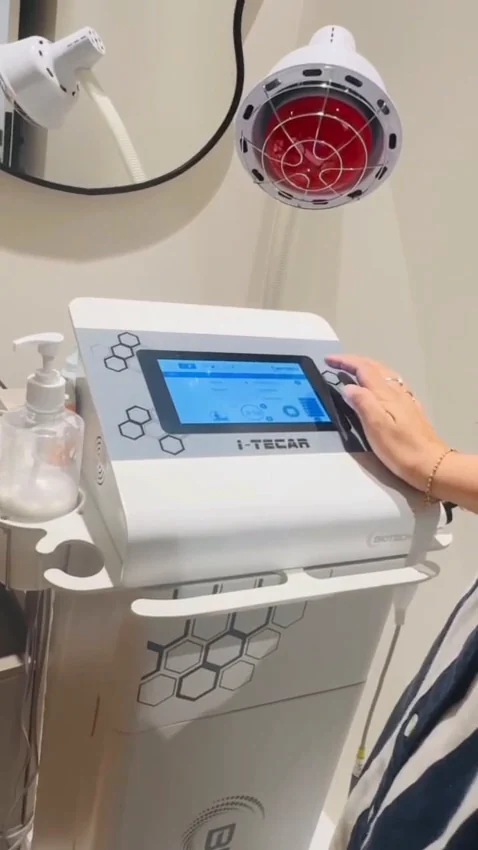
- Where the assessment supports it, treatment on the i-TECAR unit at the Gandhi Path centre in Vaishali Nagar.
- Warmth adjusted to what you can comfortably feel. Tell the physiotherapist at any point if it is too hot.
- TECAR used as one part of a plan that can also include exercise therapy and manual therapy, all on site.
- Consultation in Hindi, English or Rajasthani.
Who it's for
This treatment suits some people and not others. It is worth a call if you recognise yourself here.
- Adults with muscle, tendon or joint pain who are willing to have a full physiotherapy assessment first.
- People with low back pain or knee pain. Low back pain and knee osteoarthritis are two of the problems TECAR has been studied in most, and the results are mixed.
- People willing to do exercises as part of the plan. A 2025 clinical commentary in the International Journal of Sports Physical Therapy, which is expert opinion rather than a trial, advises using TECAR with exercise and not on its own.
- People who want the limits of the treatment explained as well as the possible benefit.
Who should not have it
A published clinical commentary and one TECAR maker's user manual list these among the reasons not to use TECAR:
- A pacemaker, an insulin pump, a hearing aid or another electronic medical device.
- Pregnancy.
- A cancer or other tumour.
- A clot or an inflamed vein, a disease of the arteries, bleeding, or a severe heart or circulation disorder.
- A metal implant, or a Copper T or other intrauterine device (coil).
- Reduced feeling in the area to be treated.
- A fever or an infection.
- Epilepsy.
The same maker's manual also says its device should not be used on children under 14. If the person to be treated is a child, ask the physiotherapist at the assessment whether TECAR is suitable. Tell the physiotherapist about any of these, and about any implant or device you have, at the assessment.
How it works
- Assessment before any machine is used A physiotherapist asks about your pain, your health and any implants or devices you have, examines the painful area, and checks the reasons TECAR would not be safe for you. TECAR is not a diagnosis. If your pain is new, severe, came after a fall, or comes with numbness, weakness, fever or unexplained weight loss, you will be advised to see a doctor first.
- Setting up You take off any metal objects you are wearing. A return plate is placed on the skin close to the area being treated, and a conductive cream goes on the skin so that no air gap is left between the electrode and your body. The physiotherapist chooses capacitive or resistive mode for the tissue being treated.
- What it feels like The physiotherapist moves the electrode over the area and raises the power until you feel warmth that is comfortable. Say so at once if it feels too hot. TECAR is given only to someone awake and able to say how it feels, which is why your feedback matters during the session.
- TECAR sits inside a wider plan In the same programme the physiotherapist may use manual therapy, myofascial release, Mulligan Concept mobilisation with movement, kinesiology taping and the exercise therapy you continue at home. Other equipment on site, including Class IV laser and spinal decompression, is used only where the assessment calls for it.
- How many sessions There is no agreed standard number of TECAR sessions: a 2020 review called for treatment methods to be standardised. Ask your physiotherapist what they suggest and why, and how progress will be judged. Longer-standing pain that needs a broader plan is handled through Pain Management.
What Is i-TECAR Therapy?
TECAR Therapy, commonly described as Transfer Energy Capacitive and Resistive therapy, uses non-invasive radiofrequency energy delivered through specialized electrodes during physiotherapy treatment.
The technology can operate through capacitive and resistive modes, allowing treatment to be adapted to different tissues and rehabilitation goals. It is commonly integrated with manual therapy, mobility work and therapeutic exercise.
At Trivayu Physio Center, i-TECAR Therapy can be incorporated into a broader rehabilitation program to help reduce discomfort, improve movement and support progressive return to activity.
Benefits of Advanced Technology
Technology features and their possible role in your rehabilitation.
Radiofrequency Delivery
Uses radiofrequency energy with capacitive or resistive delivery. Treatment parameters are selected according to the area, comfort and clinical goal, without assuming that greater depth means better recovery.
Dynamic Treatment
i-TECAR can be used while the therapist performs movement, stretching or hands-on techniques, allowing treatment to remain active rather than completely passive.
Tissue Preparation
By helping reduce stiffness and improve comfort, i-TECAR can prepare muscles and soft tissues for stretching, mobility work, strengthening and functional rehabilitation.
Dual-Mode Therapy
Capacitive and resistive modes allow the clinician to adapt treatment according to different tissue characteristics and rehabilitation goals within the same technology platform.
Rehab Readiness
Reduced discomfort and improved movement tolerance can help patients participate more effectively in strengthening and functional exercises during the rehabilitation session.
Who Can Benefit?
i-TECAR Therapy can be considered for selected patients with:
- Muscle strains and soft-tissue injuries
- Tendon-related pain
- Sports injuries
- Neck and back musculoskeletal pain
- Shoulder pain
- Knee-related musculoskeletal pain
- Muscle stiffness and soreness
- Restricted or painful movement
- Rehabilitation following selected overuse injuries
Your Next Step Towards Better Movement
If pain, stiffness or a sports-related injury is limiting your movement, book an assessment at Trivayu Physio Center, Jaipur and discover how i-TECAR Therapy can complement your rehabilitation.
Support Comfort. Restore Movement. Build Capacity.
Common questions
What does TECAR stand for?
TECAR stands for Transfer of Energy Capacitive and Resistive. It is a radiofrequency treatment, also written CRet or CRET in research, that warms the tissue between a handheld electrode and a return plate. Capacitive mode acts mainly on muscle and the tissue under the skin, and resistive mode targets deeper, denser tissue such as tendons, ligaments and bone.
What does TECAR therapy feel like?
TECAR therapy usually feels like gentle warmth under the electrode. The physiotherapist raises the power until the warmth is comfortable and lowers it if you say it is too hot. You need to be awake and able to say how it feels throughout, so speak up at any point.
Who should not have TECAR therapy?
A published clinical commentary and one TECAR maker's user manual list these among the reasons not to use TECAR: a pacemaker, an insulin pump, a hearing aid or another electronic medical device; pregnancy; a cancer or other tumour; a clot or an inflamed vein, a disease of the arteries, bleeding, or a severe heart or circulation disorder; a metal implant, or a Copper T or other intrauterine device (coil); reduced feeling in the area to be treated; a fever or an infection; and epilepsy. The same maker's manual also says its device should not be used on children under 14. If the person to be treated is a child, ask the physiotherapist at the assessment whether TECAR is suitable. Tell the physiotherapist about any of these, and about any implant or device you have, at the assessment.
Does TECAR therapy work?
TECAR may help some people with pain, but the research is limited and it disagrees. A 2020 review in the International Journal of Rehabilitation Research (Beltrame and colleagues, 13 studies, in which spine problems and knee osteoarthritis were the conditions studied most) concluded it seems to reduce pain, but found only two studies at low risk of bias. A 2023 review of diathermy treatments in the Journal of Clinical Medicine (Pollet and colleagues, 68 studies) rated the certainty low to very low and did not support its use in clinical practice.
Is TECAR the same as ultrasound or IFT?
TECAR is not the same as ultrasound or IFT. TECAR passes a radiofrequency current that warms the tissue, therapeutic ultrasound uses sound waves, and IFT uses lower-frequency electrical currents. As Dr. Jyoti Choudhary says in her video, other machines work on different mechanisms, so the choice depends on your condition and the goal of treatment, not on which machine is best.
How many TECAR sessions will I need?
The number of TECAR sessions is decided after the assessment, because there is no agreed standard: a 2020 review called for treatment methods to be standardised. Ask your physiotherapist what they suggest and why, and how progress will be judged.
Where can I get TECAR therapy in Vaishali Nagar, Jaipur?
Trivayu Physio Center is at 204, 2nd Floor, Om Tower, Gandhi Path Road, Nemi Nagar, Vaishali Nagar, Jaipur 302021. It is open Monday to Saturday, 8:00am to 8:00pm, and Sunday, 10:00am to 1:00pm. Call or WhatsApp +91 90570 65065 to ask whether TECAR suits your problem before booking. Consultations are in Hindi, English and Rajasthani. There are also branches at Vidyadhar Nagar and Rangoli Gardens, which keep different hours; ask before visiting a branch whether TECAR is available there.
See it in the physiotherapy clinic
Filmed at our centre in Vaishali Nagar, so you can see what the session actually looks like before you book.
See it explained
Filmed at our physiotherapy clinic in Vaishali Nagar. Dr. Jyoti Choudhary explains what TECAR is and why an assessment comes before any machine. What the research shows, and its limits, is set out in the questions above.
Further reading
This page is educational and does not replace a proper assessment. Outcomes vary by individual; Trivayu Physio Center makes no guarantee of specific results.
Patient information published by Trivayu Physio Center.