
Treatment
Post-Workout and GymRecovery
Two days after a hard session your legs still ache, one shoulder catches on the press, and you cannot tell whether to train through it or leave it alone. Sorting that out is what this service does.
Post-workout and gym recovery at Trivayu Physio Center is physiotherapy, not a treatment menu you pick from. Every plan starts with an assessment, and the first job of that assessment is to separate ordinary training soreness from a niggle, and a niggle from something that needs treating before you load it again.
Dr. Jyoti Choudhary leads the team. She holds an MPT in Sports and Orthopaedic Physiotherapy from Dr. M. V. Shetty College, Mangalore, completed in 2011, along with a BPT, membership of the Indian Association of Physiotherapists and a Certificate in Manual Therapy. She has 17 years of experience, was physiotherapist to the Rajasthan women's cricket team, and has worked at Santokba Durlabhji Memorial Hospital in Jaipur. The clinic is at 204, 2nd Floor, Om Tower, Gandhi Path Road, Nemi Nagar, Vaishali Nagar, Jaipur, open Monday to Saturday, 8:00am to 8:00pm, and Sunday, 10:00am to 1:00pm.
What's included
- An assessment by a physiotherapist before any treatment, covering your training history, how the problem started, your recent load, movement, strength and the painful area.
- Manual therapy, myofascial release and Mulligan Concept mobilisation (MWM), delivered by physiotherapists. Dr. Jyoti Choudhary holds a Certificate in Manual Therapy.
- Exercise therapy and kinesiology taping, with guidance on what to train next and what to hold back.
- Class IV Laser (Photon), i-TECAR and advanced electrotherapy on site, used where the assessment calls for them.
- Cupping therapy where the assessment supports it, always as one part of a plan. The Dry Cupping Therapy page sets out what it does and does not do.
- Dry needling, and dry needling with stimulation, where the physiotherapist judges it suitable. The Dry Needling page covers the after-effects and the reasons it may not suit you.
- Home visits across Jaipur, and online consultation. Hindi, English and Rajasthani spoken.
Who it's for
This service suits some people and not others. It is worth a call if you recognise yourself here.
- Gym-goers training four or five days a week who want to keep training through a niggle instead of stopping.
- Beginners whose first weeks of training have left them too sore to move normally.
- People with a niggle that is not an injury yet, like a shoulder that catches on the press or a knee that complains on squats.
- Anyone coming back after a muscle strain who does not know how much load to start with.
- People who have rested, iced and stretched at home for weeks with no change.
- Runners, cyclists and cricketers in Jaipur who pick up niggles between training sessions.
- Adults who train before or after work and need an appointment in the evening, on a Saturday, or on a Sunday morning.
How it works
- Assessment before anything else The first appointment is an examination. Nothing is treated until the physiotherapist has assessed you. They take your training history, what you were doing when the problem started, what has changed in your load recently, and your medical conditions and medicines, then test movement, strength and the painful area. You may be seen by Dr. Jyoti Choudhary or by Dr. Hritika Choudhary, Dr. Ishu Sharma, Dr. Mariyam Khan or Dr. Ajit Choudhary.
- Soreness, niggle or injury The assessment sorts the problem into one of three: ordinary training soreness, a niggle that has not stopped you training yet, and something that needs treating before you load it again. Each gets a different answer. Pain that follows a fall or an accident, pain with numbness or weakness, pain that wakes you at night, or pain with fever or unexplained weight loss should be seen by a doctor, because a physiotherapy assessment does not replace a medical diagnosis.
- Treatment matched to the finding Treatment is chosen for what the assessment found, from what is genuinely on site: manual therapy, myofascial release, Mulligan Concept mobilisation, exercise therapy, kinesiology taping, cupping therapy, dry needling and dry needling with stimulation, Class IV Laser (Photon), i-TECAR and advanced electrotherapy. Cupping and dry needling are used as part of a wider plan and never as treatments on their own, and both have conditions in which they are not suitable, which is why the medical history at step one matters. The Dry Cupping Therapy and Dry Needling pages give the detail on each.
- Back to training in steps Load is added back in stages, and the exercise programme is the part of the plan that carries that progression. Timelines depend on what was found, on the tissue involved and on how you respond, so they are set at the assessment and reviewed as you go rather than promised at the start. If an injury has already happened and the question is getting back to your sport, the Sports Injury and Rehab page covers that pathway instead. For a back or neck problem that keeps returning, Spine, Back and Neck Care is the right starting point.
Common questions
Should I train when my muscles are still sore?
Yes, if the soreness is spread evenly across the muscles you trained and eases as you warm up. Pain sitting in one spot that came on suddenly during a lift is a different thing. Swelling, a loss of strength, a loss of movement, or pain that wakes you at night should be assessed before you load that area again. If you cannot tell which one you have, get it examined.
How do I know if it is DOMS or a muscle strain?
You cannot tell reliably on your own, which is why it is an examination rather than a guess. DOMS, delayed onset muscle soreness, is the common name for soreness that appears a day or two after training rather than during it. The physiotherapist asks when the pain started, whether it began at a single moment you can point to, whether it sits in one spot or across a whole muscle group, then tests movement, tenderness and strength.
How long should I rest after a muscle strain?
There is no single number, because a rest period only means something once someone has examined the area. Rest is set by what the examination finds, how the area responds to loading, and how you progress week to week, so it is reviewed rather than fixed in advance. What matters more than the calendar is that load is added back in steps, and that strength and movement are tested before you return to your normal programme.
My muscle strain is not getting better. What should I do?
Get it examined. A strain that has not improved after weeks of rest and self-treatment may not be behaving like a simple strain, or load may have been added back too quickly, or something else in the chain may be doing the work. The next step is an assessment. Trivayu Physio Center is at 204, 2nd Floor, Om Tower, Gandhi Path Road, Nemi Nagar, Vaishali Nagar, Jaipur, on +91 90570 65065.
Do you offer sports massage or a spa-style recovery session?
No. Recovery here is physiotherapy, delivered by physiotherapists after an assessment. Hands-on work such as manual therapy and myofascial release is used where the assessment supports it, as part of a treatment plan rather than as a booked hour of soft tissue work. If you want to know why one area keeps flaring up when you train, an assessment at the Vaishali Nagar clinic is the right starting point.
Will cupping or dry needling help soreness after a workout?
Not for ordinary soreness after a session, no. The studies reporting a benefit from cupping looked at long-standing musculoskeletal pain, and a randomised trial in 81 recreational runners found cupping after a run did not improve muscle pain, fatigue, perceived recovery or jump height. Both cupping and dry needling are used here for a specific finding inside a wider plan. The Dry Cupping Therapy and Dry Needling pages set out what each does.
How many sessions will I need, and what will it cost?
Neither the number of sessions nor the fee is fixed in advance, and both are settled at the assessment. The number depends on what the assessment finds, how you respond, and what you need to get back to, and it is reviewed as treatment goes on. Physiotherapy outcomes vary from person to person. The clinic's fees page explains how costs are worked out, or ask on +91 90570 65065 when you book.
Can I get gym recovery physiotherapy at home or online in Jaipur?
Yes. Home visits are offered across Jaipur, and online consultation is available if you are travelling, training away from home, or cannot reach the clinic. An in-person assessment is the better starting point for anything with swelling, a loss of strength, or pain you cannot localise, because hands-on testing is part of it. The clinic is in Vaishali Nagar, open Monday to Saturday, 8:00am to 8:00pm, and Sunday, 10:00am to 1:00pm.
Related conditions
Related treatments
This page is educational and does not replace a proper assessment. Outcomes vary by individual; Trivayu Physio Center makes no guarantee of specific results.
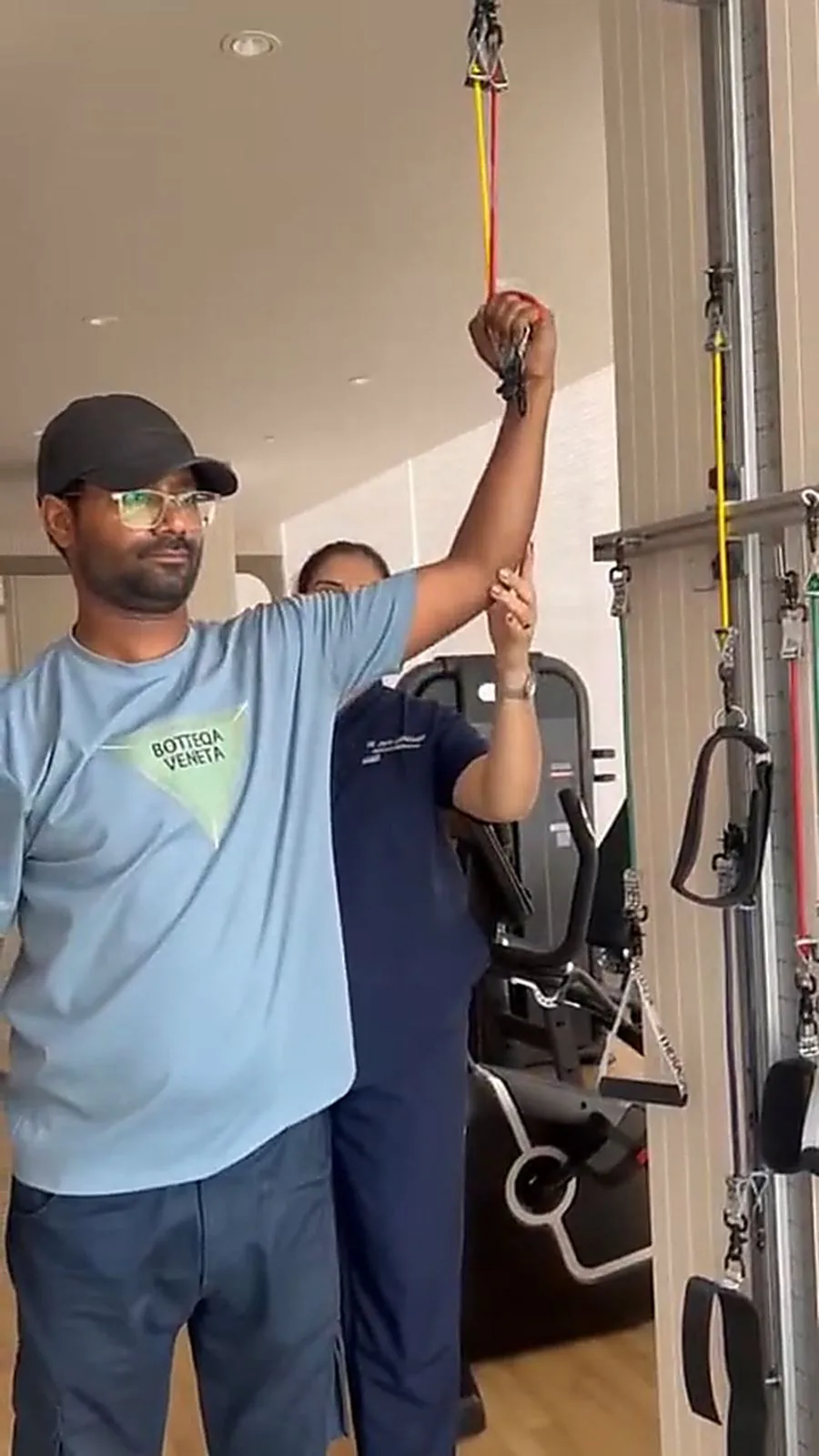
See it in the physiotherapy clinic
Filmed at our centre in Vaishali Nagar, so you can see what the session actually looks like before you book.
TECAR therapy in action
Advanced therapy equipment at the centre
Ready for a proper assessment?
Tell us what you were training and what started hurting. Message us on WhatsApp with a preferred time and we will confirm your first visit.
See it explained
A short clip from the clinic on coming back to running after an injury.
Returning to running after an injury