Treatment
Sports Injury& Rehab
Assessment and rehabilitation for sprains, strains and sports injuries, with a plan built around your sport and your goals. Whether it is a fresh sprain or a ligament injury from sport or exercise, the right rehabilitation is an important part of getting back safely.
What's included
- Assessment of the injury and how it happened
- Hands-on treatment, with dry needling or manual therapy where appropriate
- A sport-specific strength and movement plan
- Return-to-play guidance so you come back safely
Who it's for
For active people and athletes recovering from sprains, strains, muscle and ligament injuries, or anyone wanting to return to sport without picking up the same injury again.
How it works
We assess the injury, explain what has happened in plain language, and build a recovery plan around your sport and your goals, progressing you step by step until you are ready to return.
How sports injuries happen
Sports injuries cover a wide range of musculoskeletal problems linked to physical activity, and they can affect almost any part of the body depending on the sport and the way the injury happened. Most of them fall into two broad groups.
- Acute injuries come on suddenly, usually after a specific event such as a fall, a collision, an awkward landing, a sudden sprint or a quick change of direction. Ankle sprains, muscle strains, ligament tears and some fractures sit here.
- Overuse injuries build up gradually, when repeated loading asks more of the body than it can recover from and adapt to. Tendinopathies, stress-related bone injuries and some forms of lasting joint or muscle pain sit here.
The injuries that turn up most often in sport include ankle sprains, ACL injuries and tears, meniscal injuries, muscle strains, hamstring and groin injuries, tendinopathies, rotator cuff injuries, tennis elbow, Achilles tendinopathy, plantar fasciitis and stress-related bone injuries. Severity varies a lot. Some can be managed effectively with rehabilitation alone, while others may need imaging, medical assessment, surgery or a combination.
Why an injury happened is rarely down to one movement. It usually sits in the meeting point between the load going through the body, what the body can currently handle, and the demands of the activity. The things that commonly contribute:
- A sudden jump in training load. Adding volume, intensity or frequency too quickly can ask more than your current capacity allows.
- Conditioning that has not kept pace. Strength, endurance or power below what the sport demands can make hard activity difficult to tolerate.
- Fatigue. Physical or mental tiredness can affect movement control and how quickly you react when a game changes.
- A previous injury. If strength, mobility or sport-specific capacity were never fully restored, the chance of a repeat can go up.
- Thin recovery. Short sleep, heavy training and too little recovery time can affect how the body adapts to loading.
- Sharp movements. Sprinting, cutting, jumping, landing and rapid deceleration can place high forces on muscles, tendons and ligaments.
- Contact and collision. A direct impact can injure ligament, muscle, joint or bone.
- Repetitive loading. The same movement repeated without enough time to adapt can contribute to overuse injuries.
- A change in the training environment. A different playing surface, new footwear, different equipment or a new programme changes what is being asked of you.
Two injuries involving the same tissue can develop through very different routes. That is why a rehabilitation plan looks at total training load, your physical capacity and the demands of your sport, rather than blaming a single movement or a flaw in technique.
What you might notice
Symptoms depend on which tissue is involved and on how the injury came about. An acute injury usually traces back to a moment you can name. An overuse injury creeps in, and early on it may only show up during or after activity. Common signs include:
- Pain that arrives suddenly, or builds gradually
- Swelling, bruising, or tenderness in a muscle or joint
- Reduced range of movement
- Muscle weakness, or less power and endurance than usual
- Difficulty running or changing direction
- Pain when jumping or landing
- Reduced balance or coordination
- A joint that feels unstable, or gives way
- Trouble with the specific movements your sport asks for
- Less confidence in the injured area when you go back to activity
Pain is not the only signal worth watching. Some people have little or none and still show clear gaps after an injury: slower acceleration, difficulty finishing a full training session, less tolerance for high-intensity work, or the same injury returning. Those gaps are part of the picture even when nothing hurts.
A few symptoms need prompt medical assessment rather than a physiotherapy appointment. Obvious deformity, being unable to put weight through the limb, severe swelling, a suspected fracture, major joint instability, sudden and substantial weakness, or symptoms suggesting significant nerve involvement all belong in that group.
The stages of getting back
Sports rehabilitation is the work of rebuilding physical capacity after an injury or surgery, and preparing you for the level of activity you want to return to. What separates it from general rehabilitation is the target. General rehabilitation aims at everyday function. Here the aim is the specific demand you are going back to, so a footballer, a runner, a tennis player and someone who trains in the gym may follow quite different programmes even after similar injuries. A programme usually moves through stages, each one setting up the next:
- Restore. Settle pain and swelling, and get mobility and basic movement back.
- Strengthen. Rebuild muscle strength, endurance and tissue capacity.
- Control. Improve balance, coordination and neuromuscular control.
- Condition. Build cardiovascular fitness, power and tolerance for heavier physical loads.
- Perform. Reintroduce running, jumping, acceleration, deceleration and sport-specific movement.
- Return. Move progressively back into full training and competition.
How far along that sequence you go depends on what you are heading back to. For a recreational athlete it may mean running, gym training or weekend sport again without second-guessing the leg. For a competitive athlete, the later stages can be built around sprinting, jumping, landing, cutting and the demands of a particular position.
Rehabilitation is not only for fresh injuries. It may also be needed after surgery such as an ACL reconstruction or certain meniscal procedures, for an overuse condition such as Achilles tendinopathy, after repeated problems like recurring hamstring strains or ankle sprains, or after a long spell away from training when strength and fitness have dropped off.
Judging when you are ready
Pain settling does not necessarily mean you are ready to play. Pain easing is a good sign, and it is a poor place to stop. The body may still need to regain strength, power, endurance, coordination and sport-specific capacity before it goes back to unrestricted activity, and much of that work happens after the symptoms quieten down.
Readiness is better judged on what you can do than on how many weeks have passed. Strength, movement quality, how you run, jump, land and change direction, how you cope with sport-specific functional tests, and whether pain or swelling return afterwards all feed into the decision.
Confidence belongs in that list too, and it is recognised as part of rehabilitation rather than an optional extra. Returning physically is only half of returning well. After a significant injury, trusting the leg or the shoulder again comes from progressive exposure to the movements and the intensity you will meet in your sport, which is something to plan for rather than hope for.
Physiotherapy handles the movement, loading and return-to-sport side of this. Diagnosis, imaging, medication and any decision about surgery sit with a doctor or an orthopaedic surgeon, and rehabilitation works either side of that decision rather than in place of it.
Common questions
How soon after an injury should I come in?
Sooner is usually better. Early assessment helps guide the right treatment from the start and can speed up recovery.
Can you help me avoid re-injury?
Yes. A big part of rehab is building the strength and control needed to reduce the chance of the same injury happening again.
When can I get back to my sport?
That depends on the injury and how your recovery progresses. Your physiotherapist will guide you on safe return-to-play timing.
Do I need to play a sport to benefit from this?
No. The same work suits anyone rebuilding capacity after an injury, a period off training, or surgery. What changes is the target you are training towards, which is set from the activity you actually want to get back to rather than from a standard programme.
How is a physiotherapy plan decided after a sports injury?
It depends on the type and severity of the injury and on what you need to get back to. A plan usually combines managing how much load the injured area takes, targeted exercise, and rehabilitation that progresses as your capacity improves rather than on a fixed schedule.
How long does recovery take?
It varies a great deal, from a few days to several months, depending on the tissue injured, how severe the injury is and what your sport asks of you. Progress is better judged by function than by time alone, so the programme is paced by how you respond to each stage.
What does sports rehabilitation actually involve?
Managing pain and how much load the area takes, mobility work, strengthening, balance and control work, agility, and drills specific to your sport. Where you start, and how quickly things progress, depends on the injury and the stage you are at.
The same injury keeps coming back. What changes that?
A recurring problem is usually a sign that something was not fully restored before the return to activity, whether that is strength, mobility or sport-specific capacity. An assessment looks for what is still short, and the programme is built around closing that gap rather than treating the flare-up on its own.
Related conditions
- Knee Pain
- Shoulder Pain
- Muscle Strain
- Ankle Pain
- ACL Injury
- Meniscus Injury
- Rotator Cuff Injury
- Achilles Tendinopathy
- Tennis Elbow
This page is educational and does not replace a proper assessment. Outcomes vary by individual; Trivayu Physio Center makes no guarantee of specific results.
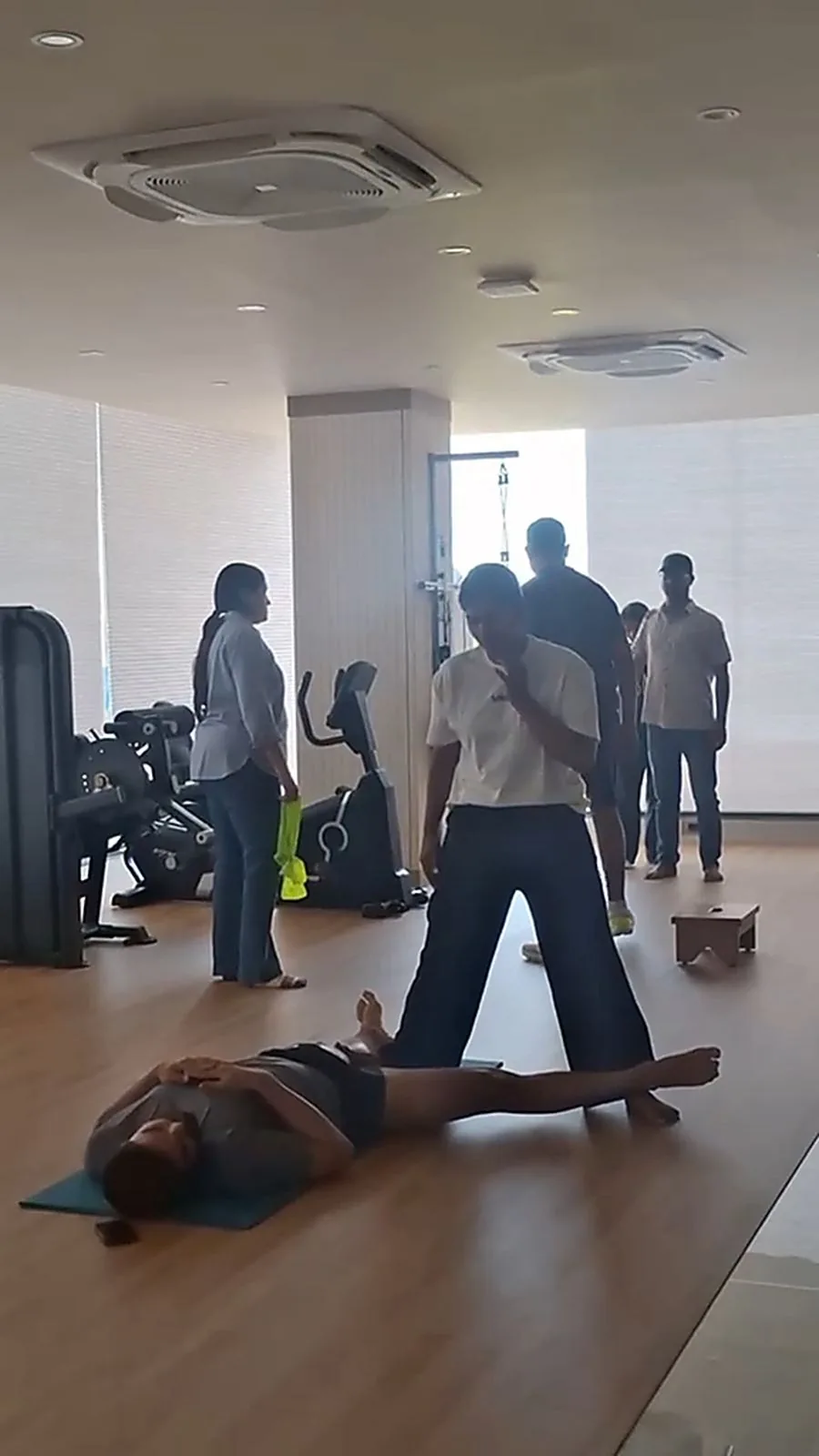
See it in the physiotherapy clinic
Filmed at our centre in Vaishali Nagar, so you can see what the session actually looks like before you book.
Core stability work
Ready for a proper assessment?
Message us on WhatsApp with your main concern and preferred time, and we'll confirm your first visit the same day.
See it explained
Returning to sport too early is the most common reason an injury comes back.
Returning to running after an injury