
Treatment
Dry CuppingTherapy in Jaipur
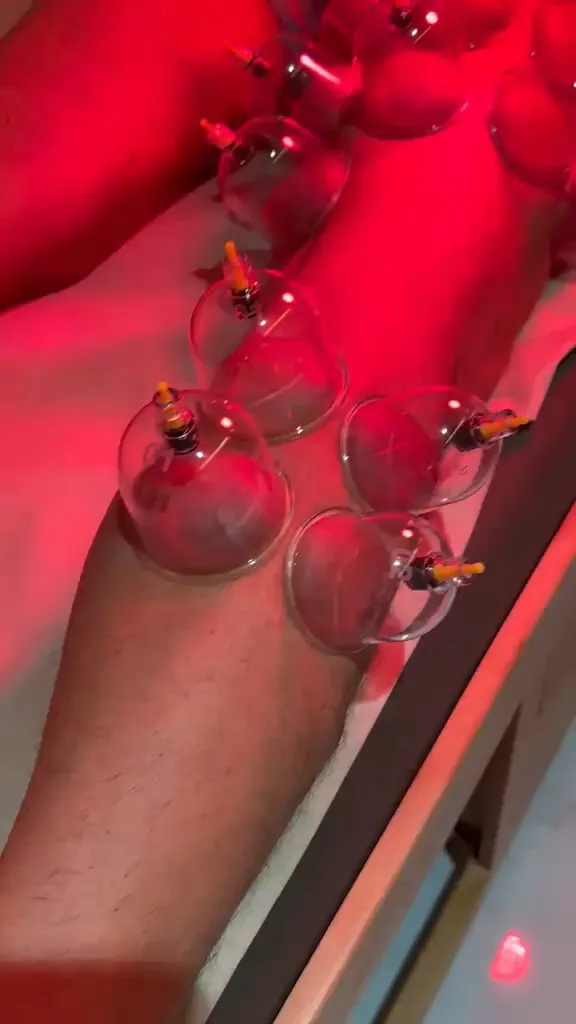
Dry cupping uses a cup placed on the skin with the air drawn out by a hand pump. The vacuum lifts the skin and the tissue just under it into the cup. The skin is not cut and no blood is taken.
At Trivayu Physio Center in Vaishali Nagar, cupping is not something you book on its own. A physiotherapist assesses you first and decides whether cupping is appropriate at all. If it is, it sits alongside manual therapy, myofascial release and the exercises you do at home. If it is not, the physiotherapist will say so and choose something else.
Most people who ask for it here have a neck or a low back that has been tight for months. Those are the two problems where dry cupping has been studied most, and the evidence there is still low quality. That is said on this page in the same words a physiotherapist would use with you in the room.
What's included
- A physiotherapy assessment before any cup is placed, covering your history, your medicines and the area that hurts.
- Dry cupping with valve cups and a hand pump. The skin stays intact and no blood is taken.
- An explanation of the round marks before anything goes on your skin, including how long they usually take to fade.
- A check for the conditions that make cupping unsafe, including bleeding disorders, blood thinning medicine, pacemakers and skin problems over the treatment area.
- Cupping placed inside the rest of your plan: manual therapy, myofascial release, Mulligan Concept mobilisation with movement, kinesiology taping and exercise therapy, all on site.
- Treatment by Dr. Jyoti Choudhary, MPT in Sports and Orthopaedic Physiotherapy, BPT, MIAP, CMT, with 17 years of experience, or by another physiotherapist on the team.
- Consultation in Hindi, English or Rajasthani.
Who it's for
This service suits some people and not others. It is worth a call if you recognise yourself here.
- Adults with muscle tightness or stiffness in the back or neck who are willing to have a full physiotherapy assessment first.
- People with long-standing neck pain or non-specific low back pain, the two conditions where dry cupping has been studied most, and where the evidence is still low quality.
- People whose main complaint is a stiff area with limited movement, where improving range of movement is one of the goals.
- People who want the limits of the treatment explained as well as the possible benefit.
- Cricketers, runners and gym-goers already under treatment for a long-standing muscle complaint. If the problem is soreness after a session, the Post-Workout and Gym Recovery page covers that instead.
- Not used if you have a bleeding disorder such as haemophilia, cancer, kidney, liver or heart failure, or a pacemaker or other implanted electronic device. Tell us anyway, because there is usually another treatment on site that suits you.
- Cupping is generally avoided in pregnancy, and is offered to adults only.
How it works
- Assessment before any cup goes on A physiotherapist takes your history, asks about your medicines and your medical conditions, examines the painful area, and checks the reasons cupping would not be safe for you. Cupping is not a diagnosis. If your pain is new, severe, came after a fall, or comes with numbness, weakness, fever or unexplained weight loss, you will be advised to see a doctor first. Where the problem is a spine complaint rather than a muscle one, the Spine, Back and Neck Care page describes the fuller pathway.
- The cups go on A cup is placed on the skin and the air is drawn out with a hand pump, so the skin and the tissue just under it lift into the cup. The cup is usually left in place for a few minutes. The feeling is normally a firm pull rather than sharp pain. Tell the physiotherapist during the session if the pull feels too strong, and it can be eased or the cup taken off.
- Cupping sits inside a wider session In the same programme the physiotherapist may use manual therapy, myofascial release, Mulligan Concept mobilisation with movement, kinesiology taping, and the exercise therapy you continue at home. Other equipment on site, including Class IV Laser (Photon) and i-TECAR, is used where the assessment calls for it. Everyday function is worked on through the whole programme: one 2025 pooled analysis in BMJ Open found cupping did not significantly improve functional disability.
- The marks, and the days afterwards Round red, purple or brownish marks are expected where the cups sat. They are pooled blood just under the skin, and they usually fade on their own over several days to about two weeks. Some people feel sore, tired or slightly light-headed after a session. Sitting quietly for a few minutes and drinking water helps. Tell the physiotherapist beforehand if you have a wedding, a function or a swim coming up, because the marks show.
- Review, and what happens next Any pain relief from cupping tends to be short-term, so it is planned as a repeated part of a wider programme. Progress is reviewed against what you can do with the affected area, not against the colour of the marks. If cupping is not adding anything, it is dropped from the plan and that time goes to something that is working. Responses differ from one person to the next. Longer-standing pain that needs a broader plan is handled through Pain Management.
Common questions
Does cupping therapy hurt?
Cupping usually feels like a strong pull or tug rather than a sharp pain, though it is not painless for everyone. Nothing is cut and no needle is used in dry cupping. Soreness for a day or two afterwards is common, and a small number of people feel tired or light-headed. Tell the physiotherapist during the session if the pull feels too strong, and it can be eased or taken off.
What are the marks after cupping, and how long do they last?
The round red, purple or brownish marks left by cupping are pooled blood just under the skin. They usually fade on their own over several days to about two weeks. They are not toxins and not bad blood, and the colour does not tell you how ill you are. If you have a wedding, a function or a swim coming up, say so before the session, because the marks show.
What is the difference between dry cupping and hijama?
Dry cupping does not break the skin and no blood is taken. Hijama, also called wet cupping, involves small incisions in the skin and drawing a small amount of blood, so it is a different treatment with different risks. Trivayu Physio Center in Vaishali Nagar, Jaipur uses dry cupping inside physiotherapy plans. It does not offer hijama or wet cupping.
Who cannot have cupping therapy?
Cupping is not used if you have a bleeding disorder such as haemophilia, cancer, kidney, liver or heart failure, or a pacemaker or another implanted electronic device. It is generally avoided in pregnancy, during a fever or active infection, and if you are very anaemic. Tell the physiotherapist if you take blood thinning medicine, or have diabetes, epilepsy or a heart condition. Cups are never placed on broken skin, varicose veins, a known clot or a fracture.
Does cupping therapy work for muscle pain and back pain?
Cupping may help reduce muscle pain and back pain, but the evidence is limited. A 2020 systematic review of dry cupping in the Journal of Bodywork and Movement Therapies (Wood and colleagues, 21 trials, 1,049 people) found low quality evidence of reduced pain in chronic neck pain and non-specific low back pain, and said definitive conclusions could not be drawn. A 2020 review in The Journal of Pain found no significant difference between cupping and fake cupping.
Can I train after cupping therapy?
Yes, you can train after cupping, but expect soreness and round marks for several days, so avoid a session the day before a match or a race. No published review has tested the best timing around training, and one randomised trial in 81 recreational runners found cupping after a run did not improve muscle pain, fatigue or perceived recovery. If you feel light-headed afterwards, sit for a few minutes before driving.
Is cupping therapy part of physiotherapy?
Cupping is used at Trivayu Physio Center in Vaishali Nagar, Jaipur as one part of a physiotherapy plan, alongside manual therapy, myofascial release and exercise therapy, and it is not sold on its own. Cleveland Clinic's patient guidance takes the same position, describing cupping as complementary medicine used in combination with conventional treatment. A physiotherapist assesses you first and decides whether cupping suits your problem at all.
Is cupping therapy safe?
Cupping is generally low risk when a trained practitioner carries it out, and serious complications are uncommon. It does have side effects. Marks, soreness, tiredness and light-headedness are all recognised, and less common risks include skin infection, blistering and scarring. Clean single-patient equipment and correct technique prevent most of these. Anyone with a bleeding disorder, a pacemaker, cancer or organ failure should not have cupping.
Where can I get dry cupping therapy in Vaishali Nagar, Jaipur?
Trivayu Physio Center offers dry cupping at 204, 2nd Floor, Om Tower, Gandhi Path Road, Nemi Nagar, Vaishali Nagar, Jaipur 302021. It is open Monday to Saturday, 8:00am to 8:00pm, and Sunday, 10:00am to 1:00pm. Call or WhatsApp +91 90570 65065 to ask whether cupping suits your problem before booking. Consultations are in Hindi, English and Rajasthani. There are also branches at Vidyadhar Nagar and Rangoli Gardens.
Related conditions
Related treatments
This page is educational and does not replace a proper assessment. Outcomes vary by individual; Trivayu Physio Center makes no guarantee of specific results.
See it in the physiotherapy clinic
Filmed at our centre in Vaishali Nagar, so you can see what the session actually looks like before you book.
Cupping therapy
Ready for a proper assessment?
Cupping is decided at an assessment, not at booking. Message us on WhatsApp with the area that is troubling you and a preferred time.