Knee Pain from Kneeling in Temple Prayers Jaipur
Knee pain from kneeling during temple prayers affects many elderly and adults in Jaipur. Prolonged kneeling on hard floors strains knees. Protective exercises before and after…
Read article

The short answer
Reduce knee swelling at home after injury using the RICE method: Rest, Ice, Compression, Elevation. Rest limits movement, ice shrinks blood vessels to cut fluid, compression applies gentle pressure, and elevation drains fluid by gravity. Focus on ice and elevation in the first days, combined with rest.
Knee swelling follows injury like a twist or fall. It signals inflammation. Fluid builds up, causing pain and stiffness. Home care helps in first days.
RICE method reduces knee swelling at home. It stands for Rest, Ice, Compression, Elevation. Ice and elevation suit home use. They cut inflammation and drain fluid. Combine with rest.
Trivayu Physio Center in Vaishali Nagar and Vidyadhar Nagar treats knee injuries. The team uses advanced tools. Start with home steps, then book assessment.
Knee swelling is extra fluid in or around the joint, called knee effusion. It happens after sprains, impacts, or twists. Ligament strains or minor tears cause it.
Swelling is normal in first 48 hours. It peaks around day two then eases with care.
RICE is standard for knee swelling at home. Rest stops damage. Ice numbs pain and shrinks blood vessels to reduce fluid. Compression limits swelling with gentle pressure.
Focus on ice and elevation at home. Apply RICE in first 48-72 hours. Rest knee by avoiding weight. Use crutches if needed.
Ice lowers inflammation. Never put ice directly on skin. Use thin towel wrap. This prevents frostbite. Physiotherapists teach exact pressure and timing during assessment.
Do while elevating. At Trivayu Physio Center, Class IV High Power Laser Therapy boosts effects. Home ice starts process. Physiotherapist combines ice with ultrasound if effusion thickens. Looking for a Rehabilitation Centre Near Me? Our team in Vaishali Nagar, Jaipur can assess you in person.
Elevation drains fluid by gravity. Lie flat on bed or floor. Prop leg on 2-3 firm pillows. Stack so knee higher than heart.
Do 2-3 hours daily in 30-45 minute sessions. Move toes up-down if comfortable. Switch legs if other knee aches.
For swollen knee home remedy, pair with ankle pumps. Sit in recliner if bed unavailable. Angle back 30 degrees. Place foot on stool higher than chest.
Compression uses light elastic bandage, knee sleeve, or tube sock. Start wrap at foot top. Go up ankle, calf, to below knee. Overlap half width each turn.
Rest means no weight on knee. Sit with leg up on stool. Use crutches or walker if moving house. Place crutch tips 15 cm ahead and out.
For knee effusion reduce, rewrap compression after ice. Remove overnight unless advised. Home users often overtighten; physio demos correct tension.
While elevated, do simple exercises. Improve flow without strain. Start slow. Stop if pain rises above mild ache. Breathe steady. Physiotherapist progresses these based on your strength and range.
Physio customises and watches form. Progress to standing when stable. They use mirror or video for your feedback.
After 48-72 hours, add gentle motion if pain eases below 3/10. Walk short distances on flat ground, 5-10 minutes. Use cane on good side if needed. Read more about our Post-Surgery & Joint Replacement Rehab in Jaipur.
Stay hydrated: drink 2-3 litres water daily. Eat vitamin C foods like oranges, amla, guava, or lemon water. These support tissue repair.
Avoid heat packs, alcohol, running, stairs, deep squats early. Track knee size daily with soft tape around widest point. Measure same spot, same time. Note changes in diary.
For manage knee swelling, gentle pedal bike if available, no resistance. 5 minutes twice daily. Wear knee sleeve during. Physiotherapist clears bike use after checking joint play.
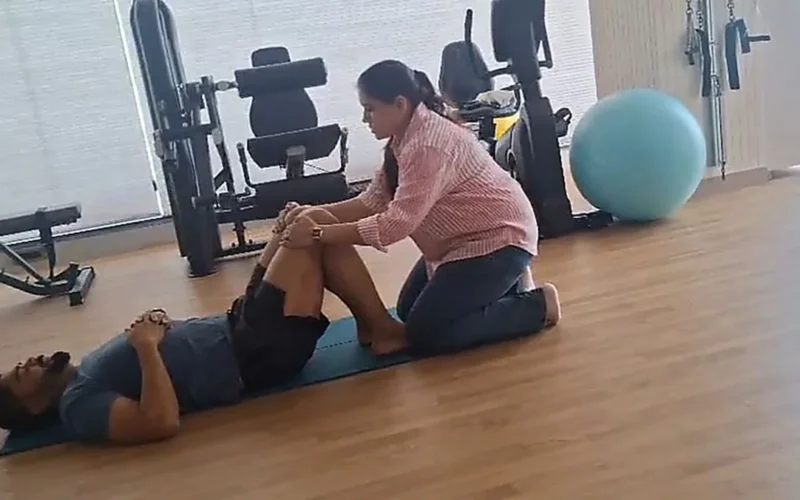
A physiotherapist starts with hands-on check. They feel for fluid type, joint warmth, and tender spots. Test ligament stability with gentle stress. Measure knee bend and straighten angles.
What to expect: 45-minute session. Lie on table. They drain excess fluid manually if safe. Apply electrotherapy like TENS for pain. Teach tape for support. Give home plan with photos. You may also find Knee Ligament Injury Home Management in Jaipur useful.
Follow-up adds TECAR Therapy for deep heat after acute phase. Progress to balance board for knee control. Team tracks weekly girth and pain scores.
Home care suits mild cases. Seek professional if swelling lasts over week, pain worsens, knee wobbly, redness spreads, or fever starts. Trivayu offers sports injury rehab and knee pain care.
Dr. Jyoti Choudhary leads with 17+ years in sports and orthopaedics. Works with Rajasthan Senior Women’s Cricket Team. Dr. Hritika Choudhary handles post-op rehab and electrotherapy.
Services: Advanced Electrotherapy, TECAR Therapy, Robotic Spinal Decompression. Treat knee ligament injury and rehab.
Use RICE: rest knee, ice 15-20 minutes every 2-3 hours, compress gently, elevate above heart. Add ankle pumps and quad sets.
Yes, reduces inflammation first 48-72 hours. Wrap and limit to 20 minutes. Switch to heat later if physio advises.
Ankle pumps, quad sets, gentle leg raises while propped up. Aid drainage and muscle activation.
If swelling persists beyond week, pain grows, movement limits, or instability noted. Book for rehab.
Limit walking. Use crutches if painful. Partial weight later if stable, with cane support.
Varies by injury and care. Mild cases ease in days with RICE. Persistent needs professional care.
RICE plus elevation exercises. Hydrate and track progress daily.
Home steps like RICE manage knee swelling at first. They support recovery but do not fix issues. For full healing, get in-person assessment at Trivayu Physio Center.
Book now via WhatsApp at +91 90570 65065 or call.
Physiotherapy is not the right first step for everything. Seek medical assessment promptly if any of the following apply to you:
If you lose control of your bladder or bowels, develop numbness around the groin, or have chest pain or breathlessness, treat it as an emergency and go to hospital.
I highly recommend Jyoti Ma'am and her team. I first visited her for a ligament injury in my knees, and with her expert treatment and therapies, I made a complete recovery.
Richa Tailang, Google review
This is one patient's own account, published with consent on our reviews page. It describes their experience, not a predicted outcome. Individual results vary.
Knee pain from kneeling during temple prayers affects many elderly and adults in Jaipur. Prolonged kneeling on hard floors strains knees. Protective exercises before and after…
Read articleMany new mothers in Jaipur notice a soft gap in their belly after delivery. This is diastasis recti postpartum. Abdominal muscles separate during pregnancy. Core activation…
Read articleLeg weakness after stroke affects walking and balance. Stroke survivors in Jaipur face this. Home exercises build strength if done safely. Seated exercises start easy. Standing…
Read articleMessage us on WhatsApp with your main concern and preferred time, and we'll confirm your first visit the same day.