Knee pain from kneeling during temple prayers affects many elderly and adults in Jaipur. Prolonged kneeling on hard floors strains knees.
Protective exercises before and after prayers strengthen knees and improve flexibility. Safe kneeling techniques reduce strain.
These methods suit daily temple visits. They prevent knee pain from praying. Start home exercises for knee pain puja protection.
Understanding Knee Pain from Temple Kneeling in Jaipur
Prolonged kneeling during puja causes knee strain. Hard temple floors press on kneecaps.
Causes include direct pressure on knees. Poor posture during prayers adds load. Back pain from prayer posture often accompanies knee issues.
Symptoms are pain under the kneecap. Swelling or stiffness follows. Pain sharpens when standing after puja.
Prayer positions lock joints under weight. Jaipur’s busy temples mean long sessions. Without knee strengthening for kneeling, strain builds.
Protect Knees During Puja: Preparation and Prevention
Prepare body ahead. Weak thighs and hips fail to support knees under load.
Start exercises before regular temple visits. Do daily. Focus on quadriceps, hamstrings and glutes. These stabilise knees when kneeling.
Exercises Before Temple Visit
Do these warm-up exercises at home before temple visits. They prepare knees for kneeling. Practice daily. Each takes 5-10 minutes.
Quadriceps sets: Sit or lie with legs straight. Tighten thigh muscles as if pushing knee down. Hold 5 seconds. Release.
Straight leg raises: Lie on back. Tighten thigh of bottom leg. Lift top leg 6 inches off floor. Keep knee straight. Hold 5 seconds. Lower slowly. Do 10 per leg. Builds knee strength. Targets front thigh.
Seated knee extensions: Sit on chair with feet flat. Straighten one knee fully. Hold 3 seconds at top. Lower slowly. 10 reps per leg. Improves flexibility. Strengthens for lifting from kneel.
Wall sits: Stand against wall with feet shoulder-width. Slide down until knees bend 90 degrees. Thighs parallel to floor. Hold 20 seconds. Stand up. Rest 30 seconds. Repeat 3 times. Strengthens for kneeling endurance.
Glute bridges: Lie on back, knees bent, feet flat. Lift hips by squeezing buttocks. Form straight line from knees to shoulders. Hold 5 seconds. Lower. 10 reps. Supports back and knees in prayer posture.
Side leg lifts: Lie on side. Lift top leg 12 inches straight. Hold 3 seconds. Lower. 10 per side. Strengthens hips to prevent knee wobble when kneeling.
These exercises protect knees during puja. A physiotherapist might add resistance bands later.
Safe Kneeling Techniques Jaipur
Use posture adjustments to avoid knee overload. A physiotherapist teaches these during session.
Place cushion or folded cloth under knees. Cushions hard floors in Jaipur temples. Carry portable knee pad like foam mat 1 cm thick.
Kneel with toes tucked under feet. Distributes weight to feet and shins, not just kneecaps. Avoid pointing toes back.
Keep back straight. Engage core by pulling belly in. Avoid slouching. Sit back on heels occasionally to unload knees.
Alternate legs during long pujas. Rise every 10 minutes. Walk a few steps. Use arms for support when rising.
Use temple benches if available. Or half-kneel with one knee down, one foot flat forward.
For back protection, widen knees slightly. Place hands on thighs to lift chest.
These tips prevent knee strain praying. For elderly, practice rising from kneel at home. Hold chair for balance.
Knee Strengthening for Kneeling
Build strength for prayer positions. Focus on endurance holds. Do these 3 times weekly after warm-up.
Kneeling hold: Kneel on soft mat with toes tucked. Hands on thighs. Hold upright 20 seconds. Rest. Repeat 5 times.
Single leg balance: Stand on one leg, soft knee. Hold 30 seconds. Switch. 3 sets. Mimics shifting weight in puja.
Step-downs: Stand on low step. Step down slowly on one leg, knee over toes. Return. 8 reps per leg.
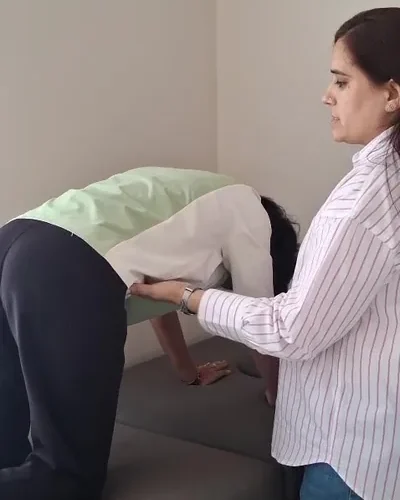
A physiotherapist monitors form. Adjusts for pain level. Combine with back exercises like cat-camel pose.
Back Pain from Prayer Posture
Prayer kneeling causes back pain. Forward lean compresses spine. Weak core fails to hold neutral back.
Prevent with core activation. Bird-dog: On all fours, extend opposite arm and leg. Hold 5 seconds. 8 per side.
During puja, check posture. Imagine string pulling head up. After, child’s pose: Kneel, sit on heels, stretch arms forward.
If back pain persists with knee issues, assessment checks alignment.
Post-Puja Knee Stretches
Cool down post-puja to ease knee pain. These reduce stiffness. Do at home or temple. Hold without bouncing. Breathe deeply.
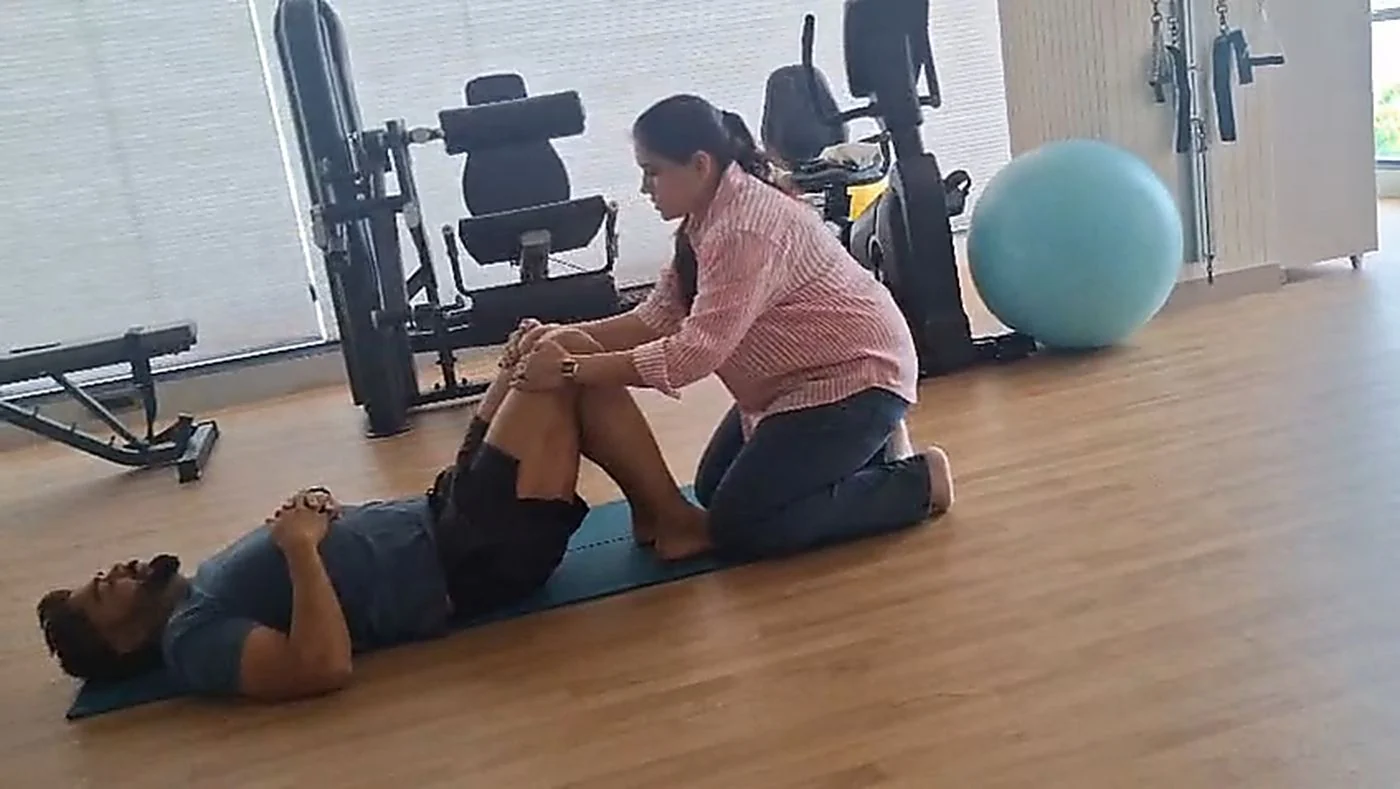
Hamstring stretch: Sit on floor. Extend one leg straight. Bend forward from hips, back straight. Reach towards toes. Hold 20-30 seconds.
Quad stretch: Stand holding wall. Bend one knee back. Hold ankle with same hand. Keep knees together. Pull till stretch in front thigh. Hold 20-30 seconds per side.
Calf stretch: Face wall, hands on it. One foot back, heel down, knee straight. Lean forward. Hold 20-30 seconds. Switch.
Knee circles: Stand feet apart, hands on hips. Bend knees slightly. Circle knees clockwise 10 times, then anti-clockwise. Loosens joints.
Seated figure-four: Sit. Cross one ankle over opposite knee. Press crossed knee down. Hold 20 seconds. Switch.
Post-puja stretches build resilience for temple visits. Do full sequence in 10 minutes.
Physiotherapy is not the right first step for everything. Seek medical assessment promptly if any of the following apply to you:
Pain following a significant fall, road accident or other major injury
Fever, chills or feeling generally unwell alongside the pain
Weakness that is getting worse, or numbness that is spreading
If you lose control of your bladder or bowels, develop numbness around the groin, or have chest pain or breathlessness, treat it as an emergency and go to hospital.
Safety limits and when this does not apply
Any exercise that sharply increases your pain, or leaves it raised the following morning, is too much for now.
Electrotherapy and laser therapy have their own restrictions, including pacemakers, pregnancy and treatment over a known tumour. Your physiotherapist screens for these before use.
This article is general information. It is not an assessment of your problem, and it cannot account for your medical history, medication or imaging.
A patient's experience
Truly thankful to Dr. Jyoti Choudhary and the entire team of Trivayu Physio Centre for their genuine care, humble behaviour, and excellent treatment.
Mahesh Dhaka, Google review
This is one patient's own account, published with consent on our reviews page. It describes their experience, not a predicted outcome. Individual results vary.
Evidence. Guidance on musculoskeletal pain here follows the 3 sources listed under References above.
Clinical experience. Practical points on what tends to help in the clinic reflect the experience of the Trivayu physiotherapy team in Vaishali Nagar, Jaipur, and are not the same as trial evidence.
Opinion. Where we suggest a preference or an approach, that is our clinical judgement. Other qualified clinicians may reasonably differ.
Many new mothers in Jaipur notice a soft gap in their belly after delivery. This is diastasis recti postpartum. Abdominal muscles separate during pregnancy. Core activation…
Leg weakness after stroke affects walking and balance. Stroke survivors in Jaipur face this. Home exercises build strength if done safely. Seated exercises start easy. Standing…