Knee Pain from Kneeling in Temple Prayers Jaipur
Knee pain from kneeling during temple prayers affects many elderly and adults in Jaipur. Prolonged kneeling on hard floors strains knees. Protective exercises before and after…
Read article
Leg weakness after stroke affects walking and balance. Stroke survivors in Jaipur face this. Home exercises build strength if done safely.
Seated exercises start easy. Standing moves follow to improve power and stability. Check with a physiotherapist first.
These target post-stroke rehab. They suit survivors and caregivers. Follow steps closely. Caregivers can guide seated and standing exercises.
Stroke damages brain areas controlling muscles. This causes leg weakness on one side. Weak legs hinder standing or walking.
Building leg strength aids recovery. Stronger muscles improve balance and movement. It helps prevent falls.
See a physiotherapist before home exercises. They tailor a plan.
Post-stroke rehab starts in clinic then moves home. Physiotherapists focus on weak leg first.
For leg weakness recovery, expect graded steps. Week one: seated only. Later: standing with support.
Caregiver role grows here. They learn cues like “push through heel” during sessions. This carries to home for steady progress.
Seated exercises fit early recovery. They lower fall risk while building muscle. No standing needed. They suit poor balance.
These target thigh front and back, calves, and ankles. They improve blood flow and joint movement.
Safety: Sit in firm chair with back support. Feet flat on floor. Breathe steadily. Progress to standing when easy.
Do 2-3 times a day. Start 5-10 repeats per leg. Build slowly. Stop if pain. Rest 30-60 seconds between sets.
Breathe out on effort. Rest between sets. Caregivers, count and check form. Note if weak leg lifts less.
Start after seated feel easy. Use chair support. Focus on balance. These aid leg power and standing balance.
Build near wall if needed. Stand tall, knees soft. Eyes ahead. Do weak leg first. If knee buckles, sit and retry.
Do 5-8 repeats. Increase as strength grows. Stand tall, eyes forward. Caregivers: Place hand on hip for steady.
Balance work follows strength. Poor balance from weak legs raises fall risk. Physiotherapists test by timing one-leg stand.
Home versions: Hold chair, shift weight side to side. Progress to no hands. Tandem stand: heel to toe like tightrope.
Do after strength sets. Stop if sway heavy.
Combine seated and standing. Seated first if weak. Total 10-20 minutes daily. Split sessions if tired.
Warm up: Ankle pumps 20 times each way. Main: 2 rounds seated (all four), rest 1 minute, then 2 standing if ready.
Physio approach: Match your level. If one side drags, do extra weak leg. Add holds for control.
Caregiver guide: Stand beside weak side. Say “lift higher, knee straight.” Help if slip.
Caregivers make home safe. Learn in clinic first. Key: watch form, not push hard.
For seated: Sit opposite, mirror moves. Touch knee to guide lift. For standing: Behind, hands ready at hips.
Daily check: Skin red spots? Leg swollen? Breathing ok? Adjust chair height so feet flat. Non-slip mat under. Hydrate after.
Clinic check: Leg strength test (push against hand), one-leg balance time, gait analysis (walk observed).
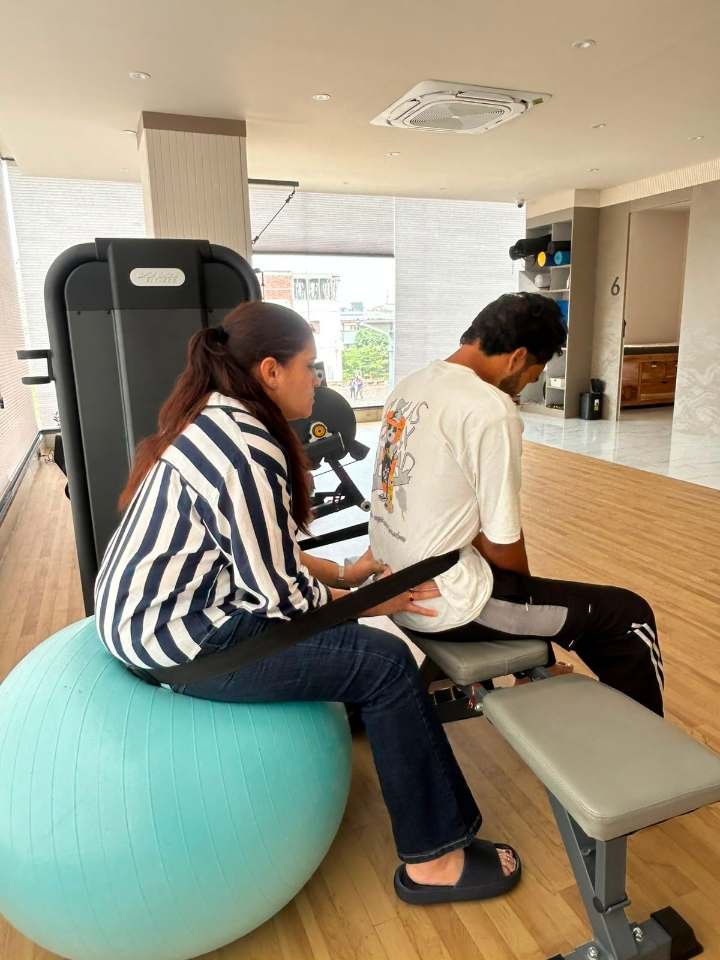
Plan: Manual therapy for tight muscles (gentle stretches). Clinical Pilates for control (seated ball work). Exercise therapy matching home.
Sessions build on home work. 30-45 minutes. Home visits check setup, form live. Online reviews video form.
Practice 10-15 minutes daily. Track repeats, leg feel, walking distance. Use notebook.
Warning signs: More weakness, numbness, falls, headache, vision change, chest pain. Seek doctor first, then physio.
Team handles neuro rehab. Dr. Ajit Choudhary leads post-stroke care. Support with exercise therapy.
Use manual therapy, clinical Pilates, exercise therapy. Home visits, online consultations. Tailored for leg weakness.
Hours: Mon-Sat 8am-8pm, Sun 10am-1pm. 204, 2nd Floor, Om Tower, Gandhi Path Road, Nemi Nagar, Vaishali Nagar, Jaipur 302021.
Knee extensions, ankle pumps, heel slides, seated marches. Build strength without standing. Start low repeats. Physiotherapist cues: thigh squeeze, toes up.
Daily, 10-15 minutes after seated easy. Chair hold. Build repeats slow.
Yes, support recovery when guided. Pair with physio assessment. Start seated for safety.
Before start, no progress after 2 weeks, pain, or balance drop. In-person for safe plans.
Yes, falls or strain if wrong form. Use support, stop for signs. Caregivers spot.
Sturdy chair with arms, non-slip floor. No special tools. Theraband later if physio says.
Guide form “knee straight,” count repeats, spot balance. Encourage, log progress. Learn cues in clinic.
These aid leg strength recovery. Stay consistent. Book assessment. WhatsApp or call +91 90570 65065 at Trivayu.
Physiotherapy is not the right first step for everything. Seek medical assessment promptly if any of the following apply to you:
If you lose control of your bladder or bowels, develop numbness around the groin, or have chest pain or breathlessness, treat it as an emergency and go to hospital.
Truly thankful to Dr. Jyoti Choudhary and the entire team of Trivayu Physio Centre for their genuine care, humble behaviour, and excellent treatment.
Mahesh Dhaka, Google review
This is one patient's own account, published with consent on our reviews page. It describes their experience, not a predicted outcome. Individual results vary.
Knee pain from kneeling during temple prayers affects many elderly and adults in Jaipur. Prolonged kneeling on hard floors strains knees. Protective exercises before and after…
Read articleMany new mothers in Jaipur notice a soft gap in their belly after delivery. This is diastasis recti postpartum. Abdominal muscles separate during pregnancy. Core activation…
Read articleHip bursitis causes pain on the outer side of your hip. It happens when the bursa sac there gets inflamed. This is common in active women…
Read articleMessage us on WhatsApp with your main concern and preferred time, and we'll confirm your first visit the same day.