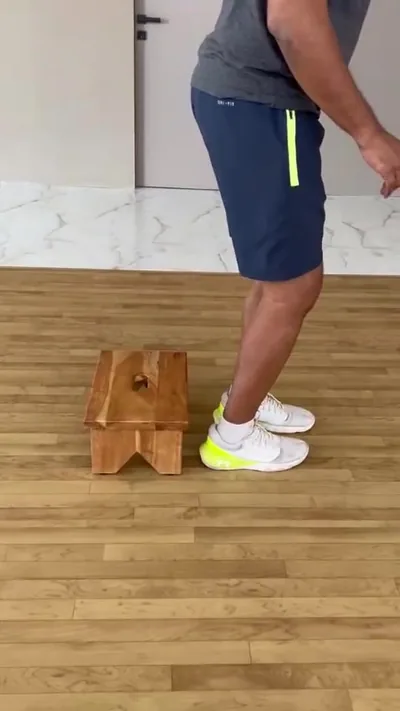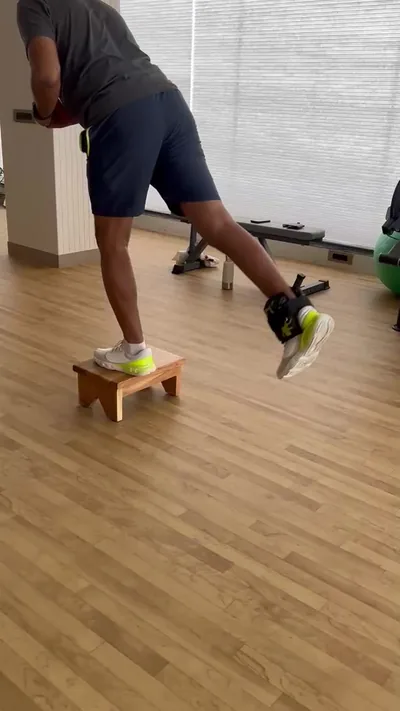
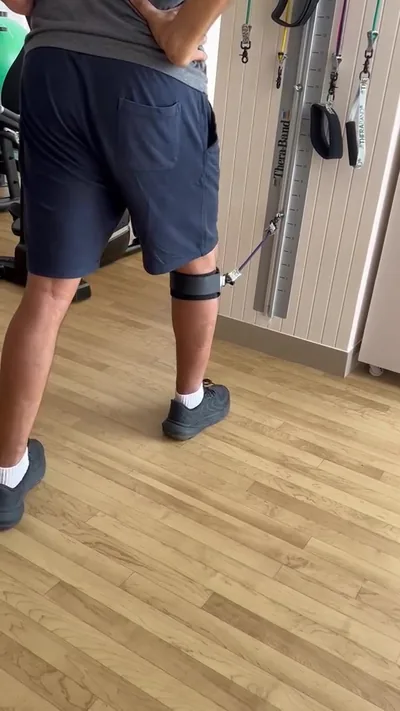
Backward Walking in ACL Rehab Phase 2
Backward walking helps athletes recover from ACL injuries. It builds knee stability in Phase 2 of rehab. This exercise targets quadriceps and improves control after surgery…
Read article

Meniscus repair surgery fixes a tear in the knee’s C-shaped cartilage. After surgery, you use crutches and avoid putting weight on the knee. This protects the stitches in the meniscus while it heals. Week 2 often marks the start of partial weight bearing. A physiotherapist assesses your knee before increasing load.
Progressive loading builds strength gradually. Begin with toe-touch, where you touch your toe to the floor without weight. Move to partial weight as your physio approves. This controlled approach supports healing without stress on the repair. Full progression depends on your knee’s response, with physio checking knee bend range, muscle activation and walking pattern each time.
In Jaipur clinics, physiotherapists guide this with hands-on checks like testing knee stability in different positions and watching your gait closely before advancing.
The meniscus cushions between thigh and shin bones. Repair uses stitches or sutures to hold the torn edges together. Early weight bearing risks pulling the repair apart. Week 2 focuses on safe progression with careful steps.
Your surgeon sets initial limits, often no weight for 1-2 weeks. Then partial, where you take part of your weight using crutches. A physio tests your knee’s readiness with simple checks like straight leg raise, squat control and side-to-side stability.
Week 2 after meniscus repair, your physio checks knee bend, swelling and pain levels first. If stable with no redness or warmth, start partial weight bearing. Use two crutches. Put your foot down flat. Take as much weight as you can without limping, pain increase or knee buckling.
Progress by small steps. Day 1: toe touch 10 times, 3 times a day. Use both crutches. Walk short distances only, like 20-30 metres at a time. Ice after each session for 15 minutes, then elevate the leg above heart level for 20 minutes. Track your knee’s response daily with notes on pain, swelling and distance covered. Looking for a Rehabilitation Centre Near Me? Our team in Vaishali Nagar, Jaipur can assess you in person.
Watch for signs to stop: new sharp pain, more swelling, giving way or clicking. These mean stop immediately, rest fully and contact your physio the next day. Do not push through discomfort – it risks re-injury to the repair site.
Exercises build quad and calf strength for safe loading. Do 2-3 sets of 10 reps, 2-3 times a day. Stop if pain rises above mild discomfort. Breathe steadily during each rep.
Ask your physio to check your form in person. They adjust based on your specific repair type, like inside or outside meniscus, and your leg alignment.
After week 2, if stable with partial weight walking 100 metres without issues, increase to full weight bearing. Start with one crutch on the other side. Walk 10 minutes at a time, 3 times a day on flat ground. Add walking practice: walk 50 metres steadily, rest 10 minutes with ice, repeat 3 times. Focus on even steps and upright posture. More on Ankle Pain Treatment and how we assess it.
Week 3 introduces single leg balance: stand on both feet first, then shift weight to the operated leg for 20 seconds with support, eyes open, progressing to eyes closed if steady. This builds proprioception, or knee position sense, key for safe movement.
Physios use Orthopaedic Rehabilitation to guide this phase, matching exercises to your knee’s current strength and range.
Across all stages, avoid twisting the knee, deep squats below 90 degrees, or stairs without holding rail and going slowly. Wear a hinged brace if your surgeon advised it – lock it straight when walking if needed. Ice 15 minutes after any activity, 3-4 times a day. Elevate leg above waist level when resting. Avoid crossing legs or sitting with knee bent too long.
Red flags needing doctor check same day: sharp calf pain, redness or heat in calf, sudden swelling increase, fever above normal, or knee locking. These could signal clot or infection.
Common errors to avoid: skipping crutches too soon, walking long distances without rest, ignoring subtle swelling, forcing full bend, or uneven weight distribution that stresses one side.
Week 1: Non-weight bearing, basic quad sets, heel slides, ankle pumps. Twice daily sessions of 20 minutes.
Week 2: Partial weight with two crutches, add heel raises and knee glides, short supported walks. Physio adds Electrotherapy like TENS or interferential to ease pain and cut swelling response. You may also find Meniscus Repair Weight Bearing from Toe-Touch to Full useful.
Weeks 3-4: Full weight with one crutch, add single leg balance, progress walks to 15 minutes. Introduce gentle Manual Therapy to release tight hamstrings or IT band around the knee.
Weeks 5-6: Stationary bike with low resistance if bend reaches 90 degrees, mini squats to 30 degrees with support. Physio assesses gait fully before clearing stairs.
Weeks 7+: Build to normal walking distance, add step-ups. Full programme needs weekly physio checks for swelling, strength and bend angle.
Physios tailor the plan to your exact surgery, leg strength and daily needs. They watch your walk pattern, test knee strength with manual resistance, measure bend and extension angles, and spot imbalances early. This prevents common pitfalls like favouring the good leg, which worsens recovery.
After initial weeks, rehab shifts to function. Week 8+: Add controlled squats to 45 degrees, step-downs from a 10 cm box, and balance on uneven surface like foam. Progress walking to 30 minutes daily, then add inclines. Physio tracks progress with simple tests like timed walk or hop test when appropriate. Full return to sports or stairs takes many months, guided step-by-step.
Local clinics offer this structured rehab. Book an in-person assessment for your knee specifics – do not follow general advice alone.
Around week 2 if physio clears it after checking swelling, pain and stability. Start with toe touch using two crutches.
Quad sets, seated knee glides, double heel raises, ankle pumps – all non-painful, supervised first.
When partial weight walking shows no limp, swelling or pain, typically week 3-4 with one crutch.
Always get personal guidance for best results. Recovery pace varies by tear size and your starting fitness.
“`
*(Word count: 1252)*
Physiotherapy is not the right first step for everything. Seek medical assessment promptly if any of the following apply to you:
If you lose control of your bladder or bowels, develop numbness around the groin, or have chest pain or breathlessness, treat it as an emergency and go to hospital.
Truly thankful to Dr. Jyoti Choudhary and the entire team of Trivayu Physio Centre for their genuine care, humble behaviour, and excellent treatment.
Mahesh Dhaka, Google review
This is one patient's own account, published with consent on our reviews page. It describes their experience, not a predicted outcome. Individual results vary.
Backward walking helps athletes recover from ACL injuries. It builds knee stability in Phase 2 of rehab. This exercise targets quadriceps and improves control after surgery…
Read articleAfter ACL surgery, rebuilding knee strength takes time and care. ACL rehabilitation phases guide this process step by step. Phase 1 protects the graft and cuts…
Read articleAfter hip replacement surgery, dressing your lower body safely helps build independence. By week 6 of hip replacement recovery, many patients aim to dress without help.…
Read articleMessage us on WhatsApp with your main concern and preferred time, and we'll confirm your first visit the same day.