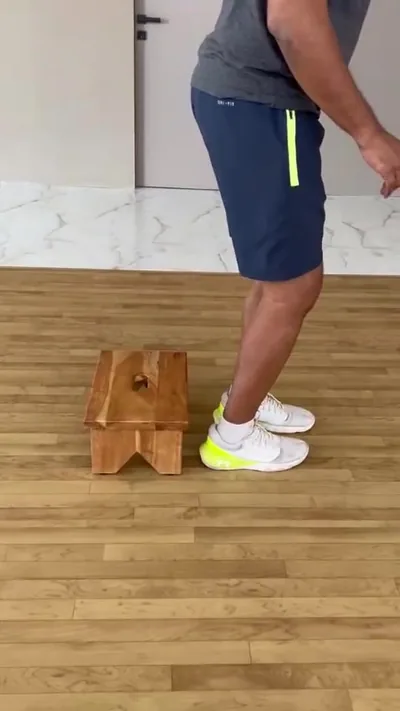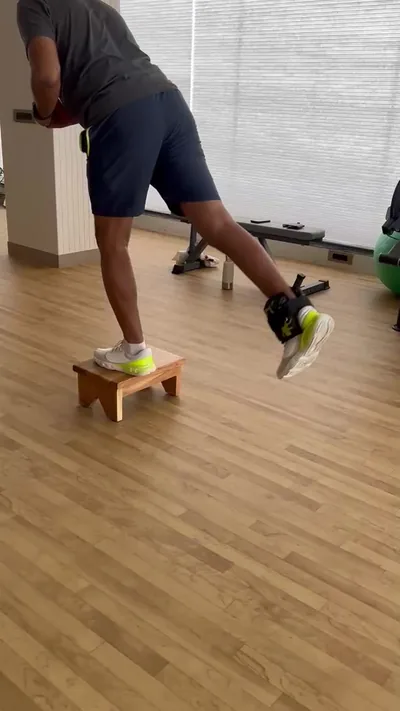
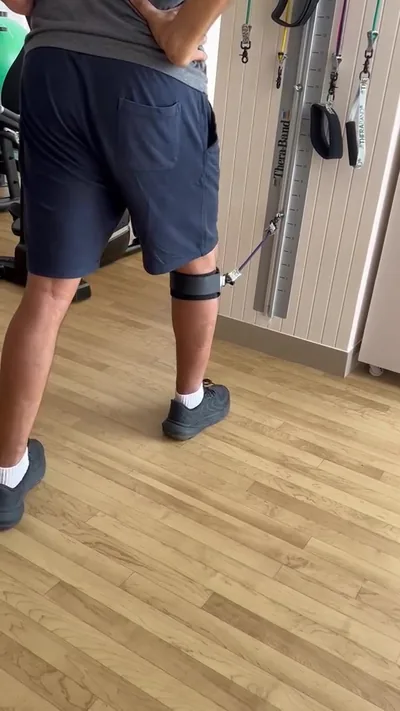
Backward Walking in ACL Rehab Phase 2
Backward walking helps athletes recover from ACL injuries. It builds knee stability in Phase 2 of rehab. This exercise targets quadriceps and improves control after surgery…
Read article

Meniscus repair fixes a tear in the knee’s C-shaped cartilage. It cushions the joint between thigh and shin bones. After surgery, weight bearing starts limited to protect the repair. Follow your surgeon’s plan. For safe steps, get physio guidance at Trivya Physiotherapy Center in Vaishali Nagar or Vidyadhar Nagar, Jaipur.
After surgery, the knee needs careful loading. Weight bearing means how much body weight the knee can take without risking the repair. Start with toe-touch to avoid stress. Physio checks stability, swelling, and pain. Cartilage has poor blood supply, especially inner white zone. Outer red zone heals better. Do not push ahead alone. A physiotherapist assesses your knee’s response to load, using touch and movement tests. They watch how the kneecap tracks and if muscles fire properly. This guides safe advance from crutches to normal walking.
Meniscus repair happens in stages matched to healing. Week 0-6 focuses on protection while inflammation settles. The repair site forms scar tissue slowly due to limited blood flow. Weeks 6-12 build strength as tissue firms. Months 3-6 add control for twists and turns. Full healing takes months, varying by tear location, your age, and activity level. Inner tears heal slowest. Physios track progress with tests like single-leg squat or hop. If pain or giving way persists, they check for issues like scar tightness or muscle gaps. Expect gradual milestones: pain-free bend to 90 degrees by week 6, straight walking by week 8-10.
Use two crutches. Keep knee straight or to allowed flexion, often 0-90 degrees. Elevate above heart level when sitting. Ice 15-20 min every 2 hours while awake. Compression wrap helps control swelling; loosen if numb.
Phase 1 exercises: ankle pumps (point and flex foot 10-20 times hourly to boost calf blood flow), quad sets (tighten front thigh muscle, hold 5 seconds, 10 times hourly to wake quads), heel slides if cleared (slide heel towards bottom, bend to 30-45 degrees, 10 reps 3 times a day). Manual Therapy reduces stiffness through gentle joint mobilisations. Watch for swelling, redness, fever, or calf pain – signs of clot or infection. Contact doctor at once. Trivya teaches crutch use, gait patterns, and home setup to avoid falls. Expect daily physio visits or home sessions in early days for wound care and basic moves. Looking for a Rehabilitation Centre Near Me? Our team in Vaishali Nagar, Jaipur can assess you in person.
No twisting, pivoting, or side steps. Use mirror to check even weight on both legs. Advance only if swelling stays low and pain below 3/10.
Exercises: straight leg raises (tighten quad first, lift leg 6 inches off bed, hold 3 seconds, 10 reps 3 sets, twice daily), heel prop (rest heel on towel roll, let knee straighten fully 10 minutes 3 times a day), stationary bike (high seat so knee barely bends, no resistance, 10-15 minutes daily), seated knee extensions (hang weight at ankle if cleared, 10 reps 2 sets). Electrotherapy cuts pain and swelling with tools like TENS or ultrasound. Track pain on 0-10 scale before and after activity. Avoid limping by focusing on full knee stretch. Physio adds balance on stable surfaces and checks brace fit if needed.
Full weight on flat surfaces if stable, no limp, and good muscle control. Ditch crutches when walking 50m without pain or wobble. Orthopaedic Rehabilitation builds for stairs, uneven ground, and daily tasks like squatting to pick items. Test readiness with 10 single-leg stands per side.
Exercises: mini squats to 30 degrees (feet shoulder-width, lower until shins vertical, 10 reps 3 sets), step-ups on 10-15 cm box (lead with operated leg up, down with other, 8-10 reps 2 sets), single-leg balance 30 seconds eyes open then closed. Warm up with moist heat pack 10 minutes. Avoid deep squats, lunges, or quick direction changes until cleared, often after 4-6 months when physio confirms strength symmetry.
Phase 1: Quad sets (tighten thigh 10 times per hour), ankle pumps (20 times per hour), heel slides (10 reps 3 times a day if cleared). Add glute squeezes (clench buttocks 10 times hourly). More on Ankle Pain Treatment and how we assess it.
Phase 2: Straight leg raises (10 reps 3 sets twice a day), stationary bike 10-15 minutes daily, seated calf raises (10 reps 3 sets). Progress to prone hamstring curls if no pain.
Phase 3: Wall squats (hold 10 seconds, 10 reps 3 sets), step-downs from 15 cm (8 reps per leg), bike with low resistance 20 minutes. By 3 months if stable, add leg press (light weight, full range), Nordic hamstring lowers (partner assist, slow lower). Always start with 5-minute walk warm-up. Do 2-3 sessions daily, rest if sore next day.
Wear supportive shoes with good arch and cushion. Build hip strength too – clamshells and bridges prevent knee collapse. If pain persists beyond expected, get re-assessed; could be inflammation, poor patella tracking, or quad weakness.
Physios follow a structured path: protect repair first, then restore range, strength, balance, speed. They use hands-on checks for joint play and muscle tone. Progress depends on your input – report swelling after walks or clicks on bends. Home program includes twice-daily exercises plus walking logs. Weekly reviews adjust load: if quad lag shows on straight leg raise, add more sets. For Jaipur’s uneven roads, early stair and ramp practice matters. Home visits suit early weeks when driving hurts. You may also find Meniscus Repair Weight Bearing Timeline in Jaipur useful.
Every knee differs – tear size, surgery type (repair vs trim), and your fitness change the plan. Physio tailors it, spots issues like weak VMO (inner quad) or tight IT band early. Dr. Jyoti Choudhary (17+ years in orthopaedics and sports) and Dr. Hritashi Choudhary (electrotherapy specialist) oversee care. Two locations: Vaishali Nagar (airport road) and Vidyadhar Nagar (near highways). Home visits for early post-op when mobility limits travel.
Basic walking by 6 weeks, sports or heavy work 3-12 months depending on tear and rehab adherence. Physio speeds safe progress without setbacks.
Non-operated leg: 1-2 days if pain-free and off strong meds. Operated leg: wait for full weight bearing, 90-degree bend, and quick brake test – usually 4-6 weeks. Check with doctor and insurer.
Stop activity, apply RICE (rest, ice, compression, elevation) for 48 hours, see physio. Could mean overload, fluid buildup, or too-fast advance.
Phase 1: no stairs, use elevator. Phase 2: one at a time, good leg up first, operated leg down. Use rail. Phase 3: normal pattern if pain-free and stable.
With proper rehab, many regain prior function for daily life and sports, but cartilage changes mean compensation through stronger muscles. Focus on balanced strength around knee, hip, core.
Book an in-person assessment at Trivya Physiotherapy Center in Vaishali Nagar or Vidyadhar Nagar, Jaipur. WhatsApp or call +91 90570 65065 for your safe weight bearing plan.
Physiotherapy is not the right first step for everything. Seek medical assessment promptly if any of the following apply to you:
If you lose control of your bladder or bowels, develop numbness around the groin, or have chest pain or breathlessness, treat it as an emergency and go to hospital.
Truly thankful to Dr. Jyoti Choudhary and the entire team of Trivayu Physio Centre for their genuine care, humble behaviour, and excellent treatment.
Mahesh Dhaka, Google review
This is one patient's own account, published with consent on our reviews page. It describes their experience, not a predicted outcome. Individual results vary.
Backward walking helps athletes recover from ACL injuries. It builds knee stability in Phase 2 of rehab. This exercise targets quadriceps and improves control after surgery…
Read articleAfter ACL surgery, rebuilding knee strength takes time and care. ACL rehabilitation phases guide this process step by step. Phase 1 protects the graft and cuts…
Read articleAfter hip replacement surgery, dressing your lower body safely helps build independence. By week 6 of hip replacement recovery, many patients aim to dress without help.…
Read articleMessage us on WhatsApp with your main concern and preferred time, and we'll confirm your first visit the same day.