Knee Pain from Kneeling in Temple Prayers Jaipur
Knee pain from kneeling during temple prayers affects many elderly and adults in Jaipur. Prolonged kneeling on hard floors strains knees. Protective exercises before and after…
Read article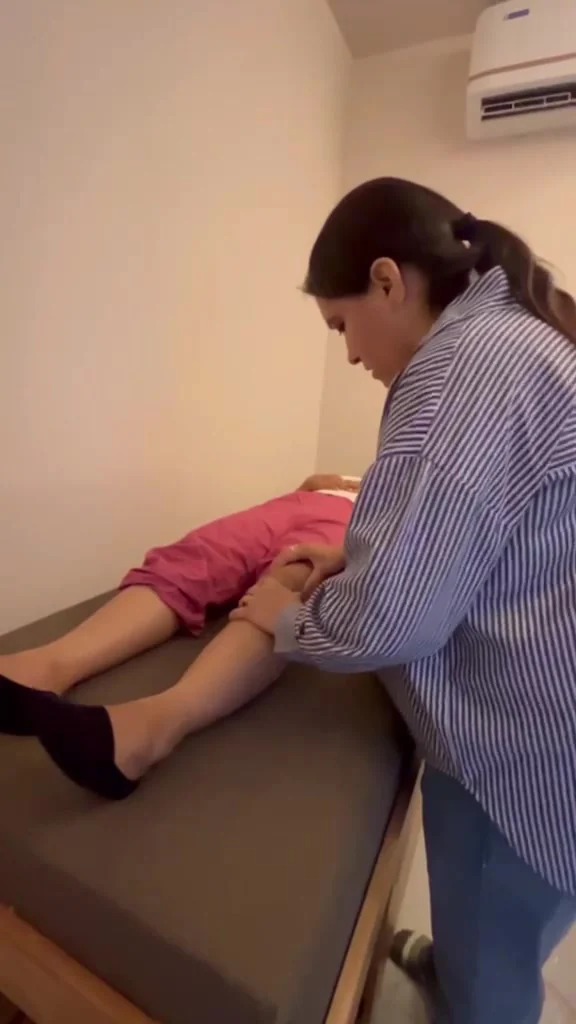
The short answer
Squatting in Indian toilets stresses knees by bending them past 90 degrees, straining joints, ligaments and muscles. Weak quadriceps and hamstrings fail to support, worsened by poor posture and narrow spaces in Jaipur toilets. Physiotherapy assesses causes and provides safe strengthening exercises.
Squatting in Indian toilets stresses knees. Many in Jaipur feel pain during or after.
Build knee strength with exercises. Use good posture. Physiotherapy helps.
Start gently. Progress slowly. See a physiotherapist for safe strengthening.
Deep squats bend knees past 90 degrees. This stresses joints, ligaments, muscles.
Weak quadriceps and hamstrings fail to support. Poor posture adds uneven pressure. Jaipur residents squat often for toilet, cooking, cleaning.
Common causes:
Sciatica or back issues can worsen it. Assessment finds root cause. Physiotherapists check muscle balance, joint range, movement.
In Indian toilets, narrow space forces tight squat. Feet slip on wet floors. No handholds add balance strain.
Start pain-free. Do 2-3 sets of 8-12 repeats, 3 times a week. Stop if pain increases.
Physiotherapist assesses squat depth without pain, tailors exercises. They measure thigh strength with hand-held device.
Add bands for resistance later. Trivayu uses exercise therapy and clinical pilates with feedback. In sessions, therapists spot form live.
Feet shoulder-width, slightly out. Weight on heels. Push hips back first. Knees over toes. Engage core, chest up.
Avoid knees forward or inward, heels up. Practice shallow against wall. Trivayu uses mirrors, video for correction.
For Indian squat, widen stance more. Toes point out 15-30 degrees. This tracks knees outward.
Needs strong ankles, knees, hips. Start ankle mobility: sit on heels or towel under ankles.
Full squat: feet flat, knees wide, hands on knees. Build from assisted: hold door frame.
Daily: 10 mini squats morning, wall sit evening.
Foam roll thighs 1-2 minutes per leg if stiff. Roll from hip to knee, pause on tight spots.
Progress to squat holds: 10 seconds at comfortable depth. Add arm circles for balance. This preps cooking or cleaning squats.
Prep: 5 leg swings per leg. Swing forward-back, side-side. Loosens hips.
In toilet: lower one side first, hands on knees push out. Heels down or stool under heels 5 cm.
After: stand slowly, shake legs. Ice 10 minutes if sore. Alternate raised seat days.
Assisted: sit low stool, stand repeatedly. Do 5-10 rises before toilet. Trivayu demos toilet practice with padded squat frame.
If pain sharp on descend, use side grab rail. Turn body sideways first. This shifts weight off bad knee.
Class IV laser reduces inflammation. TECAR boosts healing. Robotic spinal decompression for back.
Electrotherapy calms pain. Dry needling releases muscles. Manual therapy improves joints. Myofascial release for tissue.
First visit: check squat form, measure knee bend, strength. Mix hands-on, exercises, home plan.
Dr. Jyoti Choudhary leads knee care. Dr. Hritika Choudhary post-op. Dr. Ishu Sharma exercise therapy.
Clinical pilates for stability. Home visits, online. At Vaishali Nagar, Vidyadhar Nagar.
Week 1: mini squats, wall sits, 2 sets. Add ankle rolls. Week 2: add bridges, leg raises.
Track squat depth weekly: mark wall at thigh height. Pair with 20 min walk.
Physio adjusts. Stop if sharp pain. If plateau, add single-leg wall sit: one foot off floor.
Morning routine: 5 leg swings, 10 calf raises, 5 mini squats. Evening: foam roll, wall sit.
Toilet use 5-10 times daily strains weak knees.
During: place small stool forward for toes. Feet further forward reduces knee bend.
If pain persists mornings, stiff calves culprit. Calf stretch: wall lean, one leg back, heel down 30 seconds.
Build tolerance: practice toilet squat outside, timed holds. Use mirror to check heels down, knees out.
Indian squat demands ankle dorsiflexion: shin over foot. Test: kneel, see if knee passes toes without heel lift.
Safe exercise: seated calf stretch with band. Loop band on forefoot, pull toes back gently. Hold 20 seconds.
Quad stretch lying: side lie, top heel to buttock, hold knee back. Balances front thigh tightness.
Hip opener: pigeon pose modified: front shin across, back leg straight. Eases hip flexors for deeper squat.
Trivayu therapists sequence these before strength work. They ensure no knee twinge.
Cooking on low chulha or cleaning floor repeats toilet stress. Fix: squat with rolled towel under heels. Builds to barefoot.
Wide stance for stability. Elbows inside knees, push out. Like prayer pose down.
If knees grind, shallow squat only. Rise fully between reps to reset.
See physio if pain over two weeks, swelling, instability, locking, night pain, or limits stairs.
Trivayu Physio Center, 204, 2nd Floor, Om Tower, Gandhi Path Road, Nemi Nagar, Vaishali Nagar, Jaipur.
Monday-Saturday 8am-8pm, Sunday 10am-1pm. Also Rangoli Gardens, Vidyadhar Nagar. Call +91 90570 65065 or WhatsApp.
Wall sits, leg raises, bridges, mini squats. Ankle work first. Progress slowly. Physiotherapy guides form.
Mini squats, step-ups, glute bridges, straight leg raises, calf raises. Daily if pain-free. Add mobility.
Weak muscles, poor posture, joint stress, tight ankles. Daily use worsens without build-up.
Improves strength, stability, form. Needs assessment to match your needs.
Mini squats, wall sits, assisted. Shallow depth, good form, heel weight.
If persists, swells, affects walking or sleep. Book at Trivayu for check.
Stool under heels, hands push knees out, lower sideways. Prep with swings.
Knee pain fades with exercises, posture, professional help. Recovery varies. Practice daily. Consistent work builds lasting strength for Indian lifestyle squats.
Book at Trivayu Physio Center. WhatsApp https://wa.me/919057065065 or call +91 90570 65065.
Physiotherapy is not the right first step for everything. Seek medical assessment promptly if any of the following apply to you:
If you lose control of your bladder or bowels, develop numbness around the groin, or have chest pain or breathlessness, treat it as an emergency and go to hospital.
I highly recommend Jyoti Ma'am and her team. I first visited her for a ligament injury in my knees, and with her expert treatment and therapies, I made a complete recovery.
Richa Tailang, Google review
This is one patient's own account, published with consent on our reviews page. It describes their experience, not a predicted outcome. Individual results vary.
Knee pain from kneeling during temple prayers affects many elderly and adults in Jaipur. Prolonged kneeling on hard floors strains knees. Protective exercises before and after…
Read articleMany new mothers in Jaipur notice a soft gap in their belly after delivery. This is diastasis recti postpartum. Abdominal muscles separate during pregnancy. Core activation…
Read articleLeg weakness after stroke affects walking and balance. Stroke survivors in Jaipur face this. Home exercises build strength if done safely. Seated exercises start easy. Standing…
Read articleMessage us on WhatsApp with your main concern and preferred time, and we'll confirm your first visit the same day.