Skip to content

Home / Research Journal / Hip Replacement Walking Exercises Jaipur

Hip Replacement Walking Exercises Jaipur

Hip Replacement Walking Exercises Jaipur

The short answer

After hip replacement at Trivayu Physio Center in Vaishali Nagar, Jaipur, start walking with crutches or a walker using toe-touch weight bearing under Dr. Jyoti Choudhary's supervision. Progress from partial to full weight bearing over weeks with exercises like bridges, side-lying leg lifts, and gait training. Practice safe techniques to avoid strain on the new joint.

Understanding Walking After Hip Replacement Surgery

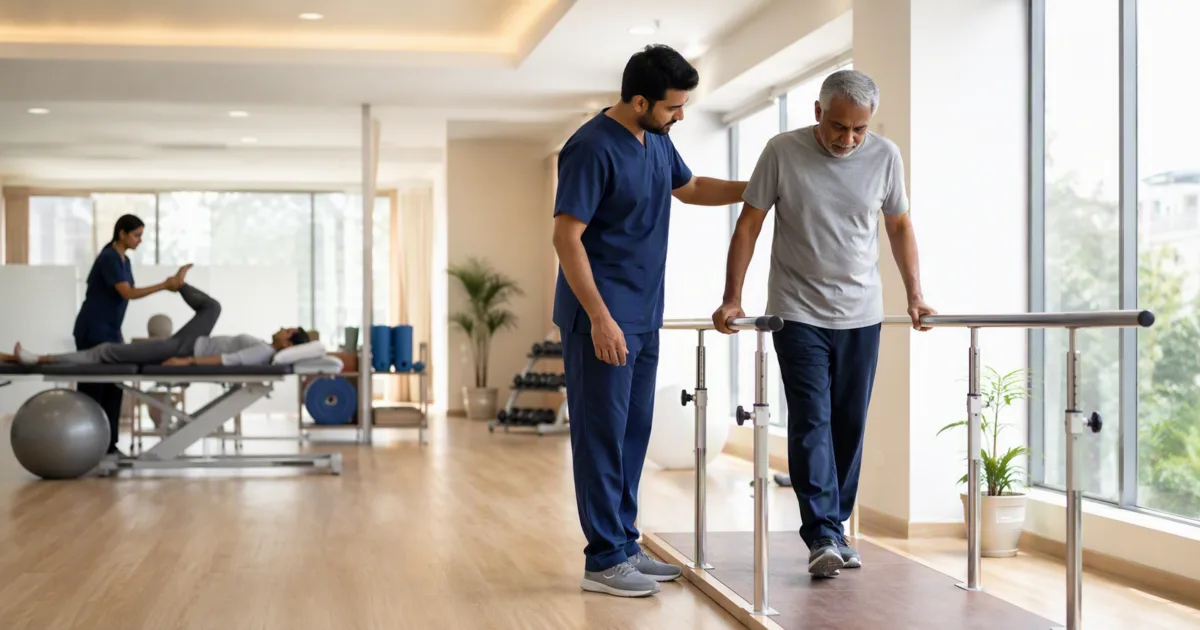
After hip replacement, start walking with crutches or a walker to protect the new joint. This keeps weight off the operated leg at first.

At Trivayu Physio Center in Vaishali Nagar, Jaipur, Dr. Jyoti Choudhary and the team use exercise therapy to guide this.

  • Start with toe-touch weight bearing: toes just touch the floor, no weight through the leg.
  • Progress to partial weight bearing, then full weight, always with supervision.
  • Keep the operated knee straight. Avoid crossing legs or bending the hip past 90 degrees.
  • Practice in front of a mirror to see even shoulder height and no trunk lean.

The physiotherapist spots limping or uneven steps. These strain the new joint or cause back pain. They adjust your plan based on daily checks.

Timeline for Walking Progression Post-Hip Replacement

Progression follows healing phases set by your surgeon and physiotherapist. On day 1 after surgery, use crutches or a walker for partial weight bearing.

A physiotherapist tests hip range of motion, leg power, and balance before each step up.

Typical Phases

  1. Weeks 1-2: Walker or two crutches. Short flat distances indoors. Aim for 5-10 minutes, 2-3 times a day. Sit and rest if pain rises or hip feels hot.
  2. Weeks 3-6: Switch to one crutch on the opposite side. Practice even steps on flat ground. No leaning to the good side. Add 1-2 minutes per session.
  3. Weeks 7+: Walk unassisted on flat ground. Add balance work, turns, and small inclines like a gentle ramp. Practice stopping and starting smoothly.
  4. Weeks 8-12: Build distance and speed. Include uneven garden paths if steady.

Progress depends on your age, pre-surgery fitness, and surgery type, like posterior or anterior approach.

Safe Hip Replacement Walking Exercises to Start With

Early exercises keep the hip mobile and help reduce stiffness or blood clots. Do them lying on your back on a firm bed.

Once standing with chair support is safe, add gentle marches: lift knees one at a time to hip height, feet shoulder-width apart.

  • Bridges: Lie on back, feet flat on floor hip-width apart. Squeeze buttocks and lift hips 5-10 cm off the bed. Hold 5 seconds, lower slowly. Strengthens glutes and lower back for stable walking. 8-10 repeats.
  • Side-lying leg lifts: Lie on unoperated side, bottom leg bent for support. Lift top (operated) leg 15 cm straight out, toes pointed forward. Hold 3 seconds, lower. Strengthens outer hip muscles to stop limping. 10 repeats.
  • Seated marches: Sit tall in a firm chair, back straight. Lift one knee at a time to 90 degrees, hold 3 seconds. Improves hip flexor control for step length. 10 per leg.
  • Quad sets: Sit or lie, tighten front thigh muscle to push knee down. Hold 5 seconds. Activates thigh without moving hip.

At Trivayu, manual therapy loosens tight tissues around the hip with hands-on stretching and joint mobilisations. Exercise therapy follows to build mobility.

Advanced Gait Training Techniques at Trivayu Physio

Gait training corrects short steps, foot dragging, or wide-based walking after hip surgery. Use a mirror to watch your form.

Clinical Pilates builds core and hip stability for smoother gait. Dr. Hritika Choudhary leads these rehab sessions.

  • Single-leg stands: Stand near a wall, lift unoperated leg. Hold 20-30 seconds on operated leg. Builds ankle and hip control for balance.
  • Heel-toe walking: Mark lines on the floor, step heel to toe along them. Helps reduce shuffling steps common post-surgery.
  • Step-ups: Use a 10 cm step or stair. Lead with operated leg up, good leg down. Strengthens front thigh for climbing. 8-10 repeats.
  • Figure-8 walks: Set cones in a figure-8 path. Walk curves slowly to practice turns without twisting the hip.
  • Tandem walk: Heel to toe in a straight line, arms out for balance. Improves coordination.

Sessions last 45-60 minutes, twice weekly, with home practice of 3-4 exercises daily. Progress only when you master the previous level without pain or wobble.

Crutch Use and Safe Walking Progression After Hip Surgery

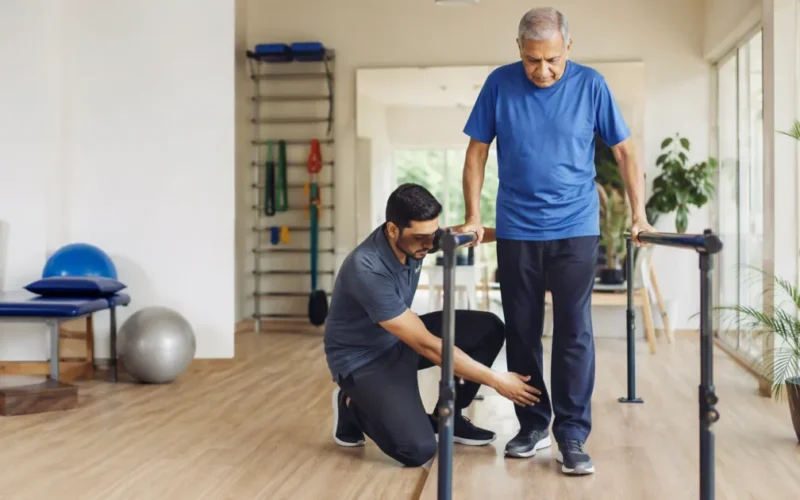
Crutches or a walker protect the hip in early weeks when the joint capsule is weak. Use elbow crutches for better control.

Basic pattern: Move both crutches forward 15-30 cm. Operated leg toe-touch, good leg steps forward with full weight. Keep torso upright.

Signs ready to progress: Walk 10 metres full weight without pain, steady balance, knee stays straight. Physiotherapist tests this in clinic.

  • Weeks 1-3: Two crutches or walker, toe-touch to partial weight. Indoor flat only.
  • Weeks 4-6: One crutch, build to full weight. Add short outdoor paths.
  • Week 7+: No aids on flat. Test 50 metres unsupported.

Avoid wet floors, loose rugs, or Jaipur’s uneven roads early. Practice on even paths like corridors. If arms ache from crutches, switch to a walker temporarily. Looking for a Physiotherapy Near Me? Our team in Vaishali Nagar, Jaipur can assess you in person.

Home Tips for Hip Replacement Walking in Jaipur

Prepare your home: Clear paths of mats, wires, or thresholds. Place a firm chair every 5 metres for rests.

  • Start on flat surfaces like corridors or rooms. Build to 100-200 metres daily in short walks of 5-10 minutes.
  • Stairs: Use handrails. Good leg up first, operated leg up last (up with good). Reverse down (operated first).
  • Avoid twisting or deep bends: Turn your whole body as one unit, feet pivoting together.
  • After walks, ice the hip 15 minutes if swollen. Elevate the leg on pillows above heart level 20 minutes.
  • Track daily: steps with a phone app, distance walked, pain score 0-10, aids used. Share with physiotherapist.
  • Local tips: Watch for monsoon puddles or temple steps. Walk early morning on dry roads.

Stay hydrated, especially in Jaipur heat. Visit Trivayu Vaishali Nagar or Vidyadhar Nagar for hands-on assessment. They offer home visits for early recovery stages when travel is hard. Read more about our Post-Surgery & Joint Replacement Rehab in Jaipur.

Why Choose Trivayu for Hip Surgery Rehab

The team specialises in post-op hip rehab. Dr. Ajit Choudhary focuses on gait retraining and balance. Dr. Jyoti Choudhary and Dr.

Staff explain each exercise’s purpose and how it supports the hip. Book online if homebound. They combine manual therapy, electrotherapy, TECAR therapy, and exercise for full recovery support. You may also find Progress from Walker to Cane after Knee Replacement useful.

Common questions

How soon can I walk without crutches after hip replacement?

This varies; most need 4-6 weeks of physio guidance. Test balance and full-weight walking first.

What exercises help walking after hip surgery in Jaipur?

Heel slides, bridges, gait drills, single-leg stands. Trivayu tailors to your strength and progress.

Is it safe to progress gait after hip replacement?

Yes, under physiotherapist guidance. Unsupervised steps risk falls or joint strain.

How long until normal walking post hip surgery?

Often 6-12 weeks with consistent physio. Pre-surgery fitness affects pace.

Can physiotherapy speed up walking recovery after hip replacement?

It guides safe, targeted progress to rebuild strength and mobility.

What if pain returns during walking progression?

Stop activity, rest, ice.

Trivayu Physio Center supports hip replacement recovery walking. Book assessment via WhatsApp at +91 90570 65065 or call. Locations: Vaishali Nagar and Vidyadhar Nagar, Jaipur.
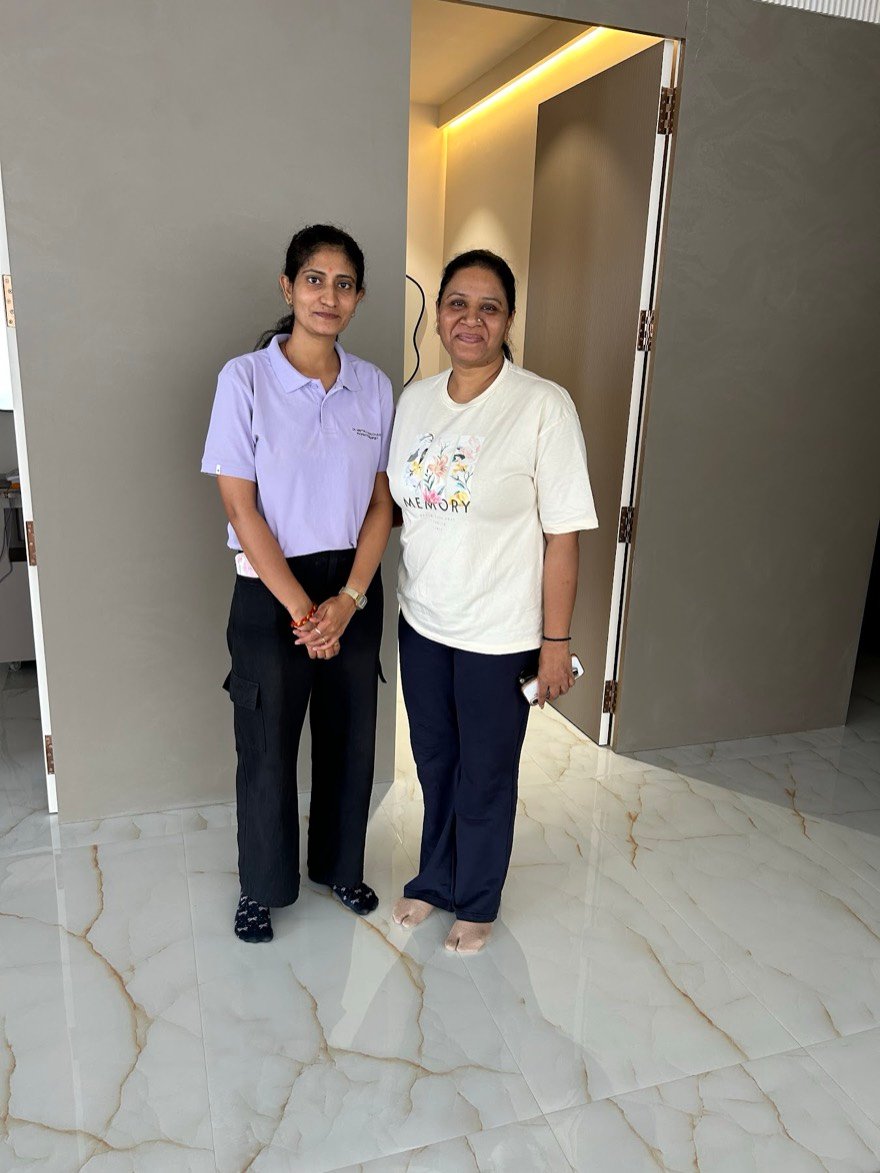
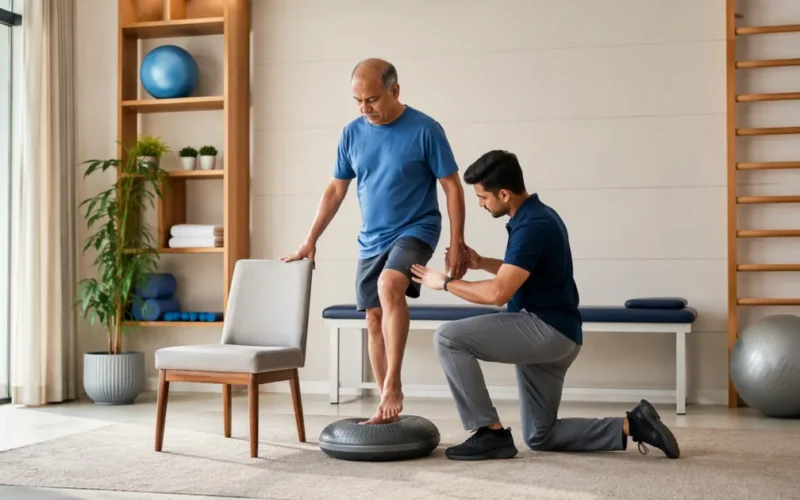
A physiotherapist assessing a patient at Trivayu Physio Center

When to see a doctor, not a physiotherapist

Physiotherapy is not the right first step for everything. Seek medical assessment promptly if any of the following apply to you:

  • Redness, heat, increasing pain or discharge at the surgical site, which may indicate infection
  • Calf pain, swelling or warmth, or sudden breathlessness or chest pain, which need emergency care
  • A sudden loss of movement or a pop with sharp pain
  • Pain following a significant fall, road accident or other major injury
  • Fever, chills or feeling generally unwell alongside the pain
  • Weakness that is getting worse, or numbness that is spreading
  • Unexplained weight loss, or a past history of cancer
  • Pain that is constant, wakes you at night and does not change with position

If you lose control of your bladder or bowels, develop numbness around the groin, or have chest pain or breathlessness, treat it as an emergency and go to hospital.

Safety limits and when this does not apply

  • Always follow the operating surgeon's protocol. Where this article and your surgeon differ, follow your surgeon.
  • Weight-bearing limits and range-of-motion restrictions after surgery are specific to your operation and must not be taken from a general article.
  • This article is general information. It is not an assessment of your problem, and it cannot account for your medical history, medication or imaging.

References

  1. NHS: Recovering from surgery
  2. WHO: Rehabilitation

How this article was produced

  • Evidence. Guidance on post-surgical rehabilitation here follows the 2 sources listed under References above.
  • Clinical experience. Practical points on what tends to help in the clinic reflect the experience of the Trivayu physiotherapy team in Vaishali Nagar, Jaipur, and are not the same as trial evidence.
  • Opinion. Where we suggest a preference or an approach, that is our clinical judgement. Other qualified clinicians may reasonably differ.
  • Author. Dr. Ajit Choudhary, B.P.T.
  • Published. 15 August 2026.
Share this article WhatsApp Facebook X Email

Ready for a proper assessment?

Message us on WhatsApp with your main concern and preferred time, and we'll confirm your first visit the same day.
Call WhatsApp