Hip Pain Pregnancy Exercises in Third Trimester Jaipur
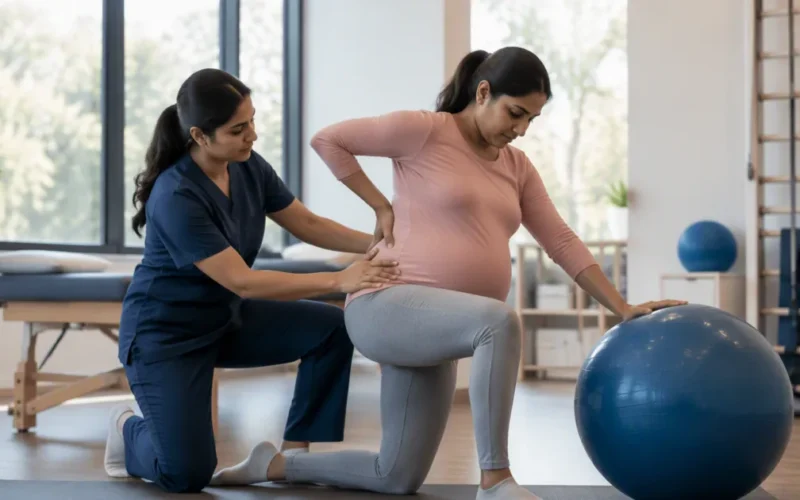
Understanding Hip Pain in Pregnancy Hip pain often starts in the third trimester. The growing baby shifts your centre of gravity forward. This strains hip joints,…
Read article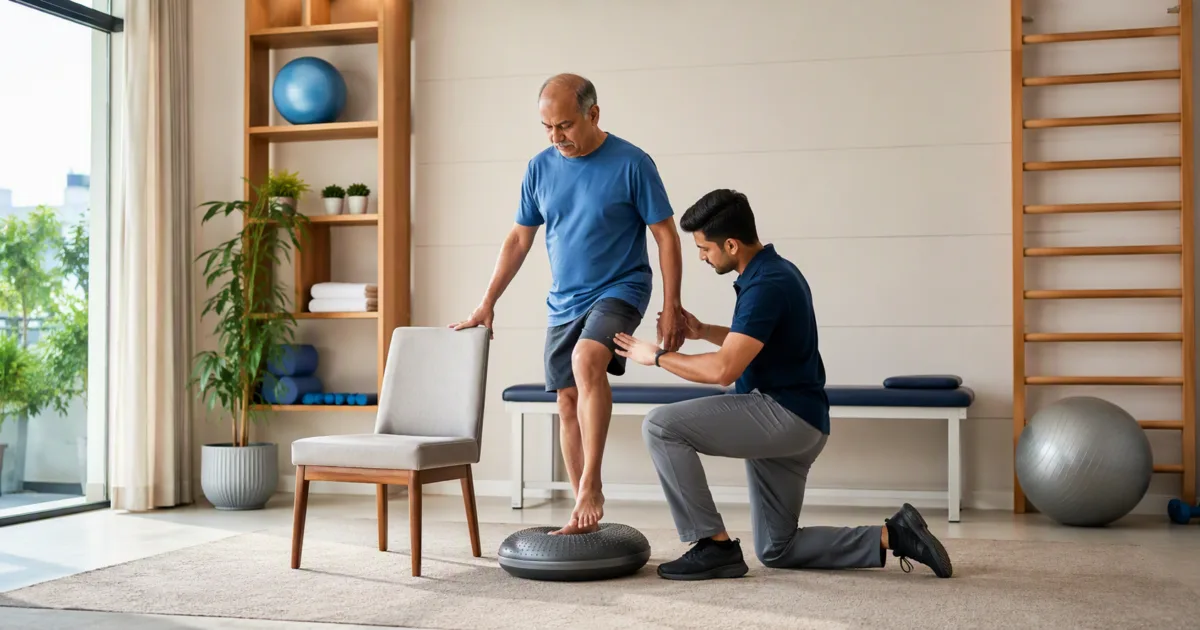

The short answer
Balance exercises after knee replacement in weeks 9-12 at Jaipur progress home routines for stability and daily tasks. They include supported stands, weight shifts, tandem stance, heel-toe walk, single-leg stance and side leg raise. Always check with your physiotherapist at Trivayu before starting to reduce fall risk.
After knee replacement surgery, balance training helps regain stability. In weeks 9-12, progress home exercises for daily tasks. This reduces fall risk.
These routines offer safe progressions for knee replacement balance training. Always check with your physiotherapist before starting. Poor balance limits walking or standing.
Falls post knee replacement delay healing. Progressive balance training supports improvement. Trivayu offers assessments at Vaishali Nagar or Vidyadhar Nagar.
Balance keeps you steady after total knee replacement (TKR). In weeks 9-12, knee gains strength, but nerves and muscles need retraining. Good balance prevents falls.
Poor balance affects stairs, uneven roads, or reaching. Home balance exercises build this skill safely.
A physiotherapist checks knee range, strength, walking pattern. They test weight shifts to spot weaknesses in ankle, knee, or hip control.
Weeks 9-12 mark progression in knee rehab. Knee bends more, bears weight better. Start if earlier exercises are easy and pain low.
Criteria: No sharp pain, single-leg hold 10 seconds, walk without limp. Begin with chair support. Increase challenge if stable.
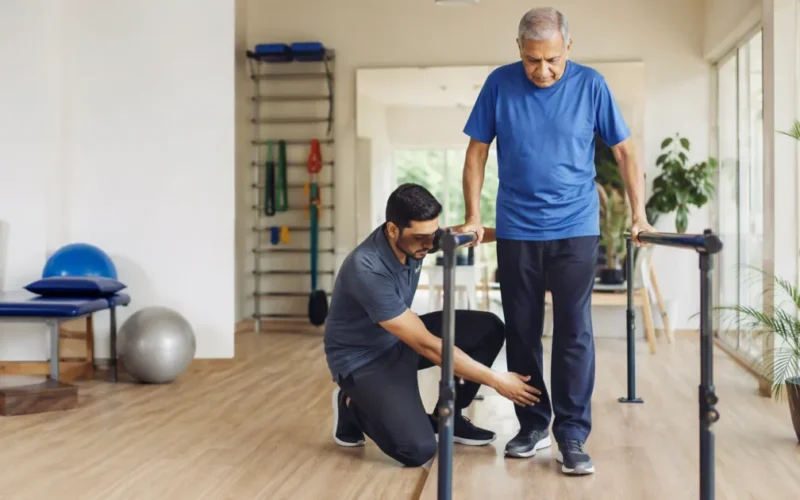
Physiotherapists at Trivayu use a step-by-step plan. They start you on firm ground. They measure your base of support—how wide your feet stand.
Do 2-3 sessions daily, 10-15 minutes. Stop if dizzy or painful. Trivayu stresses in-person assessment. Expect gait analysis with video to see knee tracking.
Try these 4 exercises. Hold sturdy chair. Breathe steadily. Firm, non-slip surface. Warm up: 5 minutes marching in place, high knees if pain-free.
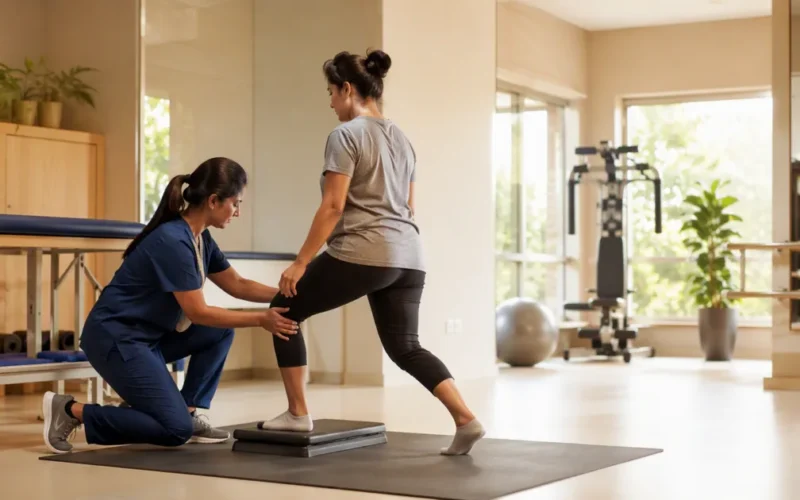
A physiotherapist shows exact form. They cue hip alignment—keep pelvis level. They check if your knee caves inward, a common fault post-TKR.
Safety: Clear space, supportive shoes with good grip. Track hold times, knee give-way. Ice 15 minutes if swelling. Note daily log: time held, wobble level.
Follow physiotherapist’s plan. Start static holds. Add dynamic steps or reaches. Unstable surfaces only after clinic approval—foam pad or wobble board at Trivayu.
Week 9: Quiet stance on even floor. Week 10: Eyes closed, gentle sway. Week 11: Controlled sway front-back, side-side. Week 12: Step over 10 cm block, alternate legs. Looking for a Physiotherapist Near Me? Our team in Vaishali Nagar, Jaipur can assess you in person.
Home: Tape lines for tandem on floor. Mirror for posture check—ears over shoulders. Physiotherapist tests proprioception by nudging your leg lightly; you correct without looking. Read more about our Post-Surgery & Joint Replacement Rehab in Jaipur.
Progress when you pass clinic tests: 30-second single-leg hold eyes closed, no wobble. They measure with timer and visual scale for sway.
Do after main set, 2 sets of 8-10 reps. These target supporting muscles. Physiotherapist adjusts reps based on your strength.
Reduce support over time. Track pain 0-10 scale. Pause if rises above 3. Add these to warm-up for full routine.
Modify space: Fix wires, add night lights, install handrails on stairs. Shoes with tread, avoid loose chappals.
Habits: Rise slowly from chair, bend knees. Turn as unit—whole body together. Step over kerbs fully, not half.
Exercises: Go slow. Stop for swelling, pain, wobble. Warning signs: Leg buckles suddenly, balance drops fast, fear of falling grows. Practice in day light first.
Daily check: Stand unsupported 30 seconds? Walk 10 tandem steps? If no, hold previous level.
Match your pace. Physiotherapist tests: Foam pad eyes closed, step-touch patterns. Uses clinical Pilates for core-knee link, electrotherapy for muscle activation.
Clinic session: Warm-up stationary bike 5 minutes, balance drills on line or grid, strength with resistance bands, cool-down stretches.
What to expect: First visit, they measure knee bend with goniometer, test balance on force plate if available. Plan lasts 4-6 weeks, weekly checks.
Go slow on progressions. Stop for swelling, sharp pain, wobble. Hydrate well—dehydration worsens balance. Signs to watch: Balance worsens day-to-day, frequent stumbles, pain climbs despite rest. You may also find Balance Exercises After ACL Surgery Weeks 8-12 useful.
Use walking stick if needed, even at home. Avoid rush—plan path before moving. Partner spots you during single-leg work.
For personalised balance plans post-TKR. Trivayu at Vaishali Nagar: Dr. Jyoti Choudhary (sports, ortho rehab), Dr. Hritika Choudhary (electrotherapy focus), Dr. Ajit Choudhary (post-op specialist).
After surgeon clearance, often weeks 6-8 if stable walking. Weeks 9-12 suit progressions. Confirm with physiotherapist at Trivayu via assessment.
Tandem stance, heel-toe walk, single-leg holds, side leg raises. Start supported, progress slow. Full list and cues above.
Retrain muscles, nerves, inner ear for quick corrections. Improves stability on stairs, uneven paths, reducing slip risk.
Yes, after physio guidance. Trivayu provides custom routines post-check. Home visits help set it up safely.
Yes, for tests and tailored plans. Start at Vaishali Nagar or Vidyadhar Nagar.
Supported to unsupported stands, eyes open to closed, static to dynamic reaches and steps. Only pain-free, clinic-approved.
Build balance for safer recovery after knee surgery. Book assessment at Trivayu Physio Center. WhatsApp or call +91 90570 65065.
Physiotherapy is not the right first step for everything. Seek medical assessment promptly if any of the following apply to you:
If you lose control of your bladder or bowels, develop numbness around the groin, or have chest pain or breathlessness, treat it as an emergency and go to hospital.
Understanding Hip Pain in Pregnancy Hip pain often starts in the third trimester. The growing baby shifts your centre of gravity forward. This strains hip joints,…
Read articleFoot drop often follows stroke. It makes lifting the front of the foot hard. This affects walking. Seated exercises build ankle strength safely. They suit stroke…
Read articleMonsoon rains in Jaipur make roads slippery. A slip can twist your knee. Active adults face this during walks or runs. Knee pain after slip is…
Read articleMessage us on WhatsApp with your main concern and preferred time, and we'll confirm your first visit the same day.