Post-Surgery & Joint Replacement Rehab··7 min read·Dr. Ishu Sharma
Written by Dr. Ishu Sharma, Physiotherapist
B.P.T · 3+ years
Published 18 September 2026
After hip replacement surgery, sitting on the floor causes pain for many. This strains the new hip joint. Safe methods help you adapt. Follow doctor rules first. These tips suit Indian homes. Always check with your surgeon before trying. Trivayi Physio Center in Vaishali Nagar guides patients on this.
Understanding Hip Replacement and Floor Sitting Challenges
Hip replacement surgery replaces the damaged ball and socket of the hip with artificial parts. In the first few weeks after surgery, your hip can only bend up to about 90 degrees to protect the joint. Sitting on the floor requires bending your hips much deeper, often past 120 degrees, which pulls on the muscles and new joint.
Safe Floor Sitting Positions After Hip Replacement
Do not try full floor sitting right away. Wait until your surgeon or physio approves, usually after 6 to 12 weeks when hip flexion improves. Start with these adapted positions, using firm cushions or bolsters under your hips to keep them higher than your knees. This reduces the bend needed in the operated hip. Looking for a Physiotherapist in Jaipur? Our team in Vaishali Nagar, Jaipur can assess you in person.
Side sitting (like virasana variation): Sit on one hip with both legs tucked to one side. Keep the operated leg less bent by using your good leg to support more weight. Lean slightly on your stronger arm for balance. Use this for short times at first, like 5 minutes, and build up.
Half lotus or sukhasana with support: Cross one leg loosely over the other, but keep the operated hip from twisting inward. Place a thick cushion under the hips so your bottom is raised 10-15 cm off the ground. Use your hands on the floor or a nearby chair for support.
Pillow tower support: Stack 2-3 firm pillows or a low stool under your hips. Sit with legs extended straight in front or one leg bent. Keep your back straight and avoid slumping forward, which strains the hip flexors.
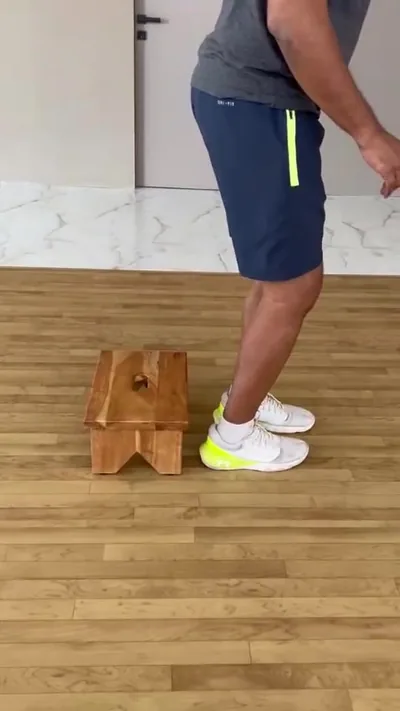
Low stool transition: Use a low Indian-style stool (chatai or small wooden platform) placed on the floor first. Practice sliding off and on slowly to build control before trying pure floor sitting.
Avoid full squats, deep bends, or twisting motions early on. Practice these 2-3 times a day for 5-10 minutes. Manual Therapy at the clinic can loosen tight hip muscles like iliopsoas and improve your range gradually.
Safe Rising Techniques from Floor After Hip Replacement
Start on your side: Never try to stand straight up from sitting. First, roll onto your unoperated side slowly, using your arms for support. Bend both knees to about 90 degrees, keeping the operated leg straight.
Position hands: Place one hand flat on the floor in front of your chest and the other on a stable chair, wall, or helper’s arm. Push down evenly with both arms to lift your chest and upper body up.
Bring good leg under: Slide your unoperated leg forward into a lunge position, with the foot flat on the ground. Keep the operated leg extended behind you without bending the hip more than allowed.
Lift hips using legs and arms: Push down through the front foot of your good leg while using your arms to shift weight forward. Come up to a kneeling position first, then to standing. Keep your operated hip in line with your body—no inward or outward twist.
Final stand with support: Grab a sturdy chair or walker with both hands. Rise by pushing through the good leg while keeping the operated one straight until you’re upright. Step back slowly.
Practice this sequence daily in front of a mirror to check form. Have someone spot you at first. A physiotherapist will watch your technique and adjust based on your strength. More on Ankle Pain Treatment and how we assess it.
Indian Toilet Use After Hip Replacement
Indian squat toilets challenge hip replacement patients because they need deep hip flexion and balance. Switch to a Western-style commode if available in your home or nearby. If not, adapt like this: You may also find Hip Replacement Floor Sitting Timeline useful.
Raised seat adapter: Place a stable footstool or low platform under your feet to elevate your hips above knee level. This reduces hip bend. Keep feet flat and shoulder-width apart for stability.
Grab bars setup: Install or use horizontal bars at chest height for lowering down, and vertical ones at knee level for support. Grip firmly and lower yourself in slow motion, bending at the knees and hips equally.
Squatting frame or commode chair: Use a portable frame that fits over the squat hole, with armrests. Lower using your arms and good leg, keeping the operated hip protected. Go with a helper for the first few months.
Timing and prep: Empty your bladder before meals or activity. Use these only after physio clears deep squats, usually after building quad and glute strength.
Electrotherapy at the clinic helps reduce swelling and build muscle power for safer toilet use.
Post Hip Replacement Mobility and Cultural Adaptations
In Indian homes, daily life involves lots of floor-based activities. For cross-legged sitting (padmasana or sukhasana), start with loose cross only after 3 months, using a high cushion under the hips. Avoid full lotus until much later. For family meals on the floor, use a low charpoy or table so you sit on a edge with legs dangling.
Floor Exercises Post Hip Replacement
Strengthen key muscles under guidance to make floor activities safer. Do these on a mat, 10 reps each, 2-3 sets daily.
Glute bridges: Lie on your back with knees bent and feet flat on the floor, hip-width apart. Tighten your bottom muscles and lift hips up slowly, squeezing glutes at the top. Lower controlled. This builds power for rising from low positions.
Straight leg raises: Lie on your back. Tighten the thigh muscle on the operated side, then lift the straight leg 6-12 inches off the ground. Hold 5 seconds. Strengthens hip flexors safely.
Side-lying leg lifts: Lie on your good side. Lift the top (operated) leg straight up 10-20 cm, keeping toes forward. This improves hip abductors for side-sitting stability.
Clamshell exercise: Lie on your good side with knees bent. Keeping feet together, lift the top knee up like opening a clamshell, without rocking hips back. Strengthens outer hip rotators.
Sit to stand from low chair: From a low stool mimicking floor height, practice rising using arms and good leg, keeping operated knee straight. Progress to no hands as strength improves.
Orthopaedic Rehabilitation at the clinic tailors these to your recovery stage.
Additional Precautions for Indian Homes
Slip on polished floors? Use anti-slip mats in bathrooms and kitchens. For langer or community meals, choose spots with nearby support like benches. Heat packs ease stiff hips before attempting sits—apply for 15 minutes first. Ice after if swollen. Watch for warning signs like sudden pain, clicking, or instability—stop and call your doctor.
Common Questions
Is it safe to sit on the floor after hip replacement?
Not right away. Wait 6-12 weeks, use cushions to limit bend, and get physio approval first.
How to sit on the floor Indian style after hip replacement?
Try side-sitting or half-crossed legs with hip-elevating pillows. Avoid full squats or deep flex early.
What are safe rising techniques after hip replacement from the floor?
Roll to good side, push with hands and good leg, grab support—no twisting or deep bends.
How to use Indian toilet after hip replacement?
Prefer Western if possible. For squat, use raised frames, grab bars, and go slow with help.
When can I sit cross-legged after hip replacement?
Start loosely after 3 months with cushions; full cross-legged only when physio clears full flexion.
Can I do floor exercises post hip replacement?
Yes, but guided ones like bridges, leg raises, and clamshells to build safe strength.
Safe habits let you enjoy home life without setbacks. Book an in-person assessment at Trivayi Physio Center, Vaishali Nagar. Call +91 90570 65065 or WhatsApp to start your tailored recovery plan.
Physiotherapy is not the right first step for everything. Seek medical assessment promptly if any of the following apply to you:
Pain following a significant fall, road accident or other major injury
Fever, chills or feeling generally unwell alongside the pain
Weakness that is getting worse, or numbness that is spreading
If you lose control of your bladder or bowels, develop numbness around the groin, or have chest pain or breathlessness, treat it as an emergency and go to hospital.
Safety limits and when this does not apply
Any exercise that sharply increases your pain, or leaves it raised the following morning, is too much for now.
Electrotherapy and laser therapy have their own restrictions, including pacemakers, pregnancy and treatment over a known tumour. Your physiotherapist screens for these before use.
This article is general information. It is not an assessment of your problem, and it cannot account for your medical history, medication or imaging.
A patient's experience
Truly thankful to Dr. Jyoti Choudhary and the entire team of Trivayu Physio Centre for their genuine care, humble behaviour, and excellent treatment.
Mahesh Dhaka, Google review
This is one patient's own account, published with consent on our reviews page. It describes their experience, not a predicted outcome. Individual results vary.
Evidence. Guidance on musculoskeletal pain here follows the 3 sources listed under References above.
Clinical experience. Practical points on what tends to help in the clinic reflect the experience of the Trivayu physiotherapy team in Vaishali Nagar, Jaipur, and are not the same as trial evidence.
Opinion. Where we suggest a preference or an approach, that is our clinical judgement. Other qualified clinicians may reasonably differ.
Backward walking helps athletes recover from ACL injuries. It builds knee stability in Phase 2 of rehab. This exercise targets quadriceps and improves control after surgery…
After ACL surgery, rebuilding knee strength takes time and care. ACL rehabilitation phases guide this process step by step. Phase 1 protects the graft and cuts…
After hip replacement surgery, dressing your lower body safely helps build independence. By week 6 of hip replacement recovery, many patients aim to dress without help.…