

Is Side Bending Safe with L4 L5 Herniated Disc
An L4 L5 herniated disc happens when the disc between your fourth and fifth lumbar vertebrae bulges or ruptures. This presses on nearby nerves, causing pain…
Read article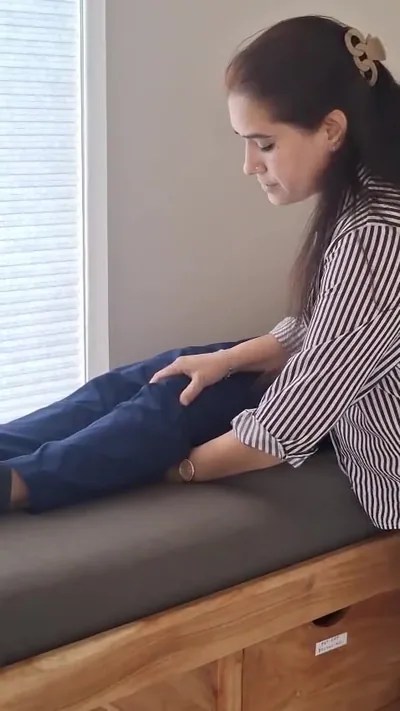
After ACL reconstruction, squats rebuild knee strength. In month 3, protect the graft. Deep squats risk damage. This guide covers ACL squat precautions, recovery phases, graft protection exercises, gym exercises post ACL, and ACL rehab guidelines.
Check with your physiotherapist before starting. They tailor ACL rehab to your knee based on surgery type, graft source, and healing progress. Personal checks beat guessing.
The ACL graft is new tissue from surgery. It comes from patellar tendon, hamstring, or donor. It heals slowly. Early blood supply is low, so it relies on bone tunnels for fixation.
In month 3 post-ACL reconstruction, the graft gains strength but stays weak against sudden loads. Bone-to-bone healing starts in tunnels, yet the tissue itself needs protection from anterior-posterior pulls.
Precautions focus on controlled movement. They shield the graft while building quadriceps, hamstrings, and glutes. Manual Therapy eases tightness around the knee—for example, in the quadriceps or iliotibial band—for safe squats.
Recovery follows phases aligned with ACL rehab guidelines. Month 1 protects graft with brace, crutches, and basic range-of-motion work like heel slides and prone hangs. Focus stays on reducing swelling and regaining full extension to prevent contractures. Looking for a Physiotherapy Clinic Near Me? Our team in Vaishali Nagar, Jaipur can assess you in person.
Month 2 adds closed-chain exercises such as mini-squats to 30 degrees knee flexion, plus stationary bike with low resistance. Progress depends on no swelling after activity and quadriceps strength matching the non-operated side.
By month 3, enter strength-building if healing is good—confirmed by imaging or clinical tests. Overload comes from poor form, like knees drifting inward. Physio tests stability with hop tests, Lachman test, or pivot-shift before approving squats.
Weekly check-ins measure swelling via tape measure, knee range with a goniometer, and strength gaps between legs. This guides knee stability squats. If asymmetry persists, delay loading.
Use partial squats. Stop at 60-degree knee bend or just past parallel (hips level with knees). Measure with phone app, goniometer app, or wall mirror marking your safe depth.
Limited depth cuts graft strain by minimising the flexion angle where shear peaks. Full squats pull tibia forward at 30-60 degrees flexion, risking micro-tears. Partial squats build quads with less risk, targeting vastus medialis oblique for patella tracking.
Track form in mirror or video from front and side. Check knees caving (valgus) or shooting forward over toes. Adjust stance wider if hips are tight. In gym exercises post ACL, pair with balance board for feedback. More on Ankle Pain Treatment and how we assess it.
Follow these steps for graft protection exercises during squats:
Stop at sharp pain, new swelling, clicking, or instability. Mild quad burn or delayed-onset soreness is normal. Speed control prevents momentum stress on graft. Breathe out on ascent, in on descent.
Start basics before partial squats. These graft protection exercises prepare the knee for load.
Electrotherapy like TENS or ultrasound reduces swelling after sessions. Use 10-15 minutes post-exercise. Add these 3-4 times weekly. Master 3 pain-free sets before squats. Physio ensures alignment with hands-on cues and taping if needed.
Grip floor with feet like rooting down. Descend to parallel or 60 degrees max. Pause 1-2 seconds at bottom to build control and isometric hold.
Use squat rack with safety bars set just below your depth. Hold dumbbells at sides for balance after body weight mastery. Goblet squats with kettlebell cue upright torso.
Common errors: knees cave inward—cue “knees out” or use resistance band around knees. Excessive forward lean strains graft—hinge hips more, sit back. Physios cue this live, using mirrors or video analysis. You may also find ACL Rehab Squat Depth in Month 3 useful.
Test 20 pain-free partial reps under physio watch.
Physio assesses with manual tests like anterior drawer, strength ratios (hamstring-to-quad), and functional screens. Clears deeper squats in month 4 or later, often with single-leg variations for knee stability squats.
Avoid bouncing, twisting, or fatigue sets. Re-assess monthly or after any setback. Progress to 90 degrees when partials feel automatic.
Physio starts with gait analysis to spot limp or compensatory patterns. Functional tests like single-leg squat or Y-balance reveal imbalances in strength or control.
Sessions mix hands-on work with exercise prescription. They correct asymmetries, like weak glutes pulling knees inward. Home program includes daily mobility plus 3x weekly strength. Track via app (reps, pain) or photos of form.
Orthopaedic Rehabilitation structures the full 6-9 month program with progressive squats, agility drills, and return-to-sport tests. Expect biofeedback tools like pressure mats for weight distribution.
In-person assessment spots subtle issues like graft laxity or muscle inhibition. Trivayu Physio Center offers sports injury rehab and post-op care for ACL reconstruction recovery.
Dr. Jyoti Choudhary leads with 17+ years experience. Team uses Robotic Spinal Decompression Therapy and Dry Needling alongside standard protocols. Book at Vaishali Nagar or Vidyadhar Nagar.
Partial to 60 degrees or hips just past parallel. Protects graft from peak shear.
Use brace if prescribed, control eccentric speed, limit depth, monitor for pain or swelling. Distribute weight through heels.
Not early phases. Full depth risks excessive strain. Build with partials until physio clears.
Warm up fully, set feet neutral, use slow tempo, stop at any warning signs. Respect depth limits.
After pain-free partials for weeks, balanced strength, and physio approval—typically post-month 3.
Yes, when phased in with limits and monitoring. Essential for strength gains.
Ice 15-20 minutes, elevate above heart, rest 48 hours. Compress if advised. See physio if repeats.
Wall sits, bridges, step-ups, leg extensions. Build base without full load.
Safe squats aid ACL reconstruction recovery. Protect graft at every step. Progress under experts for best outcomes.
Book at Trivayu Physio Center. WhatsApp or call +91 90570 65065.
Physiotherapy is not the right first step for everything. Seek medical assessment promptly if any of the following apply to you:
If you lose control of your bladder or bowels, develop numbness around the groin, or have chest pain or breathlessness, treat it as an emergency and go to hospital.
Truly thankful to Dr. Jyoti Choudhary and the entire team of Trivayu Physio Centre for their genuine care, humble behaviour, and excellent treatment.
Mahesh Dhaka, Google review
This is one patient's own account, published with consent on our reviews page. It describes their experience, not a predicted outcome. Individual results vary.
An L4 L5 herniated disc happens when the disc between your fourth and fifth lumbar vertebrae bulges or ruptures. This presses on nearby nerves, causing pain…
Read articleShopkeepers in Jaipur often stand for long hours behind counters. This prolonged standing can trigger sciatica pain. Sciatica happens when the sciatic nerve gets irritated, often…
Read articleHerniated disc night pain disrupts sleep for many. The disc bulge presses on nerves, causing sharp back pain or sciatica that flares up at night. Simple…
Read articleMessage us on WhatsApp with your main concern and preferred time, and we'll confirm your first visit the same day.

