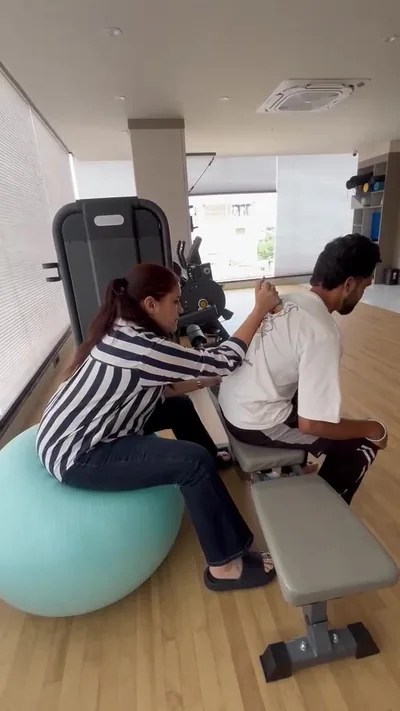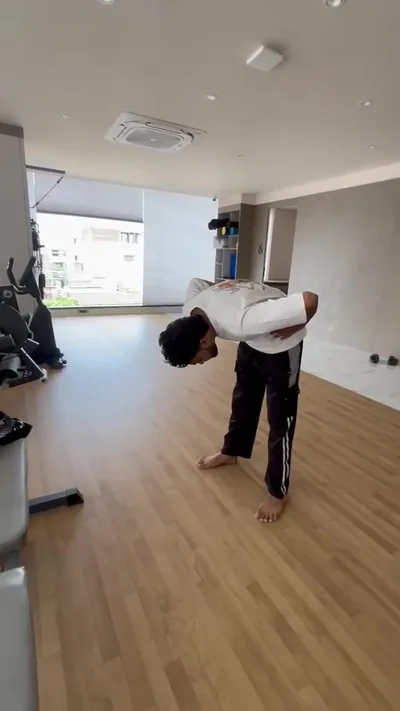
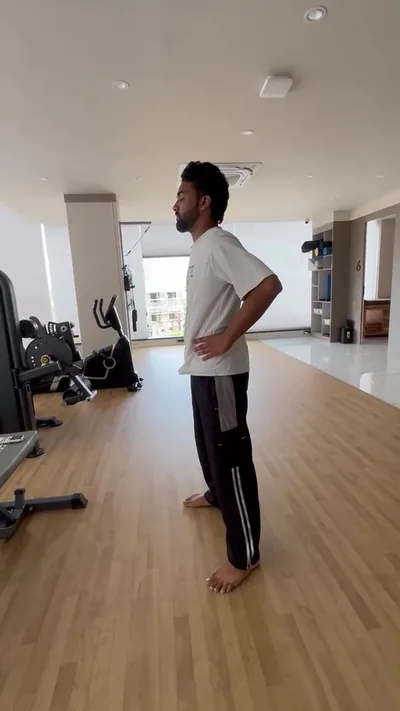
Is Side Bending Safe with L4 L5 Herniated Disc
An L4 L5 herniated disc happens when the disc between your fourth and fifth lumbar vertebrae bulges or ruptures. This presses on nearby nerves, causing pain…
Read article

After knee replacement surgery, returning to cardio exercise helps active seniors regain fitness. Stationary biking is a low-impact option. It builds endurance without stressing the joint. This guide covers cycling basics post knee replacement, including recovery exercises and when to start.
Physiotherapy ensures safe progression in recovery exercises. Start only under guidance. Trivayu Physio Center in Jaipur offers physiotherapy for knee replacement.
Active seniors seek knee replacement cardio exercise to stay mobile. Stationary bike after knee replacement supports recovery when done right. Low impact cardio after knee surgery keeps you active. Looking for a Physiotherapy Near Me? Our team in Vaishali Nagar, Jaipur can assess you in person.
Low-impact cardio like stationary biking aids knee rehab. It improves blood flow, reduces swelling and builds strength. A physiotherapist assesses range of motion, muscle strength and swelling before approving cycling.
Active seniors benefit. Cycling after knee surgery keeps hearts healthy and fights muscle loss. The therapist checks knee straightening, bending and balance on the operated leg. More on Knee Pain Treatment and how we assess it.
Physio guidance comes first. A therapist tailors activity to your recovery phase. During sessions, they loosen tight muscles around the knee before pedalling.
Before stationary biking, do knee replacement recovery exercises. These prepare the joint and muscles. A physiotherapist starts with simple moves post-surgery.
Ankle pumps: Lie or sit, point toes up and down 10-20 times hourly. This boosts circulation and cuts clot risk.
Quadriceps sets: Sit or lie with leg straight. Tighten thigh muscle, press knee down, hold 5 seconds, repeat 10 times. Do several times daily.
Straight leg raises: Once extension improves, lie on back, tighten quad, lift straight leg 6-12 inches, hold 3-5 seconds, lower slowly. Aim for 10 repeats per set, 2-3 sets daily. You may also find Knee Replacement Cycling: When to Start useful.
Heel slides: Sit or lie, slide heel towards bottom slowly until comfortable, hold 5 seconds, slide back. Repeat 10 times, several sessions a day. Stop if pain increases.
Seated knee extensions: Later, sit, straighten knee against light resistance, hold, lower. Start unweighted. A therapist checks form.
Mini squats: Stand holding chair, bend knees slightly, rise. Keep knees over toes. Do 10 slowly.
In physio: Hands-on checks for scar tissue, ice after exercises. Progress if pain stays mild and swelling drops.
Recovery has phases. Cycling often starts around 4-6 weeks post-surgery, varying by healing and physio input.
Signs you are ready: good knee bend, no sharp pain, walking without aids. Test with marches. A therapist measures knee angle and tests strength.
Book an in-person physio assessment. At Trivayu, post-surgery rehab guides you. They might use Electrotherapy to settle inflammation.
Adjust the bike for knee comfort. Seat height matters. Knee should bend slightly at bottom pedal, not lock straight.
Set resistance low. Aim for smooth pedalling. Keep feet flat on pedals. Use shoes with grip.
Maintain posture: Sit tall, shoulders relaxed, core engaged. Breathe steadily.
Begin with 5-10 minutes, 3 times a week. No resistance. Focus on smooth circles, forward then reverse if cleared.
Progress slowly. Add 2-5 minutes weekly if pain-free. Increase to 20-30 minutes over weeks. A physio tracks this.
Watch for pain. Stop if sharp. Manual Therapy can ease tight spots before biking. Warm up with 5 minutes marching.
Advanced: At 30 minutes, try intervals. Easy 2 minutes, moderate 1 minute. Cool down with slow pedalling and stretches.
Stationary bike leads to other low impact cardio after knee surgery. Water walking in pool: waist-deep, 10-15 minutes marching.
Upper body ergometer: Crank arm pedals, legs still.
Outdoor cycling after 3-6 months: Flat paths, recumbent bikes first. Wear helmet.
Physio combines these with balance work like single-leg stands.
Cycling boosts cardio fitness, joint mobility and leg strength. Low impact lubricates the joint.
It enhances balance and daily function for seniors.
Precautions: Avoid overdoing speed or resistance. Stop if pain, swelling or knee feels hot. Ice 15 minutes after, elevate leg.
Track swelling with tape measure. Note clicking or grinding; report to physio. Avoid if fever or redness.
Consult physio for issues. Orthopaedic Rehabilitation focuses on strength gains.
Our team handles post-op rehab. Dr. Jyoti Choudhary has 17+ years in orthopaedics. Dr. Hritika Choudhary handles advanced electrotherapy.
Equipment includes Class IV Laser Therapy and Robotic Spinal Decompression.
Locations in Vaishali Nagar and Vidyadhar Nagar. Hours: Mon-Sat 8 am-8 pm, Sun 10 am-1 pm.
Around 4-6 weeks, after physio clearance. Depends on healing. Get assessment for bend, strength and walk.
Yes, when guided. Low-impact protects joint. Start slow with supervision.
40-60 RPM early. Comfortable pace. Increase gradually.
Start 5-10 minutes. Build to 20-30 over weeks. Take rest days.
Builds endurance, mobility and strength. Supports daily tasks.
Stop. Ice and rest. See physio for check and Manual Therapy if needed.
Post knee replacement cycling on a stationary bike aids recovery. Follow steps and seek physio input.
Book an assessment at Trivayu Physio Center today. WhatsApp or call +91 90570 65065.
Physiotherapy is not the right first step for everything. Seek medical assessment promptly if any of the following apply to you:
If you lose control of your bladder or bowels, develop numbness around the groin, or have chest pain or breathlessness, treat it as an emergency and go to hospital.
Truly thankful to Dr. Jyoti Choudhary and the entire team of Trivayu Physio Centre for their genuine care, humble behaviour, and excellent treatment.
Mahesh Dhaka, Google review
This is one patient's own account, published with consent on our reviews page. It describes their experience, not a predicted outcome. Individual results vary.
An L4 L5 herniated disc happens when the disc between your fourth and fifth lumbar vertebrae bulges or ruptures. This presses on nearby nerves, causing pain…
Read articleShopkeepers in Jaipur often stand for long hours behind counters. This prolonged standing can trigger sciatica pain. Sciatica happens when the sciatic nerve gets irritated, often…
Read articleHerniated disc night pain disrupts sleep for many. The disc bulge presses on nerves, causing sharp back pain or sciatica that flares up at night. Simple…
Read articleMessage us on WhatsApp with your main concern and preferred time, and we'll confirm your first visit the same day.