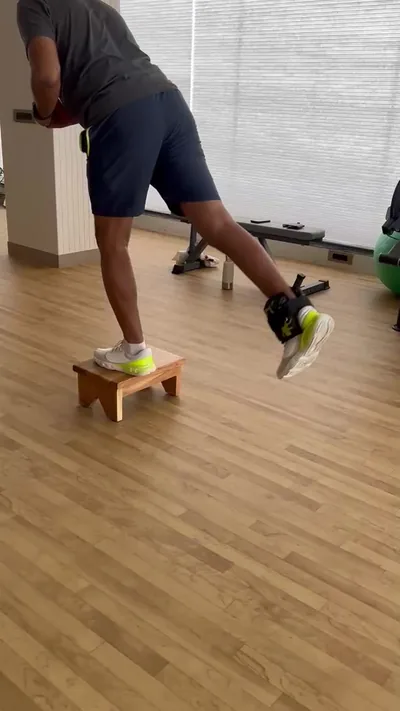
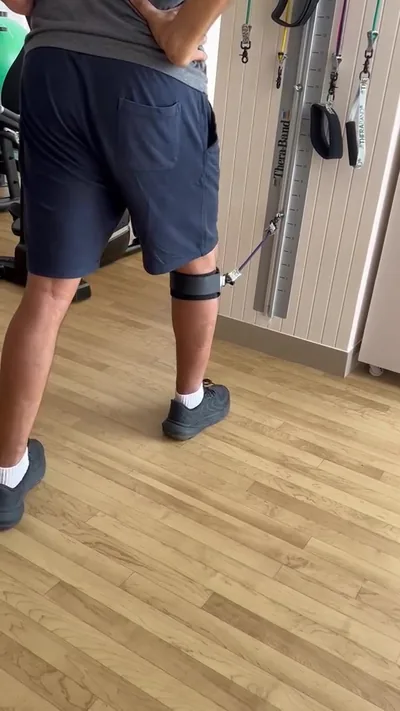
Backward Walking in ACL Rehab Phase 2
Backward walking helps athletes recover from ACL injuries. It builds knee stability in Phase 2 of rehab. This exercise targets quadriceps and improves control after surgery…
Read article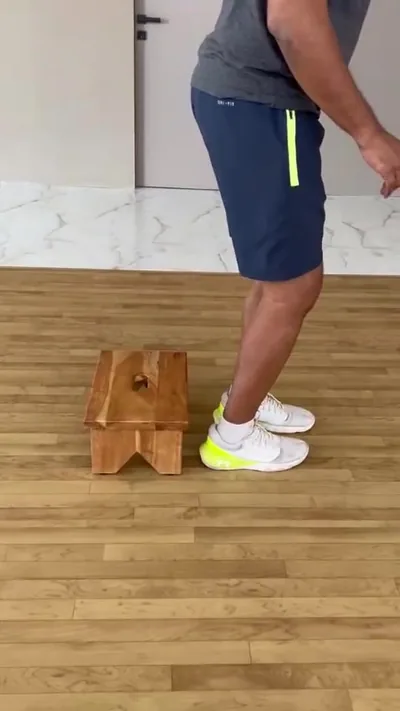
After knee replacement surgery, active seniors want to return to cycling. This low-impact activity rebuilds strength and mobility. Timing protects the new joint.
Patients ask when to start cycling after knee replacement. Around week 10, some begin on a stationary bike under guidance. Get a physiotherapist’s assessment first. Recovery varies.
This guide covers timelines, benefits, safe setup, and joint protection for return to cycling after knee replacement.
Knee replacement replaces damaged joint parts with artificial ones. Recovery phases: wound healing, strengthening, functional return.
Exercise restores range of motion and muscle power. Cycling is controlled and repeatable. A physiotherapist assesses knee flexion, extension, and stability before clearing it. They check if you can bend the knee for pedalling without pain or wobbling. They also test hip and ankle control, as these affect knee alignment during the pedal stroke.
For active seniors, cycling boosts confidence and fitness. Week 10 is a common point for low-impact cycling. Get professional assessment. Physio tests balance, muscle activation, and knee tracking. They watch for quadriceps lag, where the knee does not fully straighten due to weak thigh muscles.
Post-surgery: walking with aids by week 2-4, unaided steps by week 6-8.
Stationary cycling may begin around week 10 with improved flexion and stability. Age, pre-surgery fitness, and health affect pace. Smokers or those with diabetes often progress slower due to healing delays.
Physiotherapist reviews progress, measures knee range, observes gait. Tests like step-ups or single-leg stands gauge readiness. Follow guidance. In-person check confirms bike use. If flexion below 90 degrees, delay and add stretches. Physiotherapists use tools like a goniometer to measure exact bend and straighten angles. They also palpate the joint for tenderness around the kneecap or inner knee. Looking for a Physiotherapy Clinic Near Me? Our team in Vaishali Nagar, Jaipur can assess you in person.
Stationary cycling improves knee mobility without weight-bearing stress. It bends and straightens the joint through full circles. Circular motion lubricates surfaces and promotes synovial fluid flow.
It strengthens quadriceps and hamstrings, which support the knee. Cardio fitness improves. Circulation reduces stiffness. Controlled speed builds endurance without jolts.
Orthopaedic Rehabilitation supports such exercises for endurance. Physiotherapists pair it with balance work for outdoor cycling later. It also retrains proprioception, the sense of joint position, which surgery disrupts.
Proper setup protects the joint. Seat height: knee almost straight at bottom pedal, slight bend of 25-30 degrees. Measure from floor to front of kneecap when seated.
Balls of feet on pedals, avoid pointing toes to prevent calf strain. Low resistance first. Fore-aft: at 3 o’clock crank position, kneecap over pedal axle to align the joint. More on Knee Pain Treatment and how we assess it.
Step-by-step:
Mistakes: seat too low strains knee front; too high stresses hips and back. Recheck weekly as swelling changes. Physio fine-tunes first session, often using a plumb line to check knee over pedal tracking.
Start 5-10 minutes, 3 times a week. Increase 2-3 minutes if pain-free. Aim for 60-70 RPM cadence to keep motion smooth.
Low intensity: easy breathing, mild ache only. Pain fades within hours. Track knee temperature; warmth means overuse. Use a mirror or phone video to check if knee stays centred over toes.
Stop for: swelling, sharp pain, clicking, warmth. Integrate with exercise therapy.
By week 12-14, if cleared, add short outdoor rides on flat paths. Physiotherapist demonstrates proper mounting and dismounting to avoid twisting the new knee.
Avoid high gears early; low resistance limits torque on the implant. Wear stiff-soled shoes to keep feet flat and reduce flex at toes.
Knee tracks over toes, not inward or outward. Strengthen vastus medialis oblique with side-lying leg lifts: lie on side, lift top leg straight 10 times, 3 sets.
Build in rest days. Alternate with walking or pool therapy to vary load. Warm up extra in cold weather, as stiffness increases.
Practice clipless dismounts seated first. For road bikes, use rehab-experienced fitter for leg length difference from surgery; they shim the shorter side. Avoid sudden stops; coast to ease off pedals. You may also find ACL Bike Week 4 Seat Height useful.
Transition outdoors week 14-16 if physio approves. Start smooth flat paths, under 20 minutes, no traffic.
Physio assesses braking, cornering, clipping in and out. Ensure standing without pain: practice by rising off saddle slowly, holding bars firmly.
Use hybrid or upright bike; higher bars reduce forward lean and hip flex. Wider tires for stability on uneven ground. Hydrate often, carry phone and ID.
Monitor fatigue; stop if uneven pedalling or limping starts. Regular physio check-ins every 2 weeks. They test dynamic balance with tandem cycling drills in clinic.
Physios tailor to goals. Gait analysis spots asymmetries, like shorter stride on operated side. Functional tests like squats mimic pedalling power phase.
Manual Therapy releases tight tissues around hip and calf. Electrotherapy eases swelling with devices like TENS for pain relief. Homework: ankle pumps 20 times hourly, heel slides on bed for flexion.
In clinic: hands-on alignment checks during simulated pedalling, video form analysis on treadmill bike. Plans have milestones like 30-minute rides by month 4, with progress logs. They teach self-checks: press knee sides for fluid, note any crepitus sound.
Trivayu Physio Center offers post-surgery rehab. Team: Dr. Jyoti Choudhary (17+ years orthopaedics), Dr. Hritika Choudhary (advanced electrotherapy).
Locations: Vaishali Nagar, Vidyadhar Nagar.
Book assessment for cycling return. We tailor plans.
Timelines vary. Stationary around week 10 after clearance. Get in-person assessment. Physio checks flexion over 100 degrees and no instability.
Yes if good mobility and strength. Confirm with physio. Proper setup protects joint; start no resistance.
Seat for slight knee bend at bottom. Low resistance. Feet on pedal balls. Test and adjust; physio verifies alignment.
Short sessions. Watch pain, swelling. Progress slowly. Follow physio. Avoid hills until month 3.
Yes with guidance if recovery allows. Professional check essential; include glute strength tests.
After stationary, flat paths. Physio clearance for skills like quick stops. Upright bikes first; add clips later.
Returning to cycling takes patience. Follow guided steps. Protect your joint long-term by listening to body signals.
Book at Trivayu Physio Center. WhatsApp or call +91 90570 65065.
Physiotherapy is not the right first step for everything. Seek medical assessment promptly if any of the following apply to you:
If you lose control of your bladder or bowels, develop numbness around the groin, or have chest pain or breathlessness, treat it as an emergency and go to hospital.
Truly thankful to Dr. Jyoti Choudhary and the entire team of Trivayu Physio Centre for their genuine care, humble behaviour, and excellent treatment.
Mahesh Dhaka, Google review
This is one patient's own account, published with consent on our reviews page. It describes their experience, not a predicted outcome. Individual results vary.
Backward walking helps athletes recover from ACL injuries. It builds knee stability in Phase 2 of rehab. This exercise targets quadriceps and improves control after surgery…
Read articleAfter ACL surgery, rebuilding knee strength takes time and care. ACL rehabilitation phases guide this process step by step. Phase 1 protects the graft and cuts…
Read articleAfter hip replacement surgery, dressing your lower body safely helps build independence. By week 6 of hip replacement recovery, many patients aim to dress without help.…
Read articleMessage us on WhatsApp with your main concern and preferred time, and we'll confirm your first visit the same day.