Managing Morning Hand Stiffness in Rheumatoid Arthritis
Pain Management··5 min read·Dr. Ajit Choudhary
Written by Dr. Ajit Choudhary, Senior Physiotherapist
B.P.T · Senior clinician
Published 3 August 2026
The short answer
Morning hand stiffness in rheumatoid arthritis occurs because joints rest without movement during sleep, allowing fluid to build up from inflammation and tissues to tighten. This autoimmune condition attacks joint linings, causing swelling that limits finger mobility. Home steps like warmth, routine changes and gentle exercises support comfort alongside medical care.
Morning hand stiffness in rheumatoid arthritis can make simple tasks like holding a cup or buttoning clothes difficult. The stiffness often feels worse after sleep because joints rest without movement. Many people in Jaipur notice this stiffness linked to rheumatoid arthritis flare periods.
This article shares home steps that support daily comfort. These include daily routine adjustments and gentle hand exercises. They do not replace medical care or medicine. Always consult your doctor for rheumatoid arthritis management. An in-person assessment at a clinic like Trivayu Physio Center can help tailor support.
Why rheumatoid arthritis causes morning hand stiffness
Rheumatoid arthritis is an autoimmune condition. The body’s defence system attacks the lining of joints. This leads to inflammation. Overnight, fluid builds up in the joints when movement is low. This causes the stiff feeling in the morning.
Reduced movement during sleep allows tissues to tighten. Inflammation makes joints swell and limits finger mobility. The stiffness is often worse in the hands and fingers. Home management steps can support joint warmth and movement but do not treat the underlying disease. They work alongside your doctor’s plan.
Simple daily routine changes to ease stiffness
Start your day with warmth. A warm shower or soaking hands in warm water for a few minutes can ease stiffness. This increases joint warmth and helps finger mobility. Looking for a Physiotherapist Near Me? Our team in Vaishali Nagar, Jaipur can assess you in person.
Plan tasks when hands feel less stiff. Avoid heavy gripping first thing in the morning. Use joint protection tips such as larger handles on tools or avoiding tight pinching. Wear warm gloves at night or use a paraffin wax bath at home if suitable. Keep a steady gentle movement pattern during the day instead of long periods of rest or overuse.
Other helpful changes include keeping rooms warm in winter and using a humidifier if air is dry. These small adjustments support reduce morning stiffness in hands at home and help with daily routine for rheumatoid hand stiffness.
Gentle exercises you can do at home
Gentle hand exercises can support finger mobility and grip strength. Always start slowly. Stop if pain increases. These use no equipment or only light household items.
Finger bends: Place your hand flat on a table. Bend each finger one by one toward the palm then straighten. Repeat gently 5–8 times per hand.
Thumb touches: Touch the tip of your thumb to each fingertip in turn. Make the movement slow and controlled to improve joint range.
Wrist circles: Hold your arms in front. Make small gentle circles with your wrists, first clockwise then anti-clockwise. Keep movements small.
Hand stretches: Spread your fingers wide apart then bring them together. Hold the spread position for a few seconds before relaxing.
Grip practice: Gently squeeze a soft ball or rolled towel for 3–5 seconds then release. This helps build grip strength without strain.
Finger lifts: Rest your hand flat. Lift each finger one at a time off the surface then lower it slowly.
Perform these as exercises for rheumatoid arthritis hand stiffness once or twice daily. Focus on smooth motion rather than force.
How to combine movement with heat and rest
Apply warmth before gentle hand exercises. A warm cloth or paraffin wax bath softens tissues and reduces discomfort. Follow heat with slow movement to support swelling reduction.
Take short rest breaks during the day. Avoid staying in one position too long. Keep good posture while using hands – keep wrists straight during tasks. Breathe steadily during movement; do not hold your breath. Read more about our Geriatric Physiotherapy.
Consistency matters more than intensity. Short regular sessions help more than one long hard session. This approach supports home management of morning hand stiffness rheumatoid arthritis and helps maintain finger mobility.
When home care is not enough
Home steps help many people but are not always enough. See a professional if stiffness lasts longer, swelling increases, or pain disturbs sleep and daily life. Difficulty with basic tasks or signs of a rheumatoid arthritis flare also need attention.
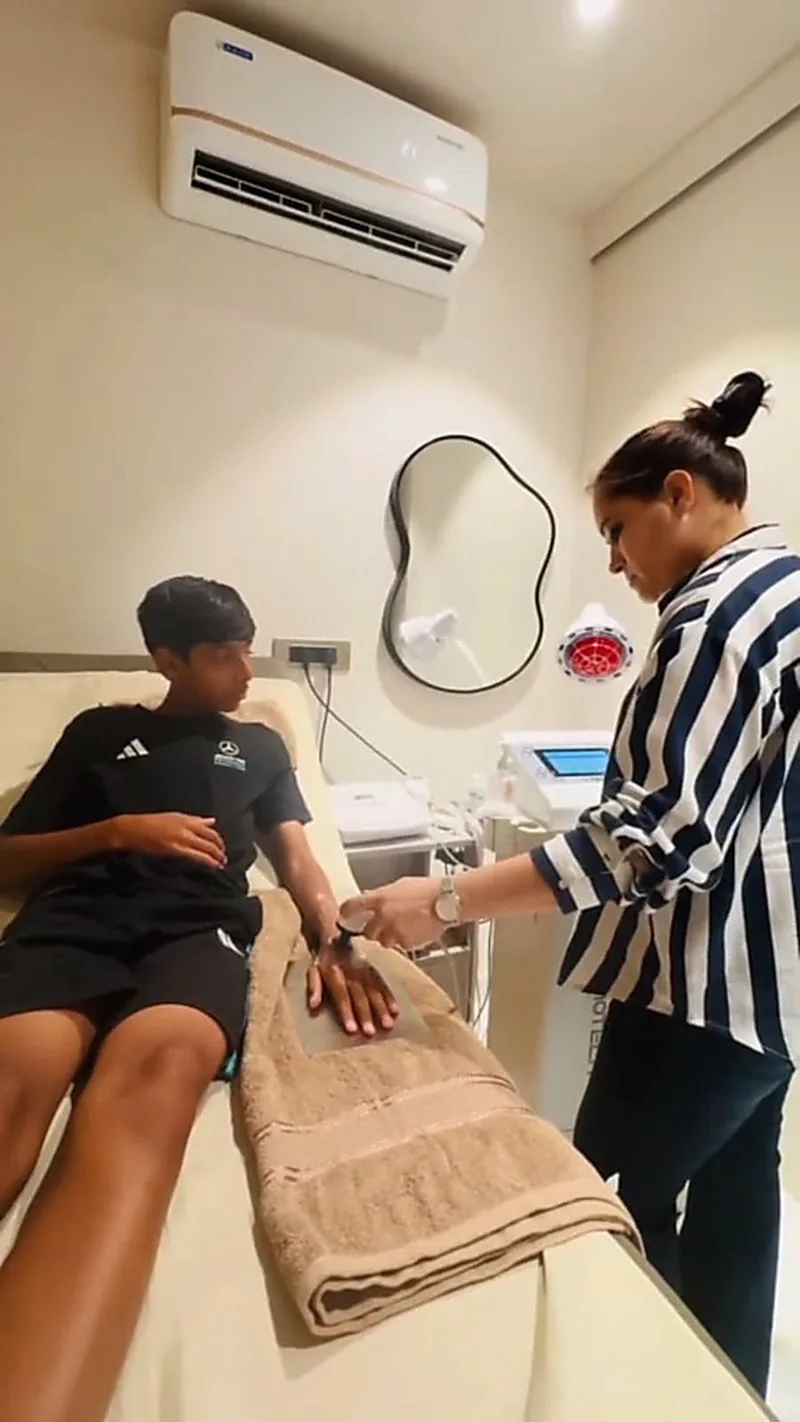
A physiotherapist can provide a proper in-person assessment. At Trivayu Physio Center in Vaishali Nagar, Jaipur, the team offers manual therapy, exercise therapy, and electrotherapy. Services also include Clinical Pilates, dry needling, and advanced techniques such as Class IV High Power Laser Therapy or TECAR Therapy. These can support overall hand function as part of a broader plan. The centre also provides home visits and online consultation.
Common questions
What causes morning hand stiffness in rheumatoid arthritis?
It is caused by overnight build-up of fluid due to inflammation and lack of movement. The immune response in rheumatoid arthritis leads to joint swelling that feels stiff after sleep. You may also find Morning Stiffness in Rheumatoid Arthritis: Self-Care in Jaipur useful.
Can gentle exercises reduce hand stiffness without medicine?
Gentle exercises and routine changes can support comfort and finger mobility. They work best alongside prescribed medical care and do not replace medicine.
How long should I do hand exercises for rheumatoid arthritis?
Short sessions of 5–10 minutes once or twice a day are often enough. Focus on gentle movement and stop if pain worsens. Consistency over weeks matters more than duration.
Are there daily habits that help with rheumatoid morning stiffness?
Yes. Warm showers, joint protection methods, steady movement during the day, and use of warmth at night can all help reduce morning stiffness in hands at home.
When should I see a physiotherapist for rheumatoid hand pain?
See a physiotherapist when stiffness interferes with daily activities, does not ease with home steps, or if you notice increasing swelling or weakness. An assessment helps guide safe care.
Managing morning hand stiffness rheumatoid arthritis involves small daily changes and careful movement. These steps support joint warmth, finger mobility, and daily comfort. Recovery varies from person to person. Combine home efforts with guidance from your doctor and physiotherapist for best results.
Book an assessment at Trivayu Physio Center. Call +91 90570 65065 or message on WhatsApp to arrange a convenient time.
Physiotherapy is not the right first step for everything. Seek medical assessment promptly if any of the following apply to you:
Chest pain or tightness, or pain spreading into your arm, neck or jaw, with breathlessness, sweating or feeling sick, whether at rest or during your exercises, which needs emergency care. Long-standing inflammatory arthritis raises the risk of a heart attack, and the pain can be milder than you expect, so do not put it down to a muscle strain from exercising.
Pain, swelling or warmth in one calf or one whole leg, especially after days of resting through a flare, after an operation or after a long journey, which needs same-day medical assessment and no rubbing, stretching or massage in the meantime. With sudden breathlessness, chest pain that is worse when you breathe in, or coughing up blood, it needs emergency care. Tell whoever sees you if you take tablets such as tofacitinib, baricitinib or upadacitinib.
New or changed neck or back pain after any knock, jolt or fall, even a small one, if you have ankylosing spondylitis or axial spondyloarthritis, which needs same-day assessment and a scan. A spine that has stiffened over years breaks far more easily than a normal one, and the break can be missed on an ordinary X-ray, so keep the area still and let nobody treat, stretch or manipulate it until a fracture has been ruled out. New numbness or weakness after such an injury needs emergency care.
One joint that suddenly becomes far more painful, hot and swollen than your usual flare and that you can barely move, which needs same-day medical assessment even if you have no fever, because arthritis medicines such as methotrexate, a biologic or steroid tablets can keep your temperature normal while a joint infection takes hold.
A new infection while you are taking arthritis medicines such as methotrexate, a biologic or steroid tablets, for example a chest infection, a shingles rash, mouth ulcers that will not heal, a wound turning red, or burning when you pass urine, which needs same-day advice from the doctor who prescribes them. If you also feel shivery or confused, are breathing fast, or feel very unwell, that needs emergency care. If you take steroid tablets and cannot keep them down, get medical help the same day rather than simply stopping them.
New neck pain, or a feeling that your head is heavy or unstable, if you have had rheumatoid arthritis for many years, which needs medical assessment before any neck treatment. Tell any doctor or surgeon treating you, particularly before an operation.
Clumsiness or numbness in both hands, dropping things, unsteady walking, or a change in bladder or bowel control, which needs same-day assessment and no neck exercises until you have been seen. Being unable to pass urine at all, or new numbness around the saddle area, needs emergency care.
A painful red eye, blurred vision or new sensitivity to light, which needs same-day medical assessment. Sudden loss of vision needs emergency care.
New or worsening breathlessness, or a dry cough that will not settle, which needs medical review before you carry on exercising, and the same day if it has come on over days rather than months or comes with a fever.
Colour change, or small painful spots or sores on the fingers, toes or around the nails, which needs medical review within a few days. A finger, toe or foot that suddenly turns white or blue and stays cold, painful or numb needs emergency care.
A flare that has not settled after about two weeks, with several joints swollen, morning stiffness lasting more than an hour and increasing tiredness, which is beyond what physiotherapy alone will settle and needs a review with the doctor who manages your arthritis.
Pregnancy, planning a pregnancy, or breastfeeding while you take arthritis medicines, which needs a conversation with the doctor who prescribes them before you continue, and should be mentioned to your physiotherapist so your exercises can be adapted.
Pain following a significant fall, road accident or other major injury
Fever, chills or feeling generally unwell alongside the pain
Weakness that is getting worse, or numbness that is spreading
Unexplained weight loss, or a past history of cancer
Pain that is constant, wakes you at night and does not change with position
If you lose control of your bladder or bowels, develop numbness around the groin, or have chest pain or breathlessness, treat it as an emergency and go to hospital.
Safety limits and when this does not apply
Stop exercising and get help if you develop chest pain or tightness, breathlessness that is not normal for you, or you feel faint. Nothing in a home exercise programme is worth pushing through those, and this rule comes before every rule below.
A painful, swollen, warm calf is never treated as a tight muscle. No stretching, massage, foam rolling, dry needling or compression work on it until a clot has been ruled out by a doctor.
During a flare the aim is gentle movement within comfort, not gaining range. A swollen joint is not pushed into resistance, and strong end-range hands-on techniques and heavy gripping are left alone while it is inflamed; strengthening is built back up as the flare settles, not during it. Strong local heat is usually unhelpful on a joint that is actively hot and swollen, and most people are more comfortable with gentle cooling during a flare and with heat for stiffness between flares.
The spine is not manipulated in rheumatoid arthritis, ankylosing spondylitis or axial spondyloarthritis, and neither is any joint that is unstable or has changed shape, because these conditions affect the supporting ligaments as well as the joints and can leave the spine brittle. After any fall or knock, nothing is done to the neck or back until a fracture has been excluded.
This is a physiotherapy clinic. We do not diagnose inflammatory arthritis, prescribe or adjust medicines, or replace the doctor who manages your condition. Starting, stopping or changing any arthritis medicine, including a steroid injection, is that doctor's decision, and nothing in this article is a reason to change, delay or skip a dose. Steroid tablets in particular are never stopped suddenly.
This article is general information. It is not an assessment of your problem, and it cannot account for your medical history, medication or imaging.
Evidence. Guidance on arthritis and joint stiffness here follows the 2 sources listed under References above.
Clinical experience. Practical points on what tends to help in the clinic reflect the experience of the Trivayu physiotherapy team in Vaishali Nagar, Jaipur, and are not the same as trial evidence.
Opinion. Where we suggest a preference or an approach, that is our clinical judgement. Other qualified clinicians may reasonably differ.
Backward walking helps athletes recover from ACL injuries. It builds knee stability in Phase 2 of rehab. This exercise targets quadriceps and improves control after surgery…
After ACL surgery, rebuilding knee strength takes time and care. ACL rehabilitation phases guide this process step by step. Phase 1 protects the graft and cuts…
After hip replacement surgery, dressing your lower body safely helps build independence. By week 6 of hip replacement recovery, many patients aim to dress without help.…