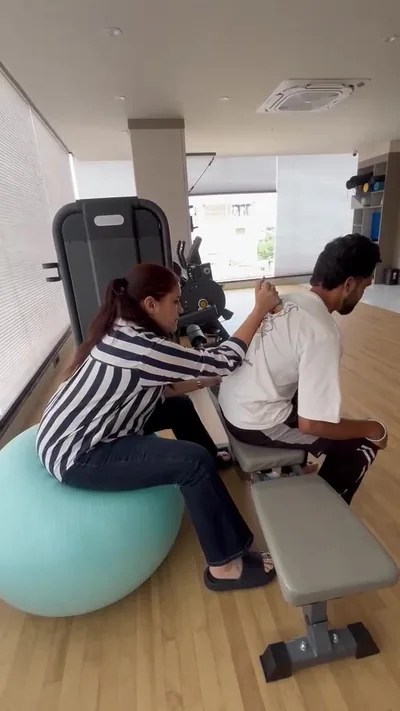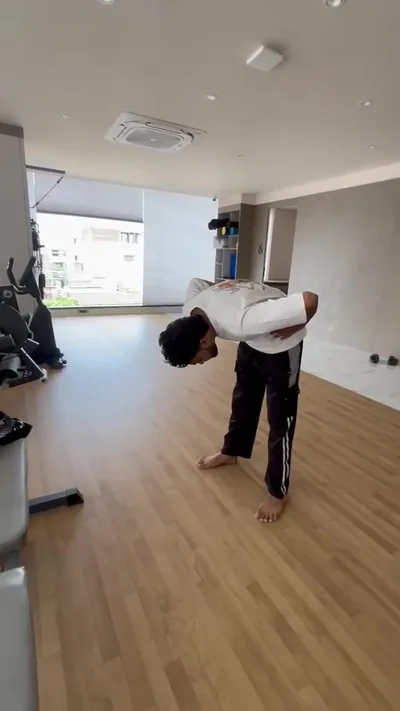
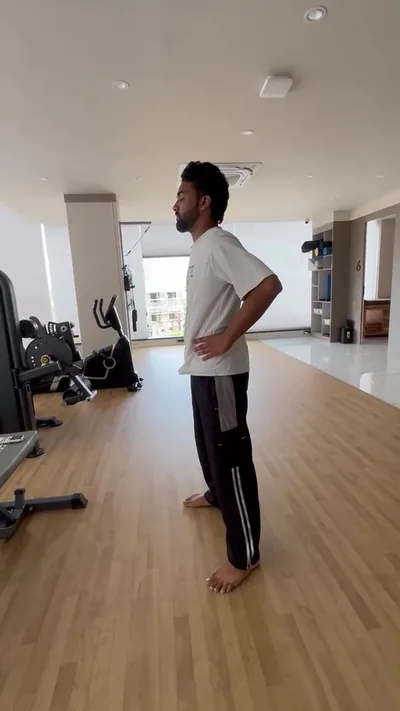
Is Side Bending Safe with L4 L5 Herniated Disc
An L4 L5 herniated disc happens when the disc between your fourth and fifth lumbar vertebrae bulges or ruptures. This presses on nearby nerves, causing pain…
Read article

After knee replacement surgery, using stairs can feel daunting. In the first week, safe descent matters most to avoid falls and support healing. This guide focuses on handrail techniques for knee replacement stairs down first week. You will learn risks, correct methods, what to expect in sessions, and when to get help.
Most patients face stiffness and pain early on. Proper technique builds confidence for knee surgery recovery stairs. Always consult your doctor before starting. Trivayu Physio Center in Vaishali Nagar, Jaipur, offers post-surgery rehab to guide you. A physiotherapist checks your form, strength, and balance before stair practice.
Focus on slow, controlled movements. Use aids like crutches if advised. Handrails provide key support for safe stair descent knee. In clinic, expect guided practice on 4-6 steps with rails on both sides.
Stairs pose risks in the first week after knee replacement. Your new joint needs time to settle. Weak muscles and swelling make balance hard. Falls can harm the surgical site or delay progress.
Handrail technique matters for safe descent. It lets your upper body take weight off the knee. This reduces strain during going down stairs after knee replacement. Early practice builds confidence without overload. Physiotherapists start with seated marches or standing shifts to prepare muscles before stairs.
Your surgeon or physiotherapist will clear stair use. Start only when ready. Poor form raises slip risk on stairs after knee replacement. Expect initial sessions to last 10-15 minutes, focusing on one direction at a time. Looking for a Rehabilitation Centre Near Me? Our team in Vaishali Nagar, Jaipur can assess you in person.
Use this step-by-step handrail method for knee replacement patients. Always lead with your good leg. Grip the handrail firmly with one hand. Keep your body close to the rail.
Body positioning keeps knee safe. Bend slightly at hips and knees. Look down at feet for placement. Breathe steadily – exhale on the step down. This post knee replacement stairs technique protects the joint and builds endurance.
In first week knee replacement mobility, expect to manage 4-6 steps per session. Physiotherapists watch for knee wobble or hip drop, correcting with cues like “squeeze your glute” or “push through heel.”
Leading with good leg puts power on the strong side. Operated knee follows without full weight. Handrail supports the rest. This lowers pain in first week knee replacement mobility. It also trains even muscle use over time. If crutches help, hook one on the rail or hold in opposite hand. More on Knee Pain Treatment and how we assess it.
Practice indoors with support for knee replacement rehab stairs. Sit at top of short stairs. Have someone spot you from behind, ready to steady your hips.
Gradual progression aids safe stairs after knee surgery. Go slow – one step every few seconds. After descent, practice ascent by leading with operated leg up, good leg follows. This balances both directions.
Physiotherapists add resistance bands or balance pads before stairs to strengthen quads and hips. Expect homework like 10 heel raises daily to prep for knee replacement rehab stairs.
Many rush or use wrong foot lead. This increases fall risk. Handrail misuse adds danger. Fix these early for smooth knee surgery recovery stairs.
Avoid these for safe stair descent knee. Wrong habits delay recovery. If you catch a slip, freeze and reset – don’t push through.
In week one, mobility focuses on bed to chair, then short walks. Stairs come after basic transfers if cleared. Expect limits: 10-20 metres walking per go, with rests. For knee replacement rehab stairs, sessions build from rail holds to full descent.
Physiotherapists assess gait first – do you limp? Shift weight evenly? Then introduce stairs. They demo twice, you copy once assisted, then solo with watch. Ice follows to cut swelling. Home plan includes mirror checks for form. You may also find Knee Replacement Stairs Balance Week 5 useful.
Safe stair descent knee starts with quad sets: lie down, tighten thigh muscle 5 seconds, 10 times hourly. This wakes the operated leg for stairs.
Watch for signs needing professional assessment. These include increased pain, swelling, instability on stairs, or falls. Do not wait if you cannot bear weight or knee buckles.
Trivayu Physio Center specialises in post-surgery rehab. Our team, including Dr. Hritika Choudhary with advanced electrotherapy and post-op rehab, helps with knee replacement stairs. We offer Manual Therapy, Orthopaedic Rehabilitation and Electrotherapy at Vaishali Nagar and Vidyadhar Nagar. Expect tailored plans: gait analysis, stair drills, home exercises.
Book an in-person assessment. Call +91 90570 65065 or WhatsApp https://wa.me/919057065065. Home visits available for early mobility needs.
Lead with good leg. Grip handrail. Lower slowly using arms. Bring operated leg down after. Practice with spotter.
Hold handrail firmly. Face stairs. Use upper body to control descent. One step at a time, good leg first.
Only if cleared by your doctor. Start with support and short stairs. Avoid if unsteady or painful.
Practice with spotter. Progress slowly. Stop at pain. Use good leg to lead. Wear grippy shoes.
This varies. Physiotherapy speeds normal use. Seek assessment for your timeline. Most need 4-6 weeks guided practice.
In summary, master handrail techniques for knee replacement stairs down first week. Safe practice builds confidence in knee surgery recovery stairs. Progress at your pace with professional guidance.
Ready to improve mobility? Book an assessment at Trivayu Physio Center today. WhatsApp or call +91 90570 65065 for help with going down stairs after knee replacement.
Physiotherapy is not the right first step for everything. Seek medical assessment promptly if any of the following apply to you:
If you lose control of your bladder or bowels, develop numbness around the groin, or have chest pain or breathlessness, treat it as an emergency and go to hospital.
Truly thankful to Dr. Jyoti Choudhary and the entire team of Trivayu Physio Centre for their genuine care, humble behaviour, and excellent treatment.
Mahesh Dhaka, Google review
This is one patient's own account, published with consent on our reviews page. It describes their experience, not a predicted outcome. Individual results vary.
An L4 L5 herniated disc happens when the disc between your fourth and fifth lumbar vertebrae bulges or ruptures. This presses on nearby nerves, causing pain…
Read articleShopkeepers in Jaipur often stand for long hours behind counters. This prolonged standing can trigger sciatica pain. Sciatica happens when the sciatic nerve gets irritated, often…
Read articleHerniated disc night pain disrupts sleep for many. The disc bulge presses on nerves, causing sharp back pain or sciatica that flares up at night. Simple…
Read articleMessage us on WhatsApp with your main concern and preferred time, and we'll confirm your first visit the same day.