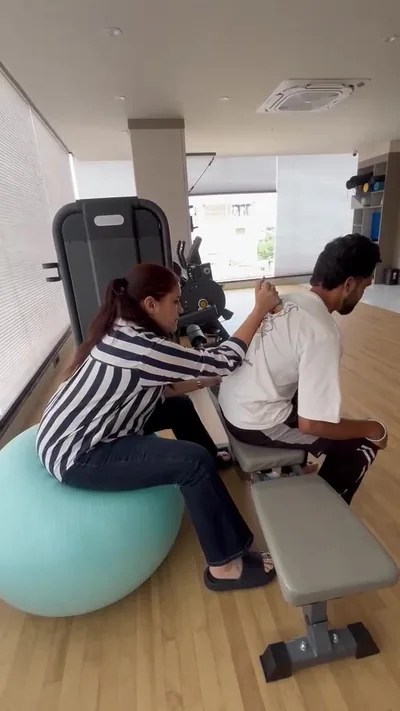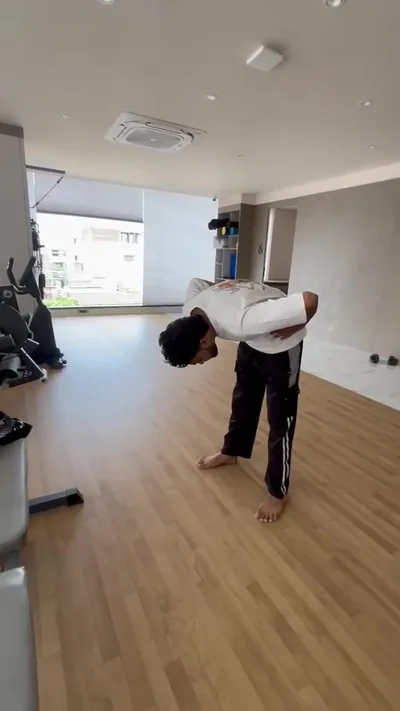
Is Side Bending Safe with L4 L5 Herniated Disc
An L4 L5 herniated disc happens when the disc between your fourth and fifth lumbar vertebrae bulges or ruptures. This presses on nearby nerves, causing pain…
Read article

A slipped disc can press on nerves to your legs. This causes weakness, numbness, or pain down one or both legs. Post-flare patients can track recovery at home. Simple tests like heel-toe walking self-assess strength and balance without tools. Single-leg stands or toe raises spot leg strength issues.
These checks give clues on nerve recovery. They spot if leg weakness improves. But they do not replace a doctor’s exam. See a physiotherapist for proper checks, especially at Trivayu Physio Center in Jaipur. A physio uses hands-on tests to confirm home findings.
Track leg strength daily. Heel-toe walk fits recovery routines. Combine with pain notes and daily function. Log how far you walk without rest. Note if stairs feel easier.
A slipped disc happens when the soft centre pushes through the outer ring. This bulge can squeeze nerves. In the lower back, it affects the sciatic nerve. That leads to leg weakness, tingling, or pain called sciatica.
Leg weakness feels like foot drag or knee buckle. Tasks like climbing stairs get hard. Self-testing shows if rest helps. But home tests miss muscle wasting or posture shifts. Slipped disc symptoms leg strength often start mild, like heavy thighs, then worsen to trips on uneven ground.
See a professional for full checks. Scans or hands-on tests give the picture. In Jaipur, clinics handle spine care. Do not delay if weakness worsens. A physio tests reflexes or resists leg push. They may tap your knee to check the jerk response.
The heel-toe walk checks balance and leg strength. Walk straight, heel touching toe each step. It stresses muscles and nerves from spine to feet. For slipped disc, it reveals if nerve pressure eases. Nerves from L4 to S1 control foot and ankle. L5 nerve lifts your big toe; S1 powers calf push-off. Looking for a Physiotherapist in Jaipur? Our team in Vaishali Nagar, Jaipur can assess you in person.
This test suits slipped disc checks. It mimics real-life balance. Use it after pain calms. Test weekly. Physios use it in Orthopaedic Rehabilitation. Heel to toe walking slipped disc test flags if the disc bulge still irritates nerves. Sway on turns shows poor proprioception from nerve lag.
Post-flare, nerves heal slowly. Heel-toe spots gains in leg power. It warns if sciatica lingers. Warm up first. Sway means disc still presses nerves. Physios watch your gait closely, noting step length or arm swing too.
Try these for leg weakness. They target slipped disc leg strength. Home tests for leg weakness help spot patterns early.
Single-leg stand: Stand on one leg for 30 seconds. Hold a chair if needed. Switch legs. Shakes signal L5 nerve issues. Eyes open first; progress to closed if steady. Time how long you hold without touch.
Sit-to-stand test: Stand up 10 times from armless chair. Time it. Slow rises point to quad or glute weakness. Quads straighten knee; glutes lift hips. Weakness here links to L3 or L4 nerves.
Toe raises: Rise onto toes 10 times. Weak calves show S1 issues. Do near a wall. Count reps without heel drop. Ankle dorsiflexion test adds heel walks forward. More on Ankle Pain Treatment and how we assess it.
Foot drop check: Sit and lift toes high 10 times. Slow lift means peroneal nerve trouble from L4-L5 disc.
Use daily post-flare. Note which leg struggles. Alternate tests to avoid fatigue.
Find a straight path, 10 steps long. Wear flat grippy shoes. Have support nearby. Test when rested. Morning works best, before daily strain.
Steps for heel-toe walk:
Safety variations:
Good: Steady 10 steps, no wobble. Weak: Sway, drag, poor heel-toe. Stop if pain or numbness spreads. Test on carpet. Twice a day max. If one leg drags more, that side has worse nerve pressure.
Steady walk means nerves recover. Wobbles point to ongoing weakness. Frequent fails show strength lags. Drag on one foot flags foot drop from L5 root.
Progress: Less support over time. Poor results mean seek physio. At Trivayu, Manual Therapy eases nerve pinch. Physios add resisted heel walks in clinic.
Track in notebook: date, steps, support, pain 0-10, notes on toe lift. Share with therapist. Photos of your path help show sway.
Layer tests. Week 1: Heel-toe and single-leg. Week 2: Add toe raises and foot drop check. Improvement: Less support, more reps. Check slipped disc progress at home by comparing weekly scores. Steady gains mean disc settling.
Daily: Morning test, evening notes. Red flags: Worsening drag, new numbness to groin, bowel changes—see doctor now. Self assess slipped disc recovery with trends: if heel-toe improves but toe raises lag, target calves next.
Pair with knee-to-chest pulls 10 times each side. Track walking distance without limp. Plateaus need pro input. Add squats if sit-to-stand speeds up.
Trends show recovery. Physios repeat tests, add bands later. They measure exact hold times or rep counts for baselines.
Combine leg strength tests with function checks. Walk 100 metres timed; note limp. Climb 10 stairs up-down; count rests. Straight-leg raise lying down: lift leg to 70 degrees without knee bend. Pain at 30 degrees suggests disc irritation.
Slipped disc leg strength recovery phases: First, less pain on tests. Then, steadier balance. Last, full power on raises. Track numbness maps: shade areas on leg drawing daily. You may also find L5 S1 Slipped Disc Leg Weakness Test at Home useful.
If tests stall after 2-3 weeks, nerve recovery slows. Physio input speeds it. Home logs guide their plan: more core if balance poor, strength if power lags.
Book evaluation if weakness or no progress in two weeks. Trivayu in Vaishali Nagar or Vidyadhar Nagar offers spine care. Robotic Spinal Decompression Therapy stretches spine to relieve pressure. Sessions 20-30 minutes. Expect gentle pull on table, no pain.
Meet Dr. Jyoti Choudhary (17+ years orthopaedics) or Dr. Hritika Choudhary. They take history, test strength, check posture, plan custom care. Physios palpate your back for tight spots. They demo exercises with feedback.
Electrotherapy calms pain. Home exercises follow. Call +91 90570 65065 or WhatsApp. Hours: Mon-Sat 8am-8pm, Sun 10am-1pm. Home visits available. Bring your test log to first visit.
Reduced leg power from disc pressing nerves. Drag feet, stumble, heavy legs. Often with sciatica. Test with heel-toe or single-leg. Feels like leg gives way on slopes.
Walk straight, heel to toe 10 steps. Use support if needed. Check wobbles. See guide. Warm up. Note side differences.
If worsens, falls, pain spreads. Urgent for sudden changes or bladder issues. New thigh numbness too.
Yes, smoother walks mean better nerves. Track weekly with other tests. Less sway equals progress.
See physiotherapist. They assess and rehab. Trivayu does gait analysis. Expect resisted tests and posture check.
Daily symptoms, weekly tests. Log results. Stop if stuck, call pro. Morning best for consistency.
Layer heel-toe, stands, raises. Note trends in notebook. Gains in all mean forward movement.
Heel-toe tests aid monitoring post-flare. Pair with professional care. They confirm nerve roots and tailor rehab.
Book assessment today. WhatsApp or call +91 90570 65065.
Physiotherapy is not the right first step for everything. Seek medical assessment promptly if any of the following apply to you:
If you lose control of your bladder or bowels, develop numbness around the groin, or have chest pain or breathlessness, treat it as an emergency and go to hospital.
Truly thankful to Dr. Jyoti Choudhary and the entire team of Trivayu Physio Centre for their genuine care, humble behaviour, and excellent treatment.
Mahesh Dhaka, Google review
This is one patient's own account, published with consent on our reviews page. It describes their experience, not a predicted outcome. Individual results vary.
An L4 L5 herniated disc happens when the disc between your fourth and fifth lumbar vertebrae bulges or ruptures. This presses on nearby nerves, causing pain…
Read articleShopkeepers in Jaipur often stand for long hours behind counters. This prolonged standing can trigger sciatica pain. Sciatica happens when the sciatic nerve gets irritated, often…
Read articleHerniated disc night pain disrupts sleep for many. The disc bulge presses on nerves, causing sharp back pain or sciatica that flares up at night. Simple…
Read articleMessage us on WhatsApp with your main concern and preferred time, and we'll confirm your first visit the same day.