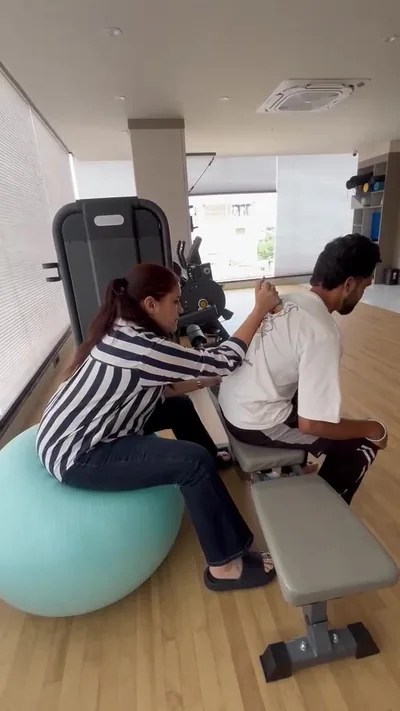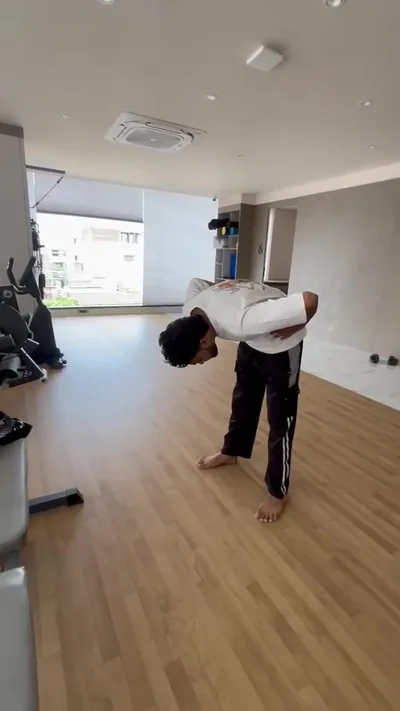
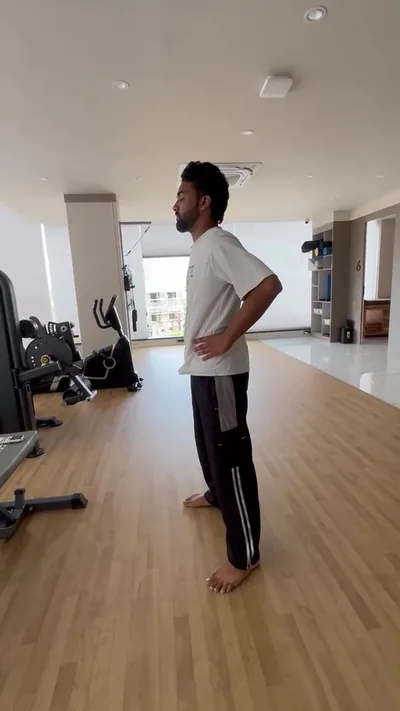
Is Side Bending Safe with L4 L5 Herniated Disc
An L4 L5 herniated disc happens when the disc between your fourth and fifth lumbar vertebrae bulges or ruptures. This presses on nearby nerves, causing pain…
Read article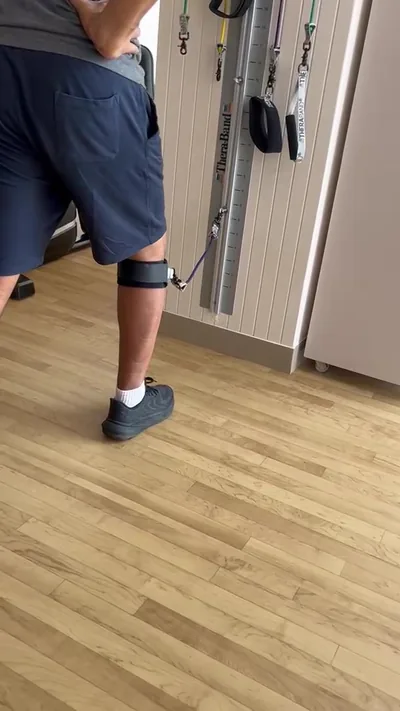

After ACL surgery, returning to gym squats takes time and care. Phase 4 of rehab uses gym clearance drills for ACL readiness. These ensure your knee handles squats without risk.
Gym athletes often rush heavy loads. This causes setbacks. Safe weightlifting post ACL starts with strength and stability tests. Get an in-person physio assessment before loaded squats.
In Jaipur, Trivayu Physio Center guides ACL recovery squats. Their team helps with post ACL knee strength. This article covers drills, progression, and when to seek help.
Phase 4 marks return to sport-specific training after ACL tear or surgery. Goals: knee strength for squats, control in single-leg tasks, no pain or swelling.
A physiotherapist reviews progress from earlier stages. They test quad strength with leg press or knee extension, ensuring operated leg matches the other. Hamstring strength uses curls for balance.
Stability prevents knee wobble under load. Without it, weightlifting risks re-injury. Sessions include balance on foam pads or wobble boards. Physio checks for knee giving way when fatigued. They also assess hip hike or trunk lean, which signal weakness.
Gym clearance drills confirm knee handles squat demands. Start with single-leg squats: 8-10 reps per side to 60 degrees. No knee valgus or pain. Knee over second toe, hips level, arms forward. Looking for a Physiotherapist Near Me? Our team in Vaishali Nagar, Jaipur can assess you in person.
Tests power and landing control. Land softly, knees bent. Triple hop test: three forward hops, measure total distance. Controlled take-offs, stable landings.
Y-balance test: reach forward, sideways on operated leg. Poor forward reach flags weak quads or tight calves. Side reach tests hip abductors; poor performance means more lateral band work.
Use stability pads. Physio may video drills to spot form flaws. They guide corrections, like cueing “push knee out” during squat descent.
Start bodyweight squats: full depth, neutral spine. Feet shoulder-width, toes out 15 degrees. Thighs to parallel, drive through heels. 3 sets of 12-15 reps, twice daily if pain-free. Breathe: inhale down, exhale up. Add a mirror to check knee tracking.
Goblet squats: light weight at chest. Upright posture, elbows inside knees. 3 sets of 10 with 8-12kg. Hold weight close to reduce back strain. Progress depth slowly; partial squats first if full range pinches.
Front squats first: bar on shoulders, elbows high. More core and quad control, less knee shear. Tempo squats: 3 seconds down, 1 up, to build control.
Pause squats: hold 3 seconds at bottom. Builds strength at sticking point. Box squats: sit to parallel box, stand explosively. Teaches hip hinge without momentum.
Form: knees over toes, brace core, squat to parallel. Stop for sharp pain or swelling. Electrotherapy eases swelling; Manual Therapy improves hip and ankle mobility. Hinge hips first, then bend knees. More on Sciatica Treatment and how we assess it.
Accessories: Romanian deadlifts for hamstrings; step-ups on 20-30cm box; Bulgarian split squats with back foot elevated. 2-3 times weekly, alternate with squats. Step-ups mimic squat ascent; do 3 sets of 10 per leg, knee forward over foot.
VMO keeps kneecap tracking: terminal knee extensions last 30 degrees against band. Sit with band around ankle, straighten knee fully. 3 sets of 15. Lateral band walks for glutes against valgus: step side to side, 10 steps each way.
Proprioception: one-leg eyes closed 30 seconds, progress to catching ball while balancing. Cable kicks or Bosu squats add perturbation. Stand on Bosu dome side, squat slowly; it challenges ankle control.
Post ACL knee strength focuses on quad-hamstring ratio. Use seated leg curls followed by extensions. Single-leg deadlifts build posterior chain stability. Physio tailors to graft type and surgery. Uses taping early, weans off.
Squatting drills for ACL recovery start unloaded. Wall sits: back against wall, thighs parallel, hold 45 seconds. Builds isometric quad endurance. Progress to Spanish squats with band behind knees, pulling forward while squatting. You may also find ACL Rehab Squat Depth at Month 4 useful.
Skater squats: narrow stance, one foot back, lower until back knee taps ground. Targets VMO and balance. 3 sets of 8 per side. Once stable, add split squat jumps cautiously.
Progress to heavy squats ACL only after drills pass. Use safety bars in rack. Warm up with empty bar, 10 reps. Add plates gradually. Track reps to failure; stop before form breaks.
Rushing loads risks graft strain. Knee tracking inward causes valgus. Fatigue breaks form. Warm up: 10 minutes cycling, leg swings, bodyweight lunges.
Overlook single-leg work; heavy squats hide imbalances. Tight hip flexors tilt pelvis. Foam roll quads and IT band, stretch hip flexors daily with lunge holds.
Orthopaedic Rehabilitation guides fixes. Log pain, reps, swelling to spot patterns. Note if pain worsens 24 hours post-workout, signaling overload.
Add plyometrics like box jumps from 30cm height, landing soft.
Watch overuse: shin splints from stiff ankles, patellar pain from quad dominance. Cross-train swimming or cycling to spare knee. Protein for repair, anti-inflammatory foods if doctor-cleared. Sleep 8 hours for tissue recovery.
Annual physio check-ins reassess symmetry. Test hop distances yearly. Adjust for life changes like weight gain, which stresses graft.
Squatting drills ACL clearance include drop jumps: step off 30cm box, land and squat immediately. Check for knee collapse. Pass if landings symmetric.
Knee stability gym ACL uses eccentric focus: slow negatives on leg press, 5 seconds down. Builds tendon resilience. Add medicine ball slams between squat sets for power.
Physio watches for anterior knee pain during deep squats; cues wider stance or shoe inserts if needed.
Seek help for lasting pain, buckling, swelling. Instability in hops, grinding or clicking. New limp or quad atrophy.
Trivayu Physio Center in Vaishali Nagar specialises in sports injury rehab. Dr. Jyoti Choudhary (17+ years, Rajasthan Women’s Cricket Team) leads ACL return to gym. Dr. Hritika Choudhary does electrotherapy and post-op rehab. Dr.
Robotic Spinal Decompression Therapy if needed; Clinical Pilates for strength. Book assessment for ACL rehab phase 4 squats.
Tests like single-leg squats, hop tests, Y-balance. Check stability and strength before squatting.
After physio clearance, phase 4 goals met with symmetry, no symptoms.
Pass clearance drills. Progress bodyweight to barbell. Watch form, pain; get input.
Physio assesses knee.
Yes, with clearance. Trivayu guides using exercise therapy and sports rehab.
Quad extensions, hamstring curls, glute bridges.
Master gym clearance drills before heavy loads. Build knee strength steadily.
Book at Trivayu Physio Center. WhatsApp +91 90570 65065 or call for safe gym squats.
Physiotherapy is not the right first step for everything. Seek medical assessment promptly if any of the following apply to you:
If you lose control of your bladder or bowels, develop numbness around the groin, or have chest pain or breathlessness, treat it as an emergency and go to hospital.
Truly thankful to Dr. Jyoti Choudhary and the entire team of Trivayu Physio Centre for their genuine care, humble behaviour, and excellent treatment.
Mahesh Dhaka, Google review
This is one patient's own account, published with consent on our reviews page. It describes their experience, not a predicted outcome. Individual results vary.
An L4 L5 herniated disc happens when the disc between your fourth and fifth lumbar vertebrae bulges or ruptures. This presses on nearby nerves, causing pain…
Read articleShopkeepers in Jaipur often stand for long hours behind counters. This prolonged standing can trigger sciatica pain. Sciatica happens when the sciatic nerve gets irritated, often…
Read articleHerniated disc night pain disrupts sleep for many. The disc bulge presses on nerves, causing sharp back pain or sciatica that flares up at night. Simple…
Read articleMessage us on WhatsApp with your main concern and preferred time, and we'll confirm your first visit the same day.