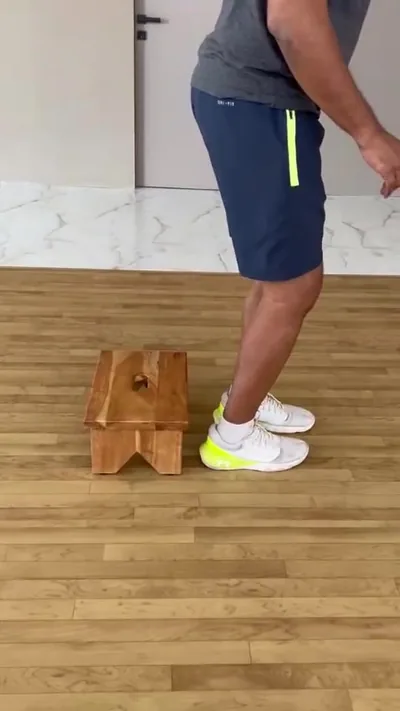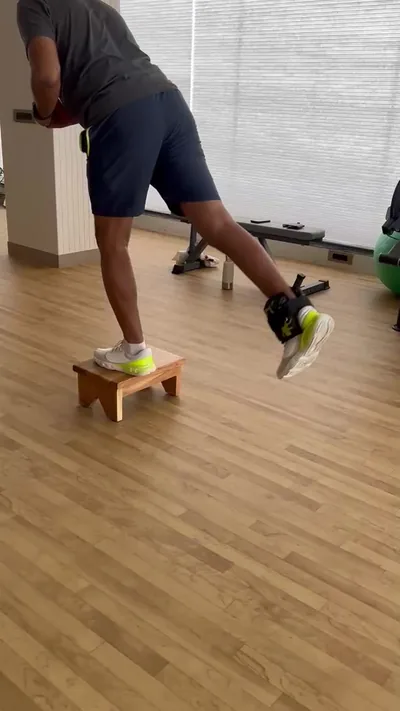
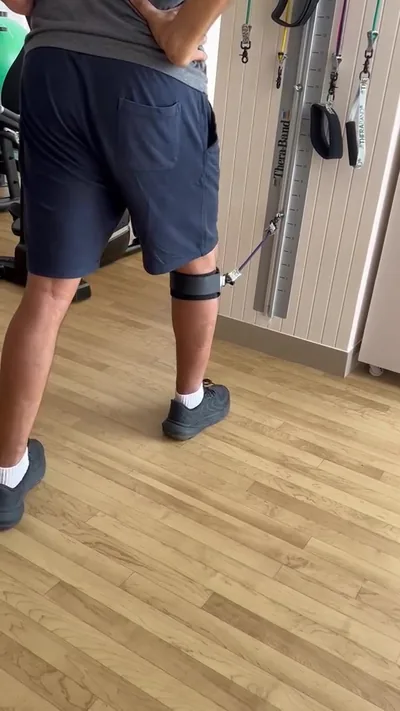
Backward Walking in ACL Rehab Phase 2
Backward walking helps athletes recover from ACL injuries. It builds knee stability in Phase 2 of rehab. This exercise targets quadriceps and improves control after surgery…
Read article

After ACL surgery, gym athletes want to know when deep squats are safe. Squat depth matters for knee stability and daily function. At month 4, many see strength gains, but clearance tests decide if full knee bend is ready.
This guide covers ACL rehab squat depth basics, month 4 progress, key tests, and safe steps. It stresses professional checks to protect your ACL graft. Recovery varies, so see a physiotherapist for your case.
In Jaipur, clinics like Trivayu Physio Center offer sports injury rehab tailored for athletes.
Squat depth refers to how low you bend your knees in a squat. Full depth means thighs parallel to the ground or lower. In ACL rehab squat depth, it tests deep knee flexion ACL without pain or wobble.
For gym athletes post-ACL, squat depth links to knee stability squat. It shows if muscles control the joint under load. Poor depth signals weakness that risks ACL graft protection. Muscles like quadriceps, hamstrings, glutes, and core must fire evenly to hold the knee in line during descent and rise.
Shallow squats build base strength. Deeper ones mimic sports moves like jumping or running. Clearance tests check readiness before pushing limits. A physiotherapist watches how your knee tracks over your toes and stays centred.
By month 4 in ACL recovery squat test, most patients regain good range. Knee bends further with less swelling. Strength improves in quads, hamstrings, and glutes.
Mobility allows partial squats. Balance drills help. But progress differs by age, graft type, and pre-injury fitness. Sports rehab pushes controlled loads here. Expect to work on straight-leg raises, wall sits, and mini-squats to 30-45 degrees early in this phase. These build endurance without full load. Looking for a Physiotherapy Near Me? Our team in Vaishali Nagar, Jaipur can assess you in person.
Do not assume full squat depth at month 4. An in-person check spots issues like graft strain. Physiotherapy ACL rehab Jaipur ensures safe gains. Your therapist measures knee range with a goniometer and tests muscle power with manual resistance.
Clearance tests confirm knee bend clearance ACL before deep squats. They assess control, not just strength. A physiotherapist performs these in clinic to check symmetry between legs.
Common tests include:
These spot asymmetries. Manual Therapy can ease tightness first, aiding test performance. Pass with no pain or instability? Advance slowly. If you fail, revisit balance work on unstable surfaces like foam pads.
Build squat depth step by step in ACL rehab month 4 squat. Start supervised to avoid errors. A physiotherapist demonstrates correct foot position—shoulder-width, toes slightly out—and cues like “knees track over toes.”
Squat depth progression follows these stages:
Signs of readiness: No pain, full control, symmetric strength. Errors like knee forward or back rounding strain the graft. Orthopaedic Rehabilitation guides this phase with targeted exercises. Post ACL gym return needs supervision. Stop if swelling or sharp pain hits. Ice for 15 minutes after sessions and elevate the leg.
ACL graft protection is key in early rehab. The new ligament needs time to integrate with bone—rushing deep flexion risks stretching it. Avoid pivoting or twisting in squats; keep movements linear. More on Sciatica Treatment and how we assess it.
Your physiotherapist teaches graft-safe cues: brace the core, squeeze glutes at top, and land softly if adding jumps later. Electrotherapy like TENS can reduce pain signals during progression, helping you tolerate deeper bends. Watch for subtle signs like warmth around the knee, which signals overload.
Combine squats with hamstring curls and calf raises for balance. This protects the graft by sharing load across the leg. Home exercises include bridges—lie on back, lift hips with feet flat—to strengthen without knee stress.
Knee stability squat drills mimic gym demands. Start with wall-supported squats: back against wall, slide down to 60 degrees, hold 30 seconds. Progress to isometric holds at parallel.
Instability tools like Bosu balls come later, after clearance. They challenge proprioception—your knee’s sense of position. A therapist spots you, correcting any wobble that could shear the graft.
Pair with single-leg deadlifts for posterior chain strength. These improve stability without full flexion. Track progress by noting hold times or reps without fatigue.
Post ACL gym return hinges on functional squat test results. These simulate real workouts: squat with a kettlebell, then hop lightly. No buckling? You’re closer to gym floors. You may also find ACL Rehab Squat Depth in Month 3 useful.
Expect 20-30 minute sessions, 3 times weekly. Your physiotherapist logs depth, reps, and pain scores. Gym return often starts with machines like leg press for controlled depth, then free weights.
Deep knee flexion ACL demands full hip and ankle mobility too. Stretch calves and hips daily. If ankles are stiff, squats suffer—use a wedge under heels if cleared.
Trivayu Physio Center in Vaishali Nagar and Vidyadhar Nagar helps with ACL rehab squat depth. Dr. Jyoti Choudhary, with 17+ years in sports and orthopaedics, leads sports injury rehab. She works with Rajasthan Women’s Cricket Team.
Dr. Hritika Choudhary handles advanced electrotherapy and post-op rehab. The team uses Robotic Spinal Decompression Therapy and Dry Needling for knee stability squat. Home visits and online consults available.
Open Mon-Sat 8am-8pm, Sun 10am-1pm. Book for personalised ACL recovery squat test. During assessment, expect gait analysis, strength tests, and a custom plan.
Deep squats often start after month 4 if tests pass. It varies. Get clearance from your physiotherapist to protect the graft. They check graft healing via hop tests too.
Single-leg squat, Y-Balance, and functional squat test check control. They guide post ACL deep squat safe. Add hop-for-distance for dynamic readiness.
Partial depth may be safe, but full needs tests. Individual factors matter. See a pro for your knee bend clearance ACL. They palpate for tenderness first.
Step up from box squats to free weights. Supervise squat depth progression. Watch for pain or instability. Include eccentrics—slow lowering—for strength.
Trivayu Physio Center offers checks. Contact for assessment at Vaishali Nagar or Vidyadhar Nagar. WhatsApp videos of your squats for remote feedback.
Progress in ACL rehab takes patience. Clearance tests ensure safe deep knee flexion ACL. Book an in-person assessment at Trivayu Physio Center. WhatsApp or call +91 90570 65065 today.
Physiotherapy is not the right first step for everything. Seek medical assessment promptly if any of the following apply to you:
If you lose control of your bladder or bowels, develop numbness around the groin, or have chest pain or breathlessness, treat it as an emergency and go to hospital.
Truly thankful to Dr. Jyoti Choudhary and the entire team of Trivayu Physio Centre for their genuine care, humble behaviour, and excellent treatment.
Mahesh Dhaka, Google review
This is one patient's own account, published with consent on our reviews page. It describes their experience, not a predicted outcome. Individual results vary.
Backward walking helps athletes recover from ACL injuries. It builds knee stability in Phase 2 of rehab. This exercise targets quadriceps and improves control after surgery…
Read articleAfter ACL surgery, rebuilding knee strength takes time and care. ACL rehabilitation phases guide this process step by step. Phase 1 protects the graft and cuts…
Read articleAfter hip replacement surgery, dressing your lower body safely helps build independence. By week 6 of hip replacement recovery, many patients aim to dress without help.…
Read articleMessage us on WhatsApp with your main concern and preferred time, and we'll confirm your first visit the same day.