Hip Pain Pregnancy Exercises in Third Trimester Jaipur
Understanding Hip Pain in Pregnancy Hip pain often starts in the third trimester. The growing baby shifts your centre of gravity forward. This strains hip joints,…
Read article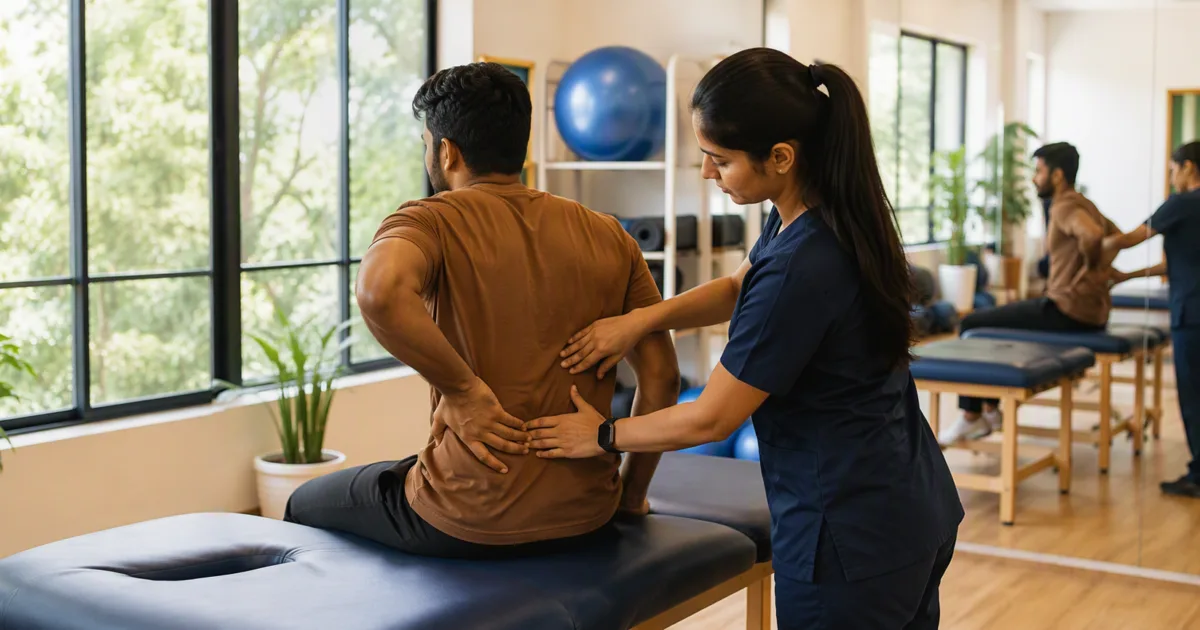
The short answer
Auto drivers and rickshaw drivers in Jaipur get back pain from long seated hours tightening spine muscles, poor posture, road vibrations, sudden stops, heavy loads, and pedaling strain. Seated stretches like forward bend, spinal twist, and hip flexor stretch provide quick relief during breaks. Posture tips and strengthening exercises build resilience.
Auto drivers and rickshaw drivers in Jaipur spend long hours seated. This tightens muscles around the spine. Poor posture adds strain. Road vibrations from bumpy roads worsen it.
Risk factors include long drives without breaks. Sudden stops jolt the spine. Heavy loads shift weight unevenly. Rickshaw drivers hunch while pedaling. Auto drivers twist for fares or mirrors.
Rickshaw drivers face extra strain from pedaling. They push down hard on pedals, which pulls the lower back forward.
Auto drivers sit for 10-12 hours daily. Jaipur’s heavy traffic on Ajmer Road or Tonk Road means idling with engine vibrations shaking the spine.
Do these during breaks. They target spine, hips, and lower back. Sit tall. Breathe deeply. Hold each 20-30 seconds. Repeat 2-3 times per side. Stop if pain increases.
After stretches, shake out legs and roll shoulders. Drink water to stay loose in Jaipur heat.
A physiotherapist assesses seated position. They watch you sit in your auto or rickshaw seat. Check how your back curves, hips level, and feet reach pedals or floor. Looking for a Physiotherapist Near Me? Our team in Vaishali Nagar, Jaipur can assess you in person.
A physiotherapist guides with hands-on feedback. They use mirrors or video to show your habits. Practice in clinic chair first, then apply to your vehicle.
Do 2-3 times weekly, 10-15 reps each. Warm up with seated stretches. A physiotherapist tailors after checking your movement patterns, like how you bend or twist during a mock drive.
Progress slowly. Do at home after night shift or mornings before work. Track how driving feels easier over weeks.
Physiotherapist asks about your daily routine: hours driven, typical routes like Jaipur-Ajmer highway, pain triggers like speed breakers. Watches you sit, stand, pedal a stationary bike, or mimic braking. Read more about our Posture Correction.
Hands-on assessment includes pressing spine gently for tender spots. They measure spine curve with tools. Test leg strength and sensation.
Sessions last 30-45 minutes. First visit builds plan. Follow-ups track progress. Expect homework: daily stretches, posture checks, strengthening. Home visits let therapist see your auto or rickshaw setup.
Trivayu offers orthopaedic physiotherapy, spine care, manual therapy, posture correction, robotic spinal decompression, clinical pilates. Dr. Jyoti Choudhary (17+ years sports and orthopaedics), Dr. Hritika Choudhary (electrotherapy), Dr. Ishu Sharma (exercise therapy). You may also find Back Pain in Jaipur Traffic: Car Stretches for Commuters useful.
Break every hour: park safely, stand, walk 50 steps. Use stops at Hawa Mahal or City Palace areas. Hydrate often; dehydration stiffens muscles in dry heat.
For rickshaws: Pad seat with cloth for cushion. Shorten straps if pulling type. Alternate routes to skip worst potholes on Galta Road. Auto drivers: Fix seat if sagging at local mechanics.
Book if pain lasts over a week, spreads to legs or buttocks, worsens with driving or pedaling.
Use posture tips, seated stretches at stops, hourly 2-minute walks. Strengthen core 2-3 times weekly. Adjust seat and pedals for neutral spine.
Forward bend for hamstrings, spinal twist for rotation, hip flexor for tight fronts, cat-cow for mobility, side bend for obliques, figure four for hips, shoulder squeeze for upper back.
If pain persists over a week, radiates to legs, limits pedaling or steering, or includes numbness. Early check prevents worsening.
It reduces strain and prevents worsening when combined with stretches, strengthening, and therapy. Physiotherapist customises for your vehicle.
Prolonged sitting or pedaling, poor posture, bumpy Jaipur roads, sudden jolts, no seat support, forward leaning, heat tension, uneven loads.
Physiotherapy is not the right first step for everything. Seek medical assessment promptly if any of the following apply to you:
If you lose control of your bladder or bowels, develop numbness around the groin, or have chest pain or breathlessness, treat it as an emergency and go to hospital.
Understanding Hip Pain in Pregnancy Hip pain often starts in the third trimester. The growing baby shifts your centre of gravity forward. This strains hip joints,…
Read articleFoot drop often follows stroke. It makes lifting the front of the foot hard. This affects walking. Seated exercises build ankle strength safely. They suit stroke…
Read articleAfter knee replacement surgery, balance training helps regain stability. In weeks 9-12, progress home exercises for daily tasks. This reduces fall risk. These routines offer safe…
Read articleMessage us on WhatsApp with your main concern and preferred time, and we'll confirm your first visit the same day.