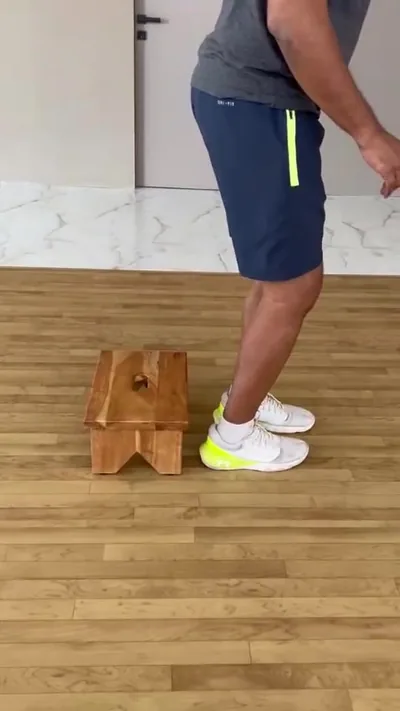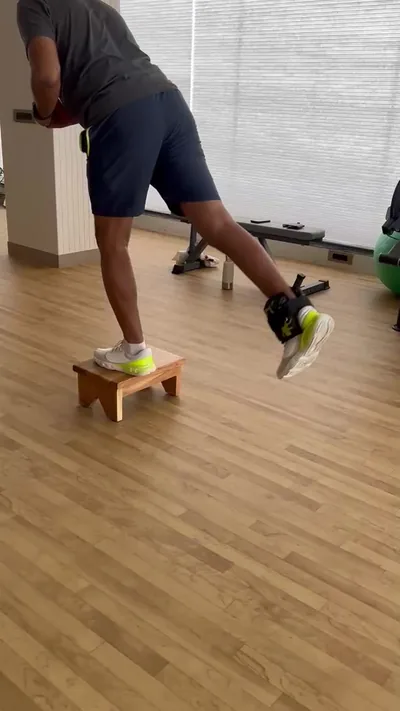
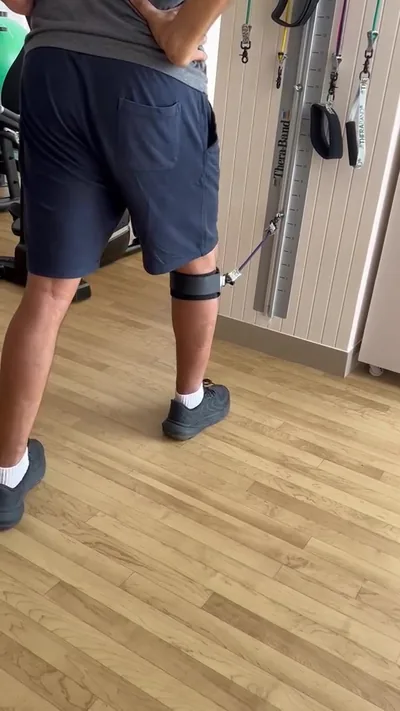
Backward Walking in ACL Rehab Phase 2
Backward walking helps athletes recover from ACL injuries. It builds knee stability in Phase 2 of rehab. This exercise targets quadriceps and improves control after surgery…
Read article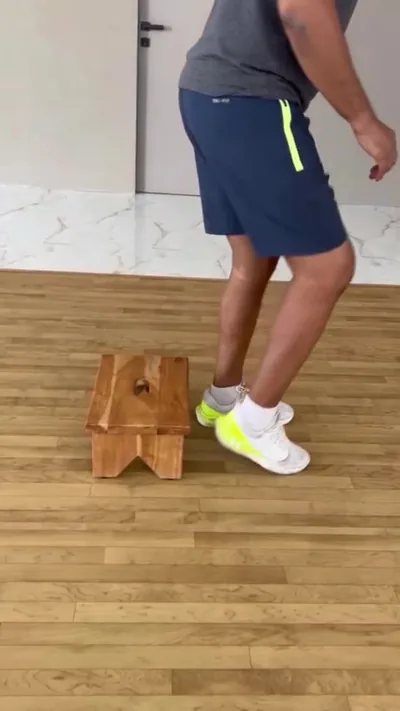
After ACL reconstruction, squatting rebuilds knee strength and stability. Month 3 marks intermediate rehab. Progress squat depth only if your knee allows painless movement. This lowers re-injury risk and supports return to sports like cricket or football.
Controlled depth protects the graft while building quadriceps, hamstrings and glutes. Rushing leads to swelling or setbacks. At Trivayu Physio Center in Jaipur, we use exercise therapy tailored to your recovery stage. Orthopaedic physiotherapy guides each step.
Always get an in-person check before deepening squats. Stop immediately if you feel sharp pain or notice swelling. These guidelines suit typical cases but differ person to person.
Squat depth progression means lowering your squat gradually over weeks. It starts with shallow squats to safeguard the knee joint. Depth increases as muscle strength and control improve.
In ACL recovery, this builds joint stability. The graft requires time to heal and integrate. Shallow squats target quads and hamstrings with minimal joint stress. Deeper squats later enhance function for sports movements like cutting or jumping.
By month 3, shift from partial squats to half or quarter depth if tests pass. This challenges control under light load. At Trivayu, physio uses hop tests for stability and knee bend checks before allowing deeper squats.
Aim for squats to knee height or just below if pain-free. Begin with bodyweight only. Add light resistance like a therapy band after physio clearance. Progress depth weekly based on how your knee responds. Looking for a Physiotherapy Clinic Near Me? Our team in Vaishali Nagar, Jaipur can assess you in person.
Accept only mild discomfort, no sharp pain. Full depth comes later, typically month 4-6. Use Clinical Pilates at Trivayu for precise control. Reformer squats apply spring resistance to guide knee tracking, avoiding free weight risks.
Physio supervision ensures correct form. Use a mirror or therapist feedback to track knee bend. Step back to shallower depth if swelling appears. Trivayu assessment includes manual alignment checks to set your exact safe depth.
ACL rehab follows phases: early protection, then strength building, and finally sports-specific work. Month 1 focuses on reducing swelling with ice, compression and gentle knee bends. Month 2 introduces mini-squats and closed-chain exercises like wall slides.
Month 3 advances to loaded squats if you meet criteria: knee flexion to 120 degrees, single-leg balance for 30 seconds, step-ups without limping. Clinic sessions happen twice weekly: start with electrotherapy to control swelling, follow with squats and balance work.
Progress to month 4 with deeper squats and single-leg variations if balance improves. Sports injury squat rehab adds directional changes, like lateral squats for cricket fielding. Orthopaedic physio monitors graft protection throughout. Always pair with medical follow-ups for imaging if needed. Read more about our Orthopaedic Physiotherapy.
Pain levels set the pace. Mild ache allows progression; sharp pain means pause.
Knee flexion reaches 120 degrees, measured with a goniometer during assessment.
Quad and hamstring balance, tested via single-leg stands or leg press machines.
Balance and proprioception, practiced on foam mats with eyes closed. Manual therapy releases tight tissues. Electrotherapy cuts swelling. Soft tissue work targets hip flexors and IT band to improve squat form.
Swelling control remains key: elevate knee post-exercise, ice for 15 minutes. Track girth with a tape measure around the knee.
Perform 2-3 sets of 8-12 repetitions, 3 times weekly under guidance. Breathe out on the way up, in on the way down. Rest 60-90 seconds between sets.
Form essentials: feet shoulder-width, toes slightly out, knees track over second toe, back neutral, core braced, weight through heels. Trivayu exercise therapy incorporates these. Advance depth by 5-10 cm weekly if knee stable. Record video for self-review or physio feedback.
Start with feet hip-width apart, toes turned out 10-15 degrees. Hinge at hips first, then bend knees to your cleared depth.
Key cues: push knees out against imaginary resistance, keep weight in heels and mid-foot, gaze forward. Tempo: 3 seconds down, 1 second up, pause at bottom. Watch for knee cave-in, often from weak glutes or quads.
Orthopaedic physio identifies valgus collapse during assessment. Warm-up: 5 minutes stationary bike, followed by 10 bodyweight squats. Cool down: hamstring stretches held 30 seconds per side, quad stretches against wall.
Post-ACL, emphasise hip hinge over knee bend to reduce shear on graft. Use a dowel along spine for alignment check: touches head, mid-back, sacrum.
Build a full programme. Straight-leg raises: lie on back, lift leg 30 cm, hold 5 seconds, 3 sets of 10. Targets quads without knee bend. You may also find Squat Depth After ACL Reconstruction in Jaipur useful.
Hamstring curls: prone with therapy ball, curl heels to glutes. Calf raises: double-leg to single-leg on step edge.
Core: front planks hold 20-30 seconds, progress to side planks. Balance: stand on one leg on foam, progress to eyes closed. Step-downs: from 15 cm box, control descent without knee wobble.
Clinic Clinical Pilates uses reformer for multi-plane stabilisers. Home options: towel slides under heels for hamstring curls, resistance bands for glute bridges. Do 10-15 minutes daily.
Going too deep strains graft: use a box or wall to limit range, measure depth with tape.
Knee cave-in: place band above knees, cue outward push, check in mirror.
Ignoring pain: stop sharp pain or new swelling, rest 48 hours, ice 15 minutes every 2 hours, elevate.
Skipping warm-up: always 5-10 minutes bike or march in place. Overloading: change only one variable—depth, reps or weight—at a time.
Practising alone: book therapist check first. Trivayu corrects form live. Add daily single-leg balance to prevent imbalances.
First visit: physio assesses joint laxity, muscle strength, walking pattern and swelling. Sets baseline squat depth. Session lasts 45-60 minutes, includes electrotherapy, manual therapy and initial exercises.
Ongoing: review every 2 weeks. Electrotherapy reduces inflammation, manual therapy improves mobility, targeted exercises build strength. For sports, add lateral squats for cricket pivots, agility drills for football. Progress pain-guided, with home programme adjustments.
Post-surgery knee strengthening starts supervised. Expect homework tracking and weekly check-ins. Full return to sport takes months, guided by tests like hop distance symmetry.
In-person assessment tailors squat progression to your knee. Trivayu specialises in sports rehab. Dr. Jyoti Choudhary brings 17+ years experience, including Rajasthan cricket team work. Dr. Hritika handles post-op knee rehab.
Locations: Vaishali Nagar or Vidyadhar Nagar. Services include orthopaedic physiotherapy, Clinical Pilates and ACL-specific exercises. Book for safe, guided squatting.
Shallow squats from month 2-3 if swelling gone and strength adequate. Always assess first.
To knee height or quarter squat. Go deeper only if pain-free and controlled. Individual variation applies.
From wall slides to box squats to free-standing. Advance depth, then load, then speed. Monitor knee response closely.
Not in month 3—risks graft stress. Advance later with physio approval.
Trivayu Physio Center in Vaishali Nagar and Vidyadhar Nagar. Sports experts provide detailed squat guidelines.
Safe progression builds lasting confidence. Book your assessment at Trivayu Physio Center. WhatsApp or call +91 90570 65065.
Physiotherapy is not the right first step for everything. Seek medical assessment promptly if any of the following apply to you:
If you lose control of your bladder or bowels, develop numbness around the groin, or have chest pain or breathlessness, treat it as an emergency and go to hospital.
Truly thankful to Dr. Jyoti Choudhary and the entire team of Trivayu Physio Centre for their genuine care, humble behaviour, and excellent treatment.
Mahesh Dhaka, Google review
This is one patient's own account, published with consent on our reviews page. It describes their experience, not a predicted outcome. Individual results vary.
Backward walking helps athletes recover from ACL injuries. It builds knee stability in Phase 2 of rehab. This exercise targets quadriceps and improves control after surgery…
Read articleAfter ACL surgery, rebuilding knee strength takes time and care. ACL rehabilitation phases guide this process step by step. Phase 1 protects the graft and cuts…
Read articleAfter hip replacement surgery, dressing your lower body safely helps build independence. By week 6 of hip replacement recovery, many patients aim to dress without help.…
Read articleMessage us on WhatsApp with your main concern and preferred time, and we'll confirm your first visit the same day.