Rotator Cuff Exercises Jaipur Post Injury
Rotator cuff injuries affect muscles and tendons around the shoulder joint. These hold the arm bone in place. Active adults in Jaipur get them from sports,…
Read article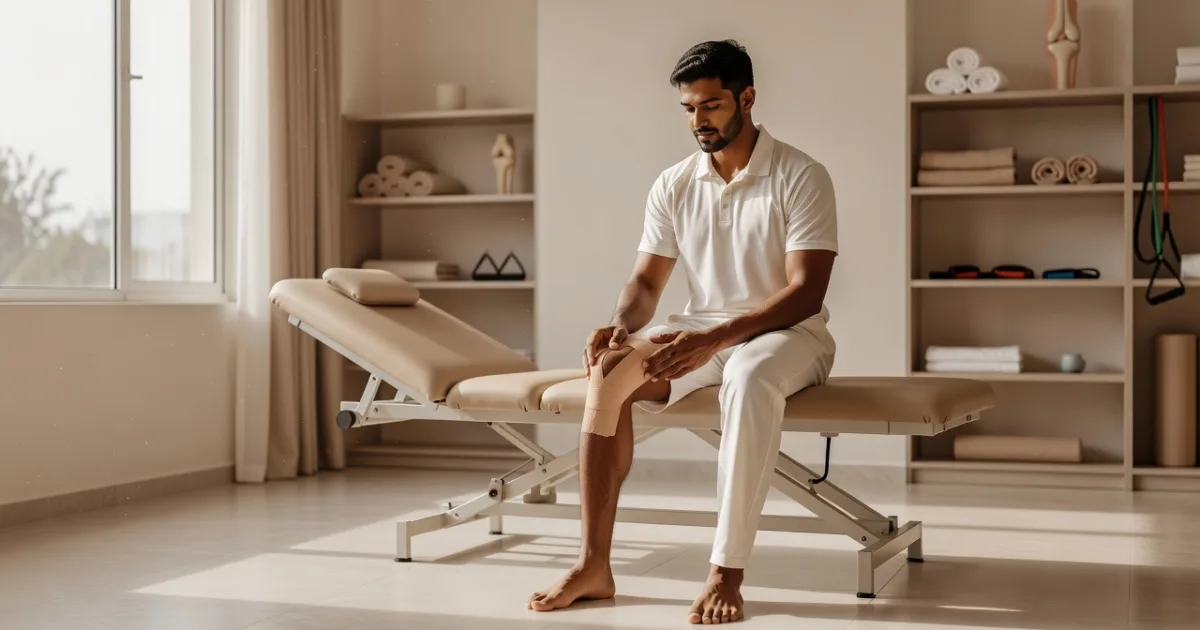

The short answer
Knee taping offers short-term support for patellar tendon pain, common in young Jaipur cricketers like fast bowlers, batsmen and fielders. It provides temporary off-loading of the painful area below the kneecap during practice. Taping is not a cure and forms part of a wider plan with load management and exercises.
Patellar tendon pain, also called jumper’s knee, is common among young cricketers in Jaipur. Fast bowlers, batsmen who jump, and fielders who sprint and stop suddenly often feel sharp pain below the kneecap.
Many players notice the pain first during net practice or matches. Knee taping for patellar tendon pain offers short-term support before cricket practice. It is not a cure.
Fast bowlers experience repeated impact when their front leg lands. Batsmen load the tendon during explosive movements. Fielders feel pain when changing direction or diving.
Common triggers include sudden increases in practice volume, playing on concrete surfaces, weak thigh muscles, and poor landing technique. Young players between 15 and 30 often push through early discomfort.
Taping gives temporary off-loading of the painful area. It does not repair the tendon. It should be part of a wider plan that includes load management and guided exercise.
Taping can help when pain is mild to moderate and appears only during activity. It may reduce pain while running or allow bowling without sharp discomfort for a single session. Looking for a Physiotherapy Clinic Near Me? Our team in Vaishali Nagar, Jaipur can assess you in person.
Do not tape if you have swelling, redness, pain at rest, locking of the knee, or inability to bear weight. These red-flag symptoms need in-person assessment at a physiotherapy clinic.
Expect temporary symptom relief, not healing. Recovery varies between players. Consistent strengthening and load control give better long-term results than repeated taping alone.
Two main types are available in Jaipur medical stores. Rigid zinc oxide sports tape provides firm support and limits unwanted movement. Kinesiology tape is stretchy and lighter.
A simple combination method works for most young cricketers. Use rigid tape for the main off-loading strip and kinesiology tape for gentle surround support.
Avoid very cheap tape that peels off quickly during sweaty practice. Test a small piece on your skin a day before to check for allergy.
Start with clean, dry skin. Shave hair below the kneecap if needed. Sit with your leg straight but relaxed.
Stand and test. Walk, jog lightly, and mimic a bowling action. The tape should reduce pain while running without cutting off blood flow or pinching the skin. Adjust tension if needed.
Watch for skin irritation, especially in Jaipur’s dusty and sweaty conditions. Redness or itching means remove the tape immediately. Check circulation by ensuring toes stay warm and pink. Read more about our Pain Management.
Keep the tape on for a maximum of four to six hours during cricket practice. Remove it gently by peeling slowly in the direction of hair growth while supporting the skin.
Taping should never replace proper strengthening or professional guidance. Over-reliance on knee support tape for bowling can hide problems and allow further damage.
Remove the tape as soon as the session ends. Apply ice wrapped in a thin cloth for ten minutes to control any swelling. Gentle stretching of the quadriceps and calf muscles helps maintain flexibility.
Simple home exercises that complement taping include straight-leg raises, wall sits, and controlled step-downs from a low box. Perform them without pain. Increase load only gradually.
If pain returns quickly or lasts into the next day, book a sports physiotherapy session.
Long-term recovery for cricketers combines load management, progressive strengthening, technique correction, and sometimes dry needling or myofascial release. Taping is one small tool within this plan. You may also find Knee Exercises in Bed After Meniscectomy First Week useful.
Apply with moderate tension that reduces pain during movement but does not cut blood flow. You should be able to slide a finger under the anchor strips. Too tight causes numbness or tingling.
Yes for short-term relief during practice, but only if pain remains mild. Daily taping without addressing the cause can delay healing. Combine with strengthening exercises and monitor symptoms.
A combination of rigid zinc oxide tape for support and kinesiology tape for awareness works well for most players. Rigid tape gives the main off-loading effect needed during bowling and running.
Stop and seek help if pain increases, swelling appears, the knee feels unstable, or pain continues after activity. Any symptoms that last more than a few days or disturb sleep need proper assessment.
No. Taping provides temporary symptom relief before cricket but does not heal the tendon. Strengthening, load control, and guided rehabilitation remain necessary for full recovery and to prevent recurrence.
Self-taping can help you stay active in the short term, yet lasting relief comes from understanding and treating the cause. Book an assessment with our sports physiotherapists at Trivayu Physio Center in Vaishali Nagar. Call or send a message on WhatsApp to arrange a convenient time. Early attention to patellar tendon pain keeps young cricketers on the field and performing at their best.
Physiotherapy is not the right first step for everything. Seek medical assessment promptly if any of the following apply to you:
If you lose control of your bladder or bowels, develop numbness around the groin, or have chest pain or breathlessness, treat it as an emergency and go to hospital.
I highly recommend Jyoti Ma'am and her team. I first visited her for a ligament injury in my knees, and with her expert treatment and therapies, I made a complete recovery.
Richa Tailang, Google review
This is one patient's own account, published with consent on our reviews page. It describes their experience, not a predicted outcome. Individual results vary.
Rotator cuff injuries affect muscles and tendons around the shoulder joint. These hold the arm bone in place. Active adults in Jaipur get them from sports,…
Read articleOffice workers in Jaipur often feel elbow pain from laptop use. This comes from hours of typing and poor posture. Repetitive strain builds up in the…
Read articleWhat is Prehab for ACL Tear? Prehabilitation, or prehab, means exercises and therapy before ACL surgery to prepare your knee. An ACL tear happens when the…
Read articleMessage us on WhatsApp with your main concern and preferred time, and we'll confirm your first visit the same day.