Hip Pain Pregnancy Exercises in Third Trimester Jaipur
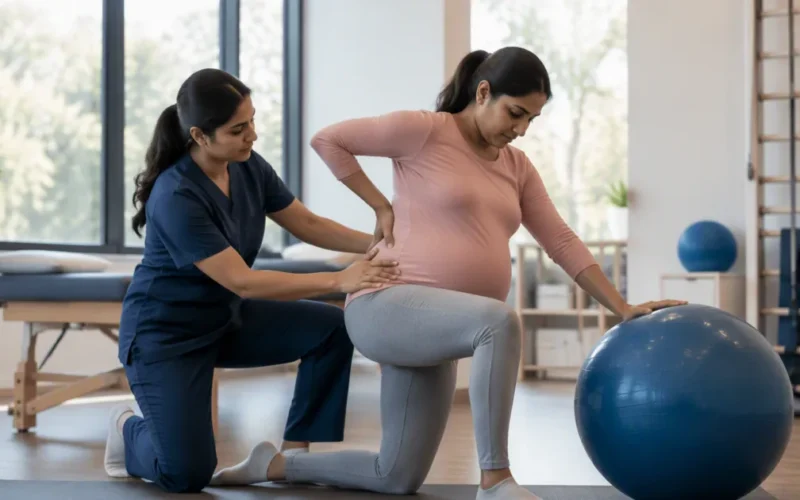
Understanding Hip Pain in Pregnancy Hip pain often starts in the third trimester. The growing baby shifts your centre of gravity forward. This strains hip joints,…
Read article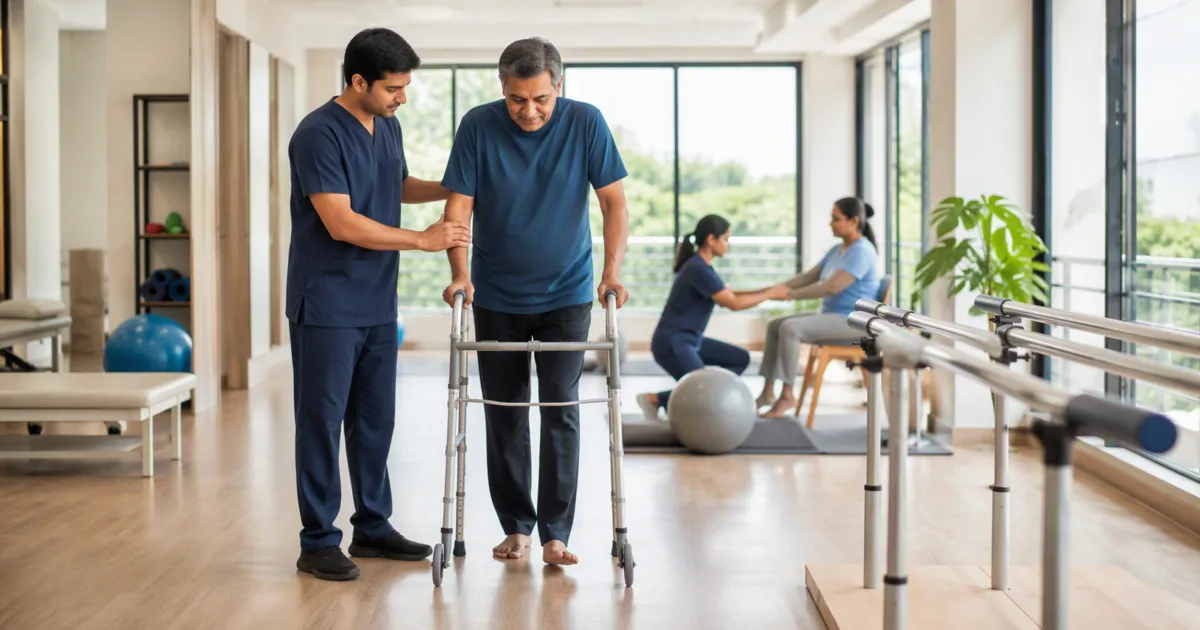

The short answer
Gait training after stroke in Jaipur retrains brain pathways through practice at centres like Trivayu Physio Center. It progresses from support aids and bedside exercises to independent walking. Physiotherapists assess gait, teach techniques, and monitor balance, strength, and coordination.
Stroke affects walking. Gait challenges include poor balance or weak legs. Gait training helps survivors regain mobility. It starts with support and builds to independent steps. In Jaipur, neuro rehab focuses on safe progression. It retrains brain pathways through practice.
Trivayu Physio Center offers neuro rehab for stroke recovery. Team uses exercise therapy and equipment to aid walking. Caregivers learn home support. Start with assessment for suited plan. Sessions check posture, strength, coordination. Initial visit includes gait analysis on treadmill or floor.
Gait training aids daily life. It boosts confidence, reduces fall risk. Progress varies by stroke effects and effort. Physiotherapists guide steps and adjust for fatigue or pain. They teach scanning the path ahead to spot obstacles.
After stroke, walking changes. Issues include foot drop, uneven steps, poor coordination. One side weakens, affecting balance. These come from brain damage to muscle control. Hip hiking or circumduction may occur. Foot drop means the toes drag, raising trip risk.
Neuro rehab in Jaipur retrains brain and body through practice. Gait training rebuilds pathways. Physiotherapists assess patterns like knee or ankle issues. Without training, challenges and fall risks persist. They teach body position awareness. Looking for a Physiotherapist in Jaipur? Our team in Vaishali Nagar, Jaipur can assess you in person.
Walking aids provide stability. Walkers suit poor balance. Canes fit lighter needs. Quad canes add stability. Choose per stability and physio advice. Fit matters: walker handles at hip height, cane at wrist level when arm hangs loose.
Start under guidance. Keep back straight, hold at wrist height, step weaker leg first. Use on even ground. Progress as confidence grows. Practice weight shift. Advance by walking without full weight on the aid. Turn slowly: pivot weaker side last.
Trivayu team teaches use, checks fit and technique. Shows corner turns. They practice ramps and doorways. Home trials ensure safe paths like flat rooms first.
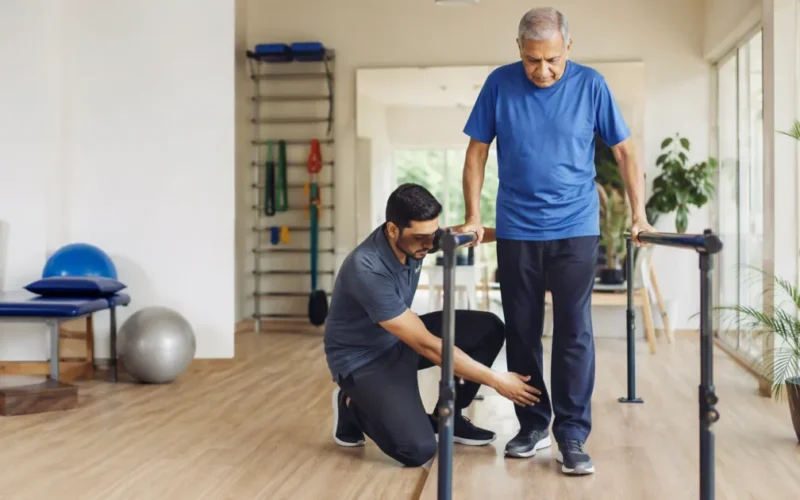
Progression goes from support to independence. Begin with aids and seated exercises. Move to standing, short walks, normal gait. Master each stage first. Weekly reviews check readiness. Use gait belt for therapist support. Read more about our Geriatric Physiotherapy.
Physiotherapists monitor, use mirrors or video. Mirrors show posture; video slows motion for feedback. Track distance weekly. Backward chaining teaches full steps by starting at end of task.
Do 2-3 sets. Breathe steadily; stop if dizzy. Warm up with ankle circles. Cool down stretches hamstrings gently.
Functional electrical stimulation activates weak muscles during steps. Task-specific training repeats real moves like stair climbing. Constraint-induced therapy limits strong side to force weak side use. Mirror therapy shows normal movement to trick brain.
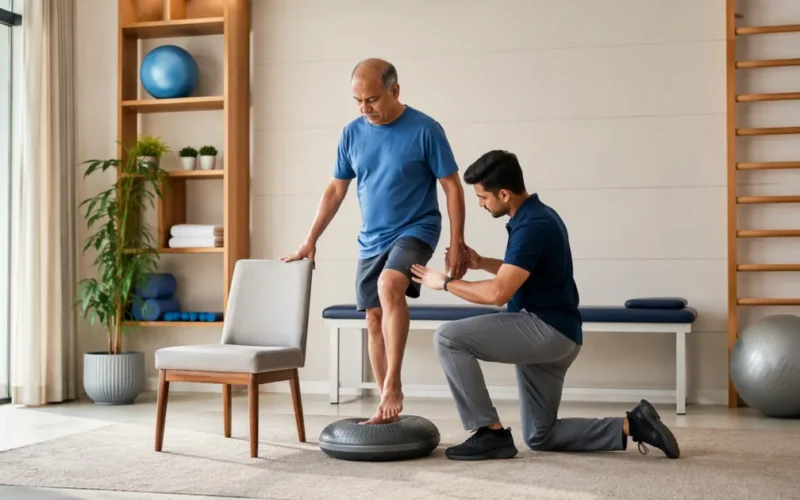
Core work: bridges or planks stabilise pelvis. Start supine bridge: lift hips, hold 5 seconds. Proprioception on foam sharpens balance. Stand on foam pad, shift weight side to side. Add ball toss for dual task. You may also find Parkinson’s Physiotherapy in Jaipur: Walking and Gait useful.
Stroke patient mobility improves with patterned walking. Practice overground or treadmill. Treadmill sets steady speed; overground builds real-world skill. Neuroplasticity grows with repetition, 100-200 steps per session.
Manual therapy loosens muscles. Myofascial release eases calves or hips. Exercise therapy strengthens legs, core. Balance board challenges stability. Tilt board shifts weight forward-back.
At Trivayu: Robotic spinal decompression for alignment. Class IV laser reduces pain, swelling. Dry needling targets glutes, hamstrings. Therapists combine with gait cues like “heel first.”
Dr. Ajit Choudhary leads neuro rehab. Sessions 45-60 minutes, 3-5 times weekly first. Warm-up: 5 minutes cycling or marches. Main: 30 minutes gait drills. Cool-down: stretches. Home program: 20-30 minutes daily marches, raises, aid walks. Caregivers learn spotting: stand behind, hands ready without pulling.
Improve walking after stroke with dual-task training. Walk while counting backwards or naming objects. Builds brain control for daily life. Aquatic therapy if available elsewhere, but focus on land progression here.
Vaishali Nagar: 204, 2nd Floor, Om Tower, Gandhi Path Road, Nemi Nagar. Vidyadhar Nagar, Rangoli Gardens. Hours: Mon-Sat 8am-8pm, Sun 10am-1pm.
Dr. Ajit handles neuro rehab. Team supports. Home visits for bed-bound. Online for initial advice. Clinics have parallel bars, mirrors, walkers.
We explain treatments. Track progress with timed walks, like 10-meter test. Adjust for Jaipur heat: indoor sessions, hydration breaks.
Book in-person assessment for gait issues and plan. Checks: strength, balance, walk pattern. Bring scans, symptoms. Expect 30-minute exam with video gait capture.
Contact +91 90570 65065 or WhatsApp https://wa.me/919057065065. Combine with doctor advice. Start home prep: clear walking paths, mark heel-toe lines with tape.
Supported sits to stands. Walker marches under physio. Seated leg lifts if needed. Add ankle pumps from bed.
Add stability, cut fall risk, support weak legs. Offload weight on weak side. Build confidence for longer walks.
Heel raises, side steps, balance holds, marches, tandem walks. Progress supported to free. Add core bridges daily.
Walk 10 meters steadily with one-hand support. Physio tests balance on turns and stops.
Trivayu in Vaishali Nagar or Vidyadhar Nagar. Neuro rehab focus. Home visits. Walking aids stroke Jaipur options on site.
Varies. Weeks to months. Sessions and home practice help. Biggest gains first 3-6 months. Continue for maintenance.
Physio plan: marches, drills, heel-toe walks. Aids on safe paths, 10-20 minutes. Track steps. Use mirror for form. Involve family for cues.
Physiotherapy is not the right first step for everything. Seek medical assessment promptly if any of the following apply to you:
If you lose control of your bladder or bowels, develop numbness around the groin, or have chest pain or breathlessness, treat it as an emergency and go to hospital.
Understanding Hip Pain in Pregnancy Hip pain often starts in the third trimester. The growing baby shifts your centre of gravity forward. This strains hip joints,…
Read articleFoot drop often follows stroke. It makes lifting the front of the foot hard. This affects walking. Seated exercises build ankle strength safely. They suit stroke…
Read articleAfter knee replacement surgery, balance training helps regain stability. In weeks 9-12, progress home exercises for daily tasks. This reduces fall risk. These routines offer safe…
Read articleMessage us on WhatsApp with your main concern and preferred time, and we'll confirm your first visit the same day.