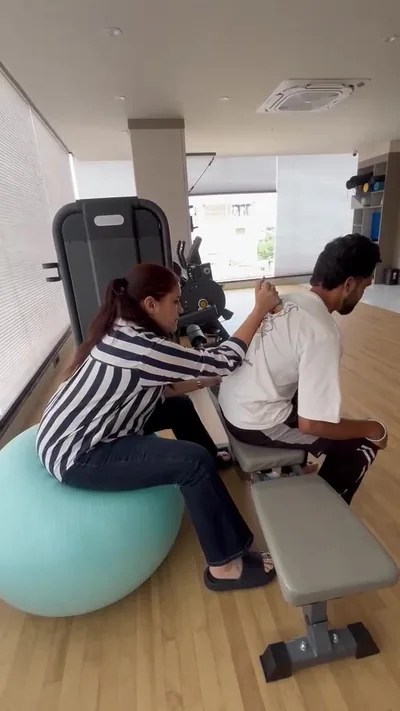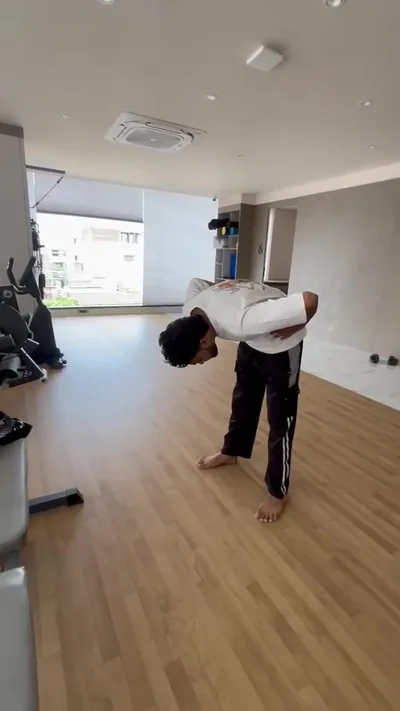
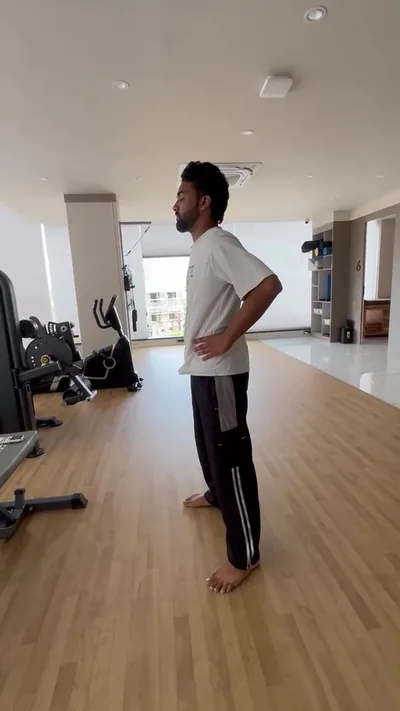
Is Side Bending Safe with L4 L5 Herniated Disc
An L4 L5 herniated disc happens when the disc between your fourth and fifth lumbar vertebrae bulges or ruptures. This presses on nearby nerves, causing pain…
Read article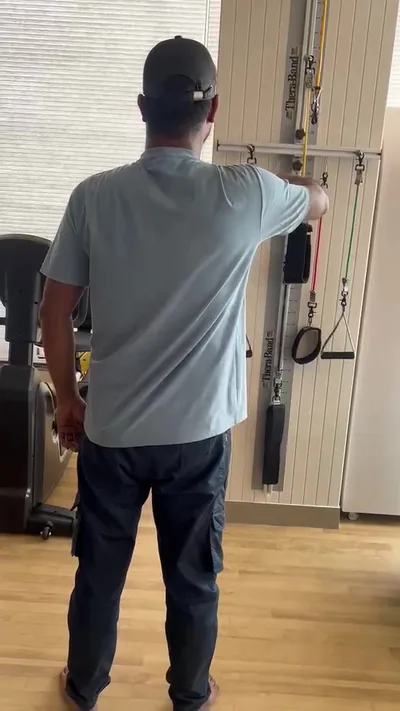

After shoulder surgery like rotator cuff repair, week 2 is an early recovery stage. Your arm stays in a sling for protection. This prevents strain on healing tissues. Isometric exercises fit this phase. They build strength without moving the joint.
These exercises keep muscles active and fight weakness from rest. Always check with your physiotherapist first. Recovery differs for each person. Trivayu Physio Center in Vaishali Nagar, Jaipur, offers assessments for safe plans.
Dr. Jyoti Choudhary, with 17+ years in sports and orthopaedics, guides patients through this. Focus on pain-free shoulder strengthening now.
In week 2, tissues start to heal. For rotator cuff surgery rehab, the sling holds your arm close to your body. This protects the repair site from stress. Looking for a Physiotherapist in Jaipur? Our team in Vaishali Nagar, Jaipur can assess you in person.
Protected shoulder rehab begins here. Isometric shoulder exercises activate muscles gently without joint motion. A physiotherapist checks your range of motion in the sling, pain response to light touch, and muscle activation. They test contractions without arm shift to spot swelling or guarding.
Get a professional assessment before starting. Your surgeon or physio tailors this to your case. At Trivayu, we check shoulder stability and pain levels first. More on Shoulder Pain Treatment and how we assess it.
Isometric holds contract muscles without length change. In sling exercises after shoulder surgery, this maintains activation in shoulder blade and rotator cuff muscles.
They cut atrophy risk. Rest weakens muscles fast. These holds preserve strength. Pain often eases as blood flow improves. Physios explain that these recruit slow-twitch fibres for endurance.
This fits shoulder surgery week 2 rehab. It supports rotator cuff repair recovery without overload. Physios track progress by measuring hold times or perceived effort. You may also find Sling Exercises Day 5 After Shoulder Surgery useful.
Do these under guidance. Sit or stand upright. Keep your sling on. Breathe steadily. Hold each for 5-10 seconds. Relax fully. Repeat 8-12 times per set. Aim for 2-3 sets daily, if pain-free.
A physiotherapist starts with fewer reps if swelling persists and corrects posture live.
Here are four safe options:
Stop if pain rises above mild discomfort. Progress slowly.
Monitor pain during holds. Mild ache is okay; sharp pain means stop. Check sling fit daily—it should cradle arm snugly.
Avoid leaning or using good arm to compensate. Keep neck relaxed. Physios demonstrate neutral spine alignment.
For early post-op exercises, hydrate well and eat protein-rich foods like dal or paneer. Track daily pain for physio review.
See a physio for hands-on check. Manual Therapy can ease tight spots. Clinic supervision ensures right form.
Protected shoulder rehab uses the sling for safe activation. In week 2, a physio integrates posture work first—seated scapular setting. Then layer isometrics.
They assess rotator cuff balance by comparing sides. Adjust emphasis if weak. Home practice gets logged; physio reviews.
For rotator cuff repair recovery, use submaximal holds. No pulsing—smooth contractions. This carries into week 3 if cleared.
Early post-op exercises prioritise circulation. In sling immobilisation, add wrist and elbow squeezes: clench fist 10 times hourly.
Physios teach scapular clocking—glide shoulder blade clockwise then anti without arm shift.
Week 2: Slight puffiness normal; physio uses tape or elevation if needed. They demo sling adjustments.
After week 2, rehab advances if healing progresses. Dr. Jyoti Choudhary and team track this. Electrotherapy aids inflammation. Located at 204, 2nd Floor, Om Tower, Gandhi Path Road, Nemi Nagar, Vaishali Nagar, Jaipur. We serve Vidyadhar Nagar at Rangoli Gardens. Home visits and online consultations available. Dr. Hritika Choudhary handles post-op care.
Progress cues: Holds reach 15 seconds pain-free, then supine elbow glides. Orthopaedic Rehabilitation follows.
Safe ones include shoulder blade squeezes and isometric presses. Build strength without motion. Get physio approval. Add wrist pumps.
They keep muscles active, reduce weakness, aid pain control. No joint stress fits sling. Physios baseline strength.
Typically week 2, after surgeon clearance. Physio assessment confirms readiness.
Yes, when gentle and supervised. Suits protected rehab. Focus on even breathing.
Watch sharp pain, ensure sling fit, avoid compensation. Ice and rest. Log symptoms.
They test directions, adjust pressure, monitor form. Builds confidence without setback.
Week 2 sets a strong base. Stick to your plan with professional input. Book an assessment at Trivayu Physio Center today. WhatsApp or call +91 90570 65065 for guidance.
Physiotherapy is not the right first step for everything. Seek medical assessment promptly if any of the following apply to you:
If you lose control of your bladder or bowels, develop numbness around the groin, or have chest pain or breathlessness, treat it as an emergency and go to hospital.
Truly thankful to Dr. Jyoti Choudhary and the entire team of Trivayu Physio Centre for their genuine care, humble behaviour, and excellent treatment.
Mahesh Dhaka, Google review
This is one patient's own account, published with consent on our reviews page. It describes their experience, not a predicted outcome. Individual results vary.
An L4 L5 herniated disc happens when the disc between your fourth and fifth lumbar vertebrae bulges or ruptures. This presses on nearby nerves, causing pain…
Read articleShopkeepers in Jaipur often stand for long hours behind counters. This prolonged standing can trigger sciatica pain. Sciatica happens when the sciatic nerve gets irritated, often…
Read articleHerniated disc night pain disrupts sleep for many. The disc bulge presses on nerves, causing sharp back pain or sciatica that flares up at night. Simple…
Read articleMessage us on WhatsApp with your main concern and preferred time, and we'll confirm your first visit the same day.