Quad Weakness After Dengue Bed Rest

The short answer
Dengue fever in Jaipur's monsoon causes bed rest, weakening quadriceps in thighs. This leads to muscle loss, making standing and walking difficult. Trivayu Physio Center treats post-dengue quad weakness with exercise therapy and in-person assessments.
Dengue fever leads to bed rest in Jaipur’s monsoon. This weakens quadriceps in thighs. Quadriceps weakness makes standing or walking hard. Lack of movement causes muscle loss. Post-dengue recovery needs time and effort.
At Trivayu Physio Center in Vaishali Nagar and Vidyadhar Nagar, we treat post-illness muscle weakness. Our team uses exercise therapy to rebuild leg strength. An in-person assessment guides recovery.
Physiotherapy supports leg recovery without replacing medical care. Dengue leg pain pairs with weakness, needing rehab. Post-illness physiotherapy rebuilds strength lost to fever and rest.
Signs of Quad Weakness After Dengue Recovery
After dengue, notice leg weakness. Signs include trouble rising from a chair without hands. Knee buckles on uneven ground. Thighs feel heavy after short steps. Leg fatigue hits during tasks like cooking.
Book an in-person assessment at Trivayu. Physiotherapists check strength and movement, ruling out nerve or joint issues. They test by asking you to hold a leg lift or walk on toes.
- Difficulty standing from sitting without arm support
- Knee giving way during steps
- Quick thigh tiredness after minimal activity
- Trouble with steps, slopes or standing
- Mild ache in front of thighs during use
- Shaky legs when shifting weight
- Balance issues on one leg
- Thighs burn after 5 minutes of walking
- Feet drag when tired
How Physiotherapy Helps Post-Dengue Leg Strengthening
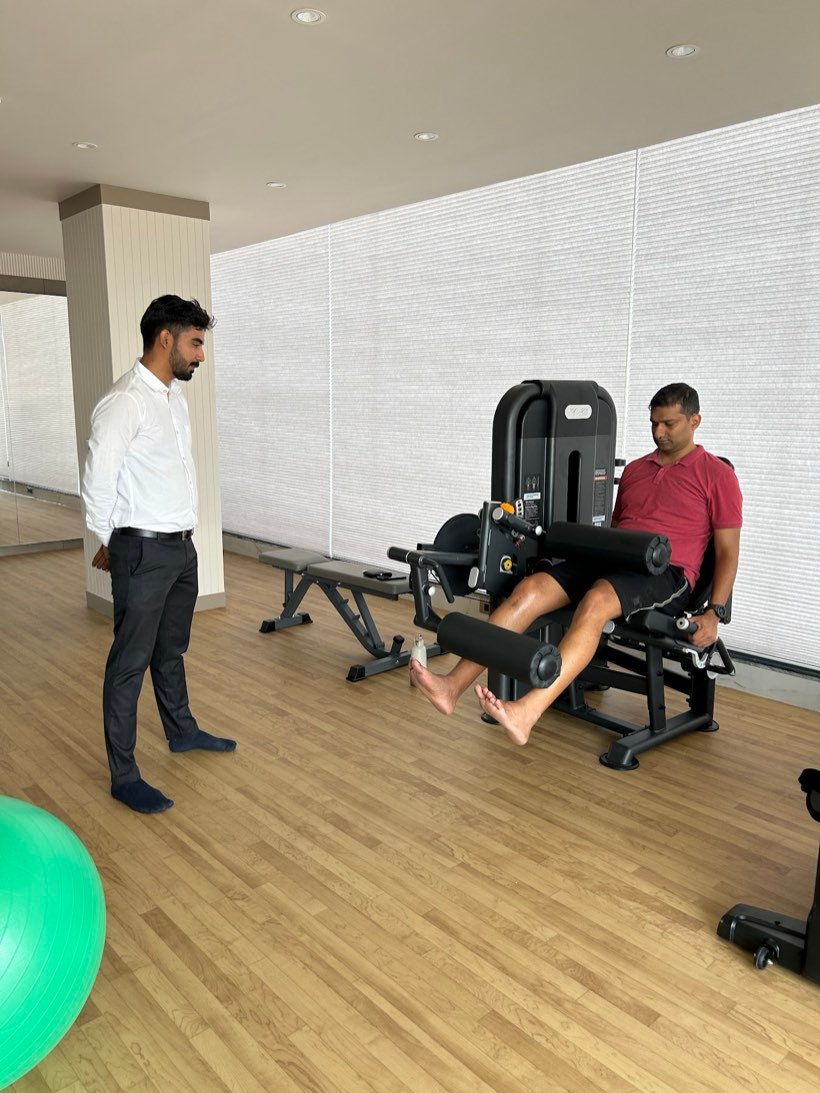
Physiotherapy targets bed rest leg weakness. Exercise therapy builds quad strength from your level. Start with gentle activation if weakness follows prolonged fever.
Manual therapy eases tight muscles around knees and hips. Use hands to press and stretch thigh fronts. Electrotherapy reduces pain and swelling by improving blood flow. Place pads on thighs for 15 minutes. Looking for a Rehabilitation Centre Near Me? Our team in Vaishali Nagar, Jaipur can assess you in person.
At Trivayu, myofascial release improves thigh function. Roll tools over tight bands in quads. Robotic spinal decompression helps if back issues contribute to leg drag. Plans follow assessment.
Key Physiotherapy Methods
- Exercise therapy: Strengthens quads from isometrics to weights
- Manual therapy: Mobilises joints and soft tissues for knee bend
- Advanced electrotherapy: Eases pain, boosts circulation
- Clinical Pilates: Improves balance, posture, leg coordination
- Myofascial release: Releases tight thigh bands
Plans tailor to needs, tracking weekly improvements. For post-dengue muscle recovery, add balance work on unstable surfaces.
Safe Quad Strengthening Exercises After Dengue
Start exercises under guidance to avoid strain. Physiotherapist checks form. Begin seated if standing tires you fast. Progress as thighs firm up.
Sit-to-stand builds base strength. Straight leg raises target quads without knee stress. Wall sits challenge safely. Progress to step-ups. For weak legs after bed rest, add bridges to wake glutes and hamstrings.
Sessions include 20-30 minutes guided exercises. Add resistance bands later. Combine with hamstring stretches. Hold stretch by sitting and reaching for toes. Breathe out during effort.
- Sit-to-stand: Sit on firm chair, feet flat. Rise using legs, lower over 3 seconds. 5-10 times, twice daily. Rest if knees wobble. Keep weight forward on toes.
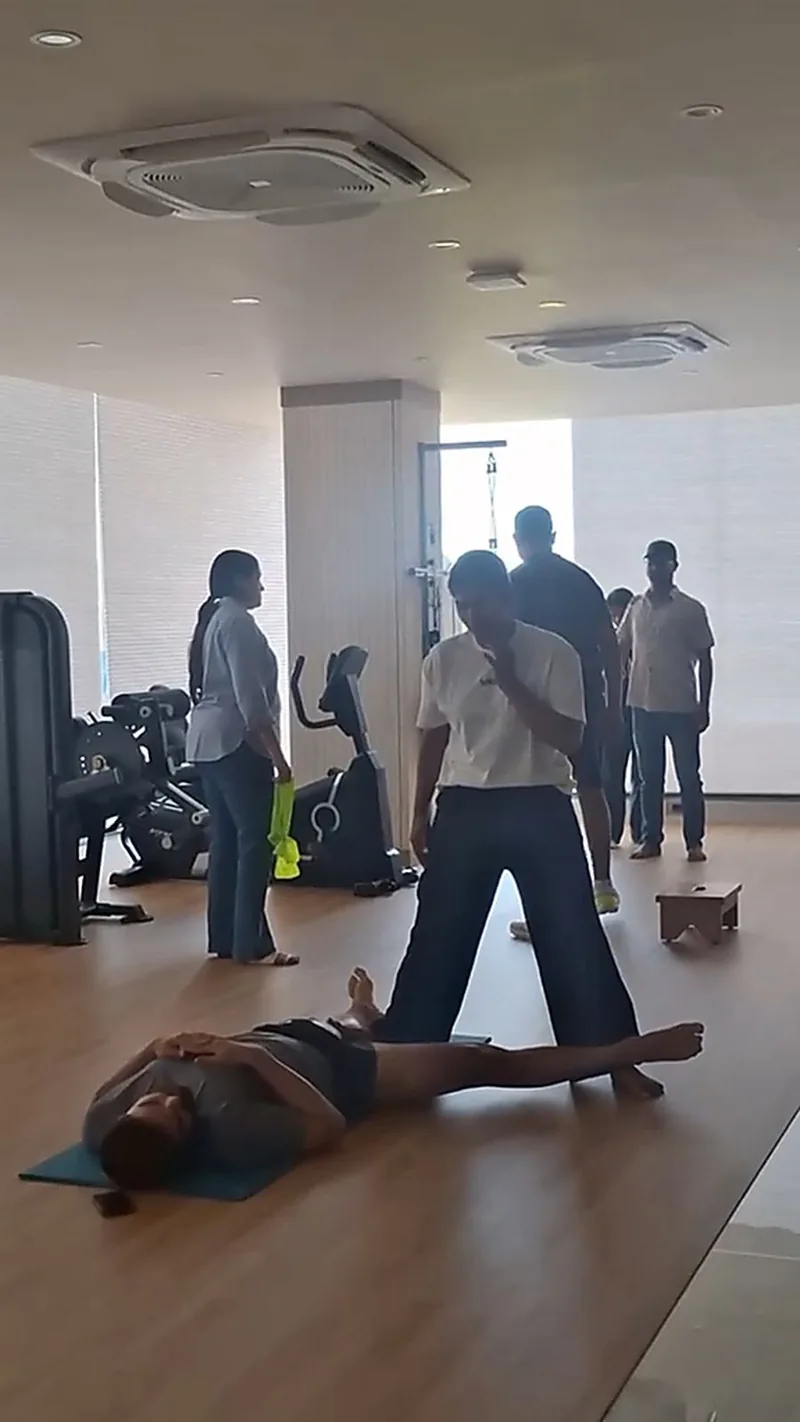
- Straight leg raise: Lie on back, one knee bent. Tighten quad of straight leg, lift 20 cm, hold 5 seconds. Lower slowly. 8-10 times per leg, 2 sets. Press back of knee down first.
- Mini squat: Stand holding table. Bend knees to 30 degrees, rise. Back straight. 10 reps, 2 sets. Eyes forward, knees over toes.
- Wall sit: Lean against wall, slide to knees at 90 degrees or less. Hold 10-20 seconds. 3-5 times. Arms out for balance.
- Step-up: 10 cm step. Step up with weak leg first, down slowly. 8 reps per leg. Hold rail if shaky.
- Quad set (isometric): Sit or lie, tighten front thigh, push knee down. Hold 10 seconds. 10 times per leg. Feel muscle harden under hand.
- Bridge: Lie on back, knees bent. Lift hips using thighs. Hold 5 seconds. 8-10 times. Squeeze glutes at top.
Dr. Jyoti Choudhary, senior sports physiotherapist with 17+ years, leads rehab. Progress with supervision. For weak legs, start isometric quad sets: tighten thigh seated, hold 10 seconds, 10 times. Strengthen gradually. Read more about our Post-Surgery & Joint Replacement Rehab in Jaipur.
What to Expect in a Physiotherapy Session for Post-Illness Weakness
First visit: history of bed rest, fever, pain. Tell about dengue leg pain duration and rest length. Measure quad strength by leg lift hold time. Gait analysis checks knee stability.
Flow: 10 minutes assessment, 20 minutes therapy, 20 minutes exercises. Manual work first: therapist kneads thighs for 10 minutes. Then electrotherapy if swollen. Practice new moves on mat.
Monitor swelling with tape around knee. Balance tests on foam pad: stand on one leg 10 seconds. Progress to eyes closed. Home visits available for bed rest cases. Therapist brings portable electrotherapy unit.
For muscle weakness after fever, sessions add circulation boosts. Lie with legs elevated during electrotherapy. Physiotherapist teaches how to self-massage quads with foam roller at home.
Physiotherapist Approach to Post-Dengue Rehab
Physiotherapists start with your baseline. Test quad by resisted knee extension: push against hand. Score from 0 to 5. Weak scores get isometrics only first week. You may also find Post Covid Fatigue Physio in Jaipur useful.
Week 1: Pain control and activation. Electrotherapy daily, quad sets 3x daily. Week 2: Add mini squats if hold improves. Track by repeat tests. Adjust for dengue fever leg pain: ice between sets.
Rehab after dengue covers full legs: strengthen inner thighs too with side leg lifts. Therapist spots form errors like knee cave-in. Home program grows: add 5 minutes cycling on stationary bike if available.
Why Choose Trivayu Physio for Dengue Recovery in Jaipur
Vaishali Nagar: 204, 2nd Floor, Om Tower, Gandhi Path Road, Nemi Nagar. Vidyadhar Nagar: Rangoli Gardens.
Team: Dr. Jyoti Choudhary (B.P.T, M.P.T Sports & Orthopaedics, 17+ years), Dr. Hritika Choudhary (advanced electrotherapy), Dr. Ishu Sharma (exercise therapy), others in post-illness rehab.
Open Mon-Sat 8 am to 8 pm, Sun 10 am to 1 pm. Contact +91 90570 65065.
Next Steps for Quad Weakness Recovery
Book assessment for plan. Home visits and online consultations available, hands-on best. List symptoms before visit: when legs tire, pain spots. Quadriceps strengthening starts with evaluation.
Common questions
What causes quad weakness after dengue?
Bed rest reduces muscle use. Fever and less activity cause loss. Dehydration adds fatigue. Dengue affects energy for movement.
How long does leg weakness last after dengue?
Duration varies by bed rest length and fitness. Physiotherapy speeds improvement. Consistent exercises shorten time.
Can physiotherapy help quad weakness from dengue bed rest?
Yes, supports strengthening and pain relief. Exercise therapy rebuilds muscle. Manual work frees stiff tissues.
What exercises strengthen quads after dengue?
Sit-to-stand, leg raises, mini squats, wall sits under guidance. Add bridges later. Progress to bands.
When to see physio for post-dengue leg weakness in Jaipur?
If weakness lasts beyond two weeks or limits tasks. Early assessment prevents setbacks. See if stairs tire you daily.
Is home visit available for dengue recovery physio?
Yes, for suitable cases. Contact to check. Good for ongoing bed rest.
How does physio differ for muscle weakness after fever?
Gentle activation first. Electrotherapy aids circulation. Builds on fever fatigue with short holds.
Trivayu aids post-dengue recovery. Book via WhatsApp https://wa.me/919057065065 or call +91 90570 65065.
When to see a doctor, not a physiotherapist
Physiotherapy is not the right first step for everything. Seek medical assessment promptly if any of the following apply to you:
- Chest pain or tightness, or breathlessness at rest or brought on by very light effort such as getting dressed or walking across a room, which need emergency care
- Sudden drooping or weakness on one side of the face, weakness or numbness in one arm or leg, or speech that is slurred or hard to follow: call emergency services immediately, even if the symptoms stop again after a few minutes
- Chest pain that is worse when you breathe in, coughing up blood, or pain, swelling, redness or darkened skin in one calf, which need emergency assessment: a clot on the lung can happen with no leg symptoms at all, so do not wait for your legs to swell
- Fainting, repeatedly feeling that you are about to faint, or a heartbeat that races, pounds or feels irregular, particularly on standing up or during activity
- A home pulse oximeter reading that falls while you are active, or that stays below the level your doctor has set for you; if no level has been set for you, treat a reading that falls during activity as a reason to get medical advice
- A fever that returns, or a new fever, after the illness seemed to be settling, especially with uncontrollable shivering, fast or difficult breathing, or skin, lips or tongue that look pale, grey, blue or blotchy: this can be a new infection or sepsis and needs emergency assessment
- Passing much less urine than usual, or none all day, or feeling extremely thirsty
- New confusion, difficulty finding words, a sudden loss or blurring of vision, a sudden very severe headache unlike any you have had before, or a fit (seizure)
- After dengue or another viral fever: severe stomach pain, repeated vomiting, bleeding from the gums or nose, blood in your vomit or stools, restlessness, or skin that turns pale and cold, which need emergency care. These warning signs most often appear as the fever comes down, so starting to feel better is not a sign that the danger has passed
- Fatigue that is getting worse week on week rather than slowly settling, which needs medical review before any exercise programme
- Pain following a significant fall, road accident or other major injury
- Fever, chills or feeling generally unwell alongside the pain
- Weakness that is getting worse, or numbness that is spreading
If you lose control of your bladder or bowels, develop numbness around the groin, or have chest pain or breathlessness, treat it as an emergency and go to hospital.
Safety limits and when this does not apply
- Recovery after a viral illness is paced, not pushed. There is no fixed weekly increase to follow, and you should not try to train through fatigue: doing more on a good day can leave you worse for several days afterwards.
- Stay at an activity level you could repeat tomorrow. If a session leaves your symptoms raised for more than 24 hours, the level was too high, and the next session should be smaller rather than the same.
- Stop straight away and rest if you become breathless, light-headed, or your heart races during an exercise, and have it assessed before you try that exercise again. Chest, breathing or heart symptoms that appeared with or after the illness must be assessed and cleared by your doctor before any exercise programme begins.
- While dengue or any other infection is still active, the treatment is rest and medical care, not physiotherapy. Rehabilitation starts once your doctor confirms the acute illness has settled, and if you have had a further illness or a hospital stay since your last session, tell us first so we can restart at a lower level.
- If any of the warning signs above appear, that is a reason for emergency medical care, not a physiotherapy appointment. Do not wait for your next session and do not travel to the clinic first.
- This article is general information. It is not an assessment of your problem, and it cannot account for your medical history, medication or imaging.
References
How this article was produced
- Evidence. Guidance on post-viral fatigue and recovery after illness here follows the 5 sources listed under References above.
- Clinical experience. Practical points on what tends to help in the clinic reflect the experience of the Trivayu physiotherapy team in Vaishali Nagar, Jaipur, and are not the same as trial evidence.
- Opinion. Where we suggest a preference or an approach, that is our clinical judgement. Other qualified clinicians may reasonably differ.
- Author. Dr. Jyoti Choudhary, B.P.T, M.P.T (Sports & Orthopaedics), C.M.T, MIAP.
- Published. 25 August 2026.