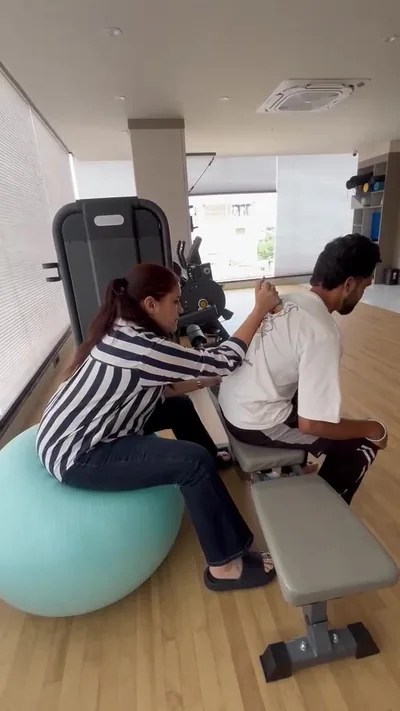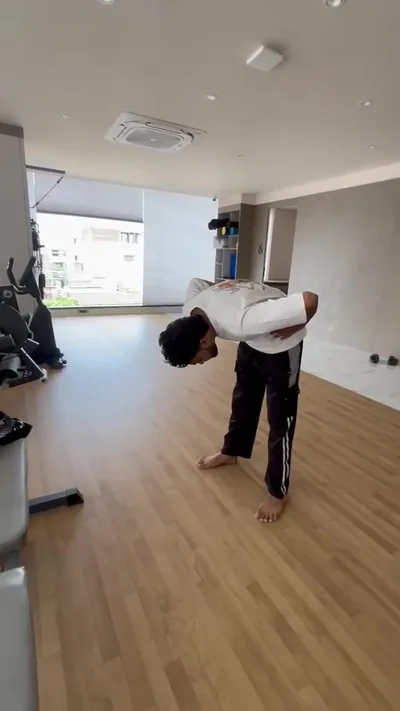
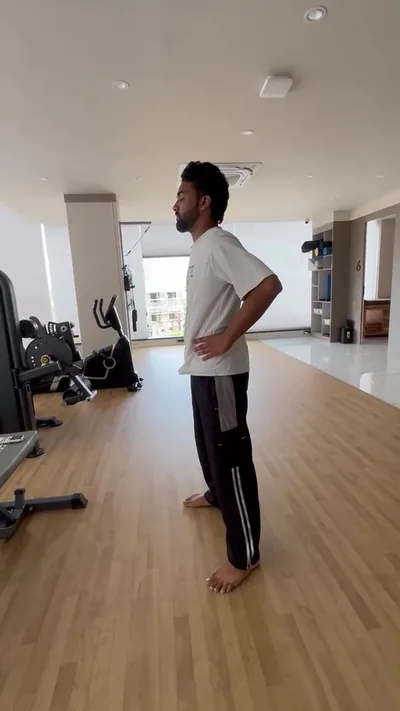
Is Side Bending Safe with L4 L5 Herniated Disc
An L4 L5 herniated disc happens when the disc between your fourth and fifth lumbar vertebrae bulges or ruptures. This presses on nearby nerves, causing pain…
Read article

The pistol squat test checks knee strength for advanced ACL rehabilitation. It is a single-leg squat testing strength, balance, and control. In ACL rehab phases, phase 4 shifts to sport-specific training. Athletes use it to gauge readiness before returning to sports.
This test fits sports injury rehab in Jaipur. It spots weaknesses after ACL surgery. Trivayu Physio Center offers assessments for safe progression. Get a physio check before trying it alone.
Dr. Jyoti Choudhary, with 17+ years in sports physiotherapy, guides athletes through such tests. Dr. Hritika Choudhary and the team support ACL recovery. Proper use prevents setbacks. Looking for a Physiotherapy Clinic Near Me? Our team in Vaishali Nagar, Jaipur can assess you in person.
The pistol squat is a single-leg squat to full depth. In ACL rehabilitation phases, it serves as a phase 4 readiness test. Phase 4 focuses on advanced strength for return to sport.
ACL rehab follows structured phases after surgery or injury. Phase 1 protects the knee and reduces swelling. Phase 2 builds basic range of motion and strength with heel slides. Phase 3 adds functional moves like lunges and step-ups. Phase 4 tests advanced control for sports.
This test checks knee stability under load. It mimics sports demands like jumping or cutting. The purpose is to confirm single-leg control without pain or wobble. Passing signals progress from basic squats and balance work. More on Sciatica Treatment and how we assess it.
It is not for beginners. Early recovery builds basics first. Use it to measure knee strength before high-impact activities. A physio watches for knee valgus, where the knee caves inward.
Pistol squats assess single-leg strength, balance, and knee stability. These are key for safe return to sport after ACL injury. Weakness in one leg can lead to re-injury. You may also find Single Leg Pistol Squat for Late ACL Recovery useful.
In phase 4, it links to recovery progression. Good performance shows knee handles eccentric load – lowering control. This matters for running or pivoting.
It tests proprioception, your body’s position sense. Poor balance flags more rehab need. Sports injury rehab in Jaipur uses such tests to tailor plans.
Physios integrate it with single leg squat basics. Pistol squat demands full depth without support.
Post ACL surgery exercises start simple. Phase 1: Slide heel towards you lying down for pain-free knee bend. Do quad sets to tighten thigh muscle.
Phase 2: Mini squats with both legs. Wall sits holding 20-30 seconds. Straight leg raises lying down.
Phase 3: Single leg stands on stable surface. Forward lunges with knee over foot. Step-ups onto 10-15 cm box. Balance on wobble board if available.
Phase 4: Introduce pistol squat after mastering phase 3. Knee strength assessment confirms leg symmetry. Physio compares reps or hold times.
Progression varies. Swelling or pain means stay in prior phase. Trivayu Physio Center tracks this.
Start with physio assessment at Trivayu Physio Center in Vaishali Nagar or Vidyadhar Nagar. No equipment needed, but guidance ensures safety. Follow these steps:
Stop if knee pain or instability. Post ACL surgery exercises need supervision first. Manual Therapy can address tightness around hip or calf.
You may be ready if prior phases are solid. Check these signs:
Consult Dr. Jyoti Choudhary or Dr. Hritika Choudhary for evaluation. Trivayu handles sports rehab. Orthopaedic Rehabilitation fits your pace.
Focus on technique: Chest up, eyes forward. Knee over middle toes. Slight hip hinge. Non-working leg counterbalances.
Common flaw: Rushing down. Slow eccentric phase. Another: Leaning too far. Keep weight mid-foot to heel.
Build with regressions: Assisted with TRX or door frame. Box pistol squat to bench height.
Athletes rush depth, causing knee cave-in. Others lean forward, losing balance. Keep chest up, knee over toes.
Tips: Start assisted. Film side-on for form. Breathe: inhale down, exhale up. Warm up with leg swings and squats.
Professional guidance prevents errors. At Trivayu, Electrotherapy aids soreness after sessions.
If form breaks before 5 reps, regress. Rest 48 hours between tests.
If pass, add sport-specific drills: agility ladder or cone shuttles. Single leg hops follow.
If not, return to phase 3 like single leg squat variations. Add bands. Re-test every 1-2 weeks.
Book at Trivayu for Orthopaedic Rehabilitation. Options include home visits. Track weekly.
Full recovery takes months. Combine with jog-walk intervals.
Single-leg squat test for advanced ACL strength in phase 4 for sports return.
No pain in basics, good balance, physio approval. Master phase 3.
Build from easier single-leg exercises. See physio for plan adjustment.
Yes, if cleared by physio after earlier phases. Use supervision.
Trivayu Physio Center in Vaishali Nagar or Vidyadhar Nagar. Home visits available.
In summary, the ACL rehab pistol squat advances recovery safely. It tests strengths for athletes. Professional input ensures best results.
Book an assessment at Trivayu Physio Center today. WhatsApp +91 90570 65065 or call to start.
Physiotherapy is not the right first step for everything. Seek medical assessment promptly if any of the following apply to you:
If you lose control of your bladder or bowels, develop numbness around the groin, or have chest pain or breathlessness, treat it as an emergency and go to hospital.
Truly thankful to Dr. Jyoti Choudhary and the entire team of Trivayu Physio Centre for their genuine care, humble behaviour, and excellent treatment.
Mahesh Dhaka, Google review
This is one patient's own account, published with consent on our reviews page. It describes their experience, not a predicted outcome. Individual results vary.
An L4 L5 herniated disc happens when the disc between your fourth and fifth lumbar vertebrae bulges or ruptures. This presses on nearby nerves, causing pain…
Read articleShopkeepers in Jaipur often stand for long hours behind counters. This prolonged standing can trigger sciatica pain. Sciatica happens when the sciatic nerve gets irritated, often…
Read articleHerniated disc night pain disrupts sleep for many. The disc bulge presses on nerves, causing sharp back pain or sciatica that flares up at night. Simple…
Read articleMessage us on WhatsApp with your main concern and preferred time, and we'll confirm your first visit the same day.