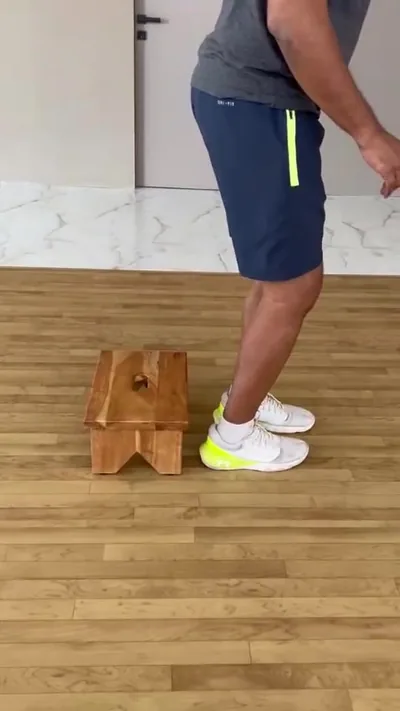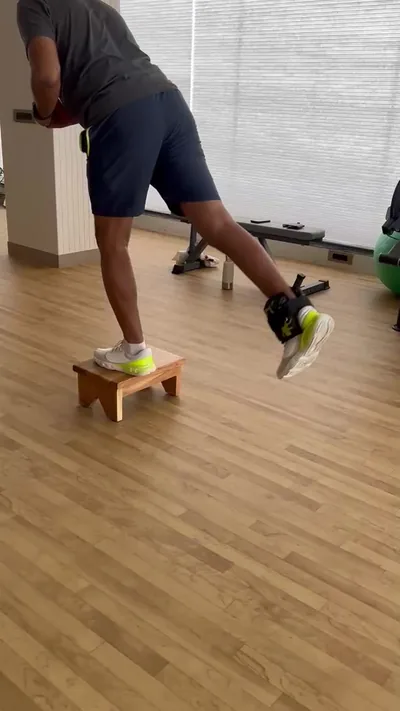
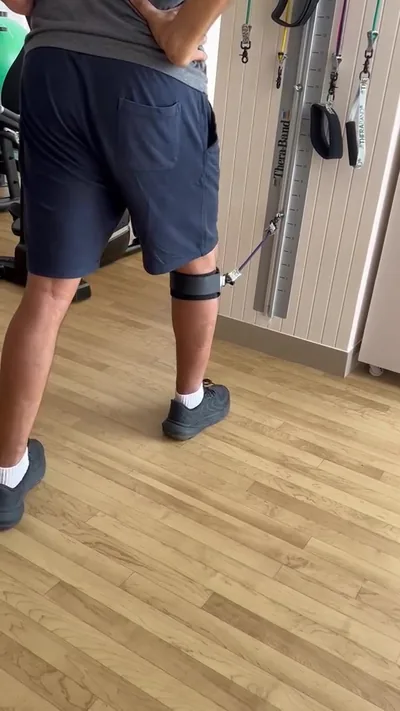
Backward Walking in ACL Rehab Phase 2
Backward walking helps athletes recover from ACL injuries. It builds knee stability in Phase 2 of rehab. This exercise targets quadriceps and improves control after surgery…
Read article

The short answer
After 4 weeks of knee replacement surgery, focus shifts to safe strengthening exercises like seated knee extensions, straight leg raises, heel slides, mini-squats, step-ups and resistance band work. Initial healing allows controlled loading. Always consult a physiotherapist for assessment before starting.
After the first four weeks following knee replacement surgery, the focus shifts from protection and gentle mobility to safe strengthening. By this stage, initial healing has usually occurred enough to allow controlled loading.
Every person heals at a different pace. This article gives general information on safe knee rehab after 4 weeks. It is not a substitute for a proper in-person assessment. Always check with a physiotherapist before starting new exercises after knee replacement.
The first four weeks after knee surgery focus on protecting the new joint, reducing swelling and restoring basic movement. Gentle activities such as heel slides and straight leg raises help with quadriceps activation and early range of motion.
From week five onwards, the phase moves towards controlled strengthening. This includes exercises after knee replacement 4 weeks that build muscle support around the knee. Progress varies. Age, general health, type of surgery and knee response all matter.
Pain is an important guide. Mild discomfort may occur, but sharp pain or lasting swelling means stop and seek advice. Focus on correct form rather than high repetitions. A proper warm-up with light walking or gentle knee circles prepares the tissues. Looking for a Physiotherapy Near Me? Our team in Vaishali Nagar, Jaipur can assess you in person.
Gradual increase in load helps reduce setbacks. Start with body weight and add resistance only when the physiotherapist approves. Supervision helps correct technique and avoids re-injury.
These exercises build on early mobility work. Perform them slowly with control. Begin with 8 to 10 repetitions and 2 sets. Rest one day between sessions if the knee feels sore. Always modify for comfort.
These moves support strengthening after knee replacement when added gradually. A physiotherapist can adjust them to your exact stage.
Rushing into full weight bearing before tissues are ready can delay healing. Ignoring swelling or continuing when the knee throbs often leads to more inflammation. Poor posture during movement, such as letting the knee collapse inwards, puts uneven stress on the joint.
Skipping rest days helps reduce recovery. The body needs time to adapt. When pain or stiffness appears, combining manual therapy, dry needling or electrotherapy can help settle symptoms. At our clinic we assess these issues and adjust the programme to keep progress steady. Read more about our Post-Surgery & Joint Replacement Rehab.
Physiotherapists at Trivayu Physio Center in Vaishali Nagar and Vidyadhar Nagar create personalised plans based on your surgery, age and goals. We check movement, strength and swelling at every visit. This guided progression reduces the chance of setbacks in safe knee rehab after 4 weeks.
We use Class IV High Power Laser Therapy and TECAR Therapy to manage pain and support tissue healing. Robotic Spinal Decompression is available when back issues affect posture. Home visits and online consultation make care convenient.
Contact a physiotherapist straight away if you notice increased swelling that does not settle, redness, heat, sharp pain, sudden instability or difficulty bearing weight. Regular follow-up helps track improvements in range of motion and strength.
Do not try to manage alone if progress feels slow. An in-person evaluation gives clear answers about your stage of recovery.
Most people begin light strengthening after the first four weeks once the surgeon or physiotherapist confirms initial healing. An individual assessment is required before starting. You may also find Return to Running after ACL Surgery useful.
Seated knee extension, straight leg raises, mini-squats, low step-ups and light resistance band work are usually safe when introduced gradually. Form and load must match your current ability.
Move from simple mobility work to controlled resistance only when pain-free and cleared by a physiotherapist. Increase repetitions, range or load in small steps while monitoring swelling and discomfort.
Stop if pain increases sharply. Watch for swelling. Maintain good posture. Avoid deep squats or twisting movements. Use support when needed and never push through significant discomfort.
Many exercises can be done at home once taught correctly. Regular physiotherapy checks help ensure safe progression. Home visits are available if travel is difficult.
Recovery after knee replacement takes time and patience. Safe strengthening in the weeks after initial healing can improve daily function and confidence. The physiotherapists at Trivayu Physio Center in Vaishali Nagar and Vidyadhar Nagar, Jaipur, help older adults follow the right path.
Book an assessment with us to receive a personalised plan. Call +91 90570 65065 or message on WhatsApp to arrange a convenient time for evaluation, either in clinic or at home.
Physiotherapy is not the right first step for everything. Seek medical assessment promptly if any of the following apply to you:
If you lose control of your bladder or bowels, develop numbness around the groin, or have chest pain or breathlessness, treat it as an emergency and go to hospital.
Backward walking helps athletes recover from ACL injuries. It builds knee stability in Phase 2 of rehab. This exercise targets quadriceps and improves control after surgery…
Read articleAfter ACL surgery, rebuilding knee strength takes time and care. ACL rehabilitation phases guide this process step by step. Phase 1 protects the graft and cuts…
Read articleAfter hip replacement surgery, dressing your lower body safely helps build independence. By week 6 of hip replacement recovery, many patients aim to dress without help.…
Read articleMessage us on WhatsApp with your main concern and preferred time, and we'll confirm your first visit the same day.