Women's Health Physiotherapy··6 min read·Dr. Ajit Choudhary
Written by Dr. Ajit Choudhary, Senior Physiotherapist
B.P.T · Senior clinician
Published 26 August 2026
Pregnancy loads pelvic floor muscles. These support bladder, bowel, and uterus. Weakness causes leaks or pain. Antenatal pelvic floor physio prevents this.
Prevention uses guided steps. This includes pelvic floor strengthening to ease delivery. Safe exercises prevent incontinence. Book an assessment for your stage. Trivayu serves Vaishali Nagar and Vidyadhar Nagar.
Understanding Pelvic Floor Muscles in Pregnancy
Pelvic floor muscles form a sling from pubic bone to tailbone. They stretch like a hammock. In pregnancy, they hold the growing baby. Baby weight presses down over months.
Weakness shows as urine leaks on cough, sneeze, or laugh. It causes pain during sex, dragging sensation in pelvis, or bowel issues like constipation. Some feel heavy vaginal pressure or wind leaks.
See a physiotherapist for check. At Trivayu, Vaishali Nagar, we assess strength with internal and external tests. Internal uses gloved fingers to feel squeezes (with your full consent).
Benefits of Antenatal Pelvic Floor Physiotherapy
Antenatal physio builds strength against weight gain and hormones. Strong muscles lower tear risks in delivery by better supporting tissues. They aid bladder control and reduce perineal pain from pressure. Looking for a Physiotherapy Clinic Near Me? Our team in Vaishali Nagar, Jaipur can assess you in person.
Improves posture as belly shifts gravity forward.
Boosts core stability to ease back strain and waddling gait.
Reduces pelvic girdle pain from uneven tension.
Prepares for labour by improving push control and endurance.
Manages swelling via better circulation and lymph flow.
Supports breathing patterns for less strain during contractions.
Women’s health physiotherapy includes antenatal programs. Dr. Jyoti Choudhary leads with 17+ years in sports and orthopaedics. Dr. Hritika Choudhary handles rehab. Dr. Ishu Sharma adds Clinical Pilates.
Key Antenatal Exercises for Pelvic Floor Strengthening
Safe exercises target pelvic floor without strain. Always start under physiotherapist guidance to avoid wrong habits. Begin with awareness, then build power and speed. Practice in quiet spot, good posture.
Basic Kegels: Imagine stopping urine flow mid-stream. Squeeze pelvic floor to lift up and in, like closing vagina and anus. Hold 5-10 seconds, relax fully for same time.
Breathe right: Inhale nose to relax pelvic floor and let belly drop. Exhale mouth to squeeze and lift. Never hold breath or bear down—this strains.
Progress by trimester: First: short holds for awareness, feel the lift. Second: longer holds with deep breaths. Third: quick flicks (1-second squeezes, 10 fast) for labour, plus ‘the knack’—squeeze before cough, sneeze, or lift.
Wide squats: Feet wider than hips, toes out at 45 degrees. Lower knees over toes, tilt pelvis back (tuck tailbone), squeeze pelvic floor at bottom, rise slowly. 8-10 repeats, twice daily. Use wall for support if balance shifts.
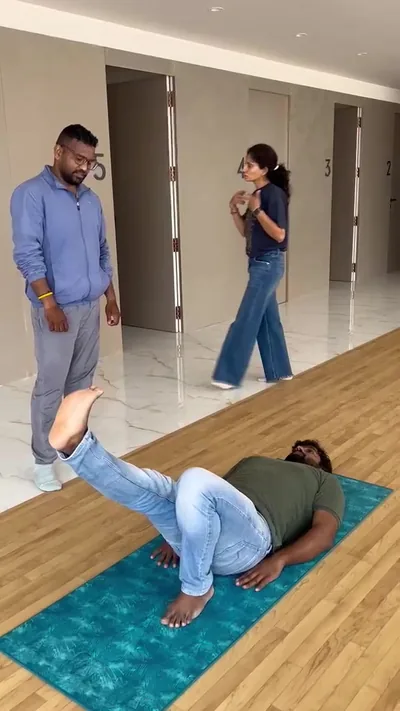
Bridge (to 20 weeks): Lie on back, knees bent, feet flat. Lift hips to straight line from knees to shoulders, squeeze pelvic floor and glutes lightly. Hold 5 seconds, lower. 8-10 repeats. After 20 weeks, do side-lying version: lie on side, knees bent, lift top hip.
Happy baby pose: On back (early pregnancy) or propped, hold outer feet, knees wide to sides. Gently rock side to side or knees to armpits, breathe deeply to relax floor. Hold 30-60 seconds.
Seated squeezes (all stages): Sit tall on chair edge, feet flat. Squeeze and lift, hold 8 seconds, relax. Add arm raises for core link.
Clinical Pilates strengthens core and pelvic floor together. Dr. Ishu Sharma guides small classes or one-on-one. Focus on neutral spine and controlled moves. In-person ensures form—home videos alone miss errors.
Role of Myofascial Release (MFR) in Antenatal Care
MFR targets tight fascia—the web around muscles. Pregnancy weight causes knots in pelvis, hips, inner thighs, back, and sacrum. Tight fascia blocks full pelvic floor contraction. Read more about our Pain Management.
Session: 10-20 minutes per area. Therapist holds pressure till tissue softens (1-2 minutes), then moves. Improves blood flow, reduces swelling in legs and pelvis, eases tension headaches from neck ties.
At Trivayu, MFR combines with manual therapy like soft tissue work. Add electrotherapy (TENS) for pain spots if suitable. Safe all trimesters—pressure adjusts to your comfort.
How a Physiotherapist Approaches Pelvic Floor Rehab Antenatal
First visit: discuss history—past births, leaks, pains, exercise habits, delivery plans (vaginal or C-section). Observe walking, standing from chair, squatting. Palpate abdomen for tummy gap (diastasis recti).
Private room, fresh gown, chaperone option. Full check: abdominal draw-in, pelvic tilt, breathing. Teach exercises hands-on—feel your squeeze, correct butt clench. Home plan with photos, videos, daily log. You may also find Elderly Knee Strengthening with Chair Exercises in Jaipur useful.
Mid-program: add side-lying bridges, four-point kneeling rocks (hands/knees, tilt pelvis). Address diastasis recti with gentle core activations—no crunches. Third trimester: labour prep like perineal massage (gentle stretch to entry), birth ball squats.
Safe Exercises for Pregnant Women: Full Guidelines
Not all exercises suit pregnancy. Safe ones build strength without high impact. Avoid: full planks, double-leg raises, inversions, heavy weights. Limit back-lying past 20 weeks. Warm up 5 minutes walk, cool down stretches.
Book at Vaishali Nagar (204, 2nd Floor, Om Tower, Gandhi Path Road, Nemi Nagar) or Vidyadhar Nagar. Hours: Mon-Sat 8am-8pm, Sun 10am-1pm. Home visits for later pregnancy or mobility issues.
Contact WhatsApp +91 90570 65065 or call. Share trimester, symptoms, past issues.
Feel inner lift, no buttock/thigh clench or tummy bulge. Physio confirms with touch or ultrasound. Try mirror: see/perineum lift. Apps with reminders help track.
Can physio prevent incontinence in pregnancy?
Guided strengthening reduces leak risks by building control before symptoms peak.
Strengthen pelvic floor for confident pregnancy. Early physio supports body changes. Consistent practice aids comfort. Recovery varies—personal steps matter. Book assessment at Trivayu. WhatsApp or call +91 90570 65065.
Physiotherapy is not the right first step for everything. Seek medical assessment promptly if any of the following apply to you:
A fit or a blackout, or if you collapse or cannot be woken properly. Call an ambulance or get to the nearest hospital emergency department.
Any bleeding from the vagina, or any fluid leaking or gushing from the vagina, at any stage of pregnancy. If the bleeding is heavy, or you also have severe tummy pain, pain in the tip of your shoulder, or you feel faint or dizzy, call an ambulance.
Your baby moving less than usual, or any change in the usual pattern of movements. Call the hospital where you are booked straight away, even in the middle of the night. Do not wait until morning, and do not try to get the baby to move first.
A severe headache that will not settle, blurred vision or flashing lights, sudden swelling of your face, hands or feet, pain just under your ribs, or feeling very unwell or being sick. Get your blood pressure checked the same day.
Severe, constant or one sided pain in your tummy, pain that does not settle after resting for 30 to 60 minutes, or a tummy that feels hard, tight and tender to touch.
Before 37 weeks: regular tightenings or contractions, period type cramps, or a backache that is not usual for you. Call the hospital where you are booked the same day.
Numbness or pins and needles around your back passage, your genitals or your inner thighs, losing control of passing urine or opening your bowels, not being able to pass urine at all, or new weakness or loss of feeling in one or both legs. Go straight to a hospital emergency department. Pregnancy does not explain these symptoms and they have to be treated within hours.
Pain in your back or in your side just below the ribs along with a temperature, shivering, vomiting, or feeling cold and clammy, whether or not it stings when you pass urine. Also get checked the same day for burning when you pass urine, needing to pass urine far more often than has been normal in this pregnancy, or urine that looks cloudy, pink, red or brown.
Pain, swelling, warmth or redness in one leg, or one leg, thigh, groin or buttock looking bigger or feeling heavier than the other. Go to hospital the same day. Do not wait to see whether it settles, and do not assume that swelling higher up the leg is ordinary pregnancy swelling.
Sudden breathlessness, breathlessness when you lie down, chest pain, coughing up blood, a racing heart, or feeling faint. Call an ambulance and do not wait to see whether it settles.
Any fall, road accident, or knock to your bump, even if you feel completely well afterwards. Get checked the same day.
Pain following a significant fall, road accident or other major injury
Fever, chills or feeling generally unwell alongside the pain
Weakness that is getting worse, or numbness that is spreading
Unexplained weight loss, or a past history of cancer
Pain that is constant, wakes you at night and does not change with position
If you lose control of your bladder or bowels, develop numbness around the groin, or have chest pain or breathlessness, treat it as an emergency and go to hospital.
Safety limits and when this does not apply
We treat only the muscle and joint side of pregnancy pain. The doctor looking after your pregnancy stays in charge of your antenatal care, so keep every scan and check up, and anything in the list above goes to them or to a hospital, not to us. Check with them before you start or change any exercise programme, particularly if you have been told you have high blood pressure, a low lying placenta, a twin pregnancy, a stitch in the cervix, or you have had any bleeding or early contractions.
Shortwave diathermy and TECAR are not used anywhere on the body during pregnancy, and therapeutic ultrasound is never applied over the tummy. Electrotherapy, laser, dry needling and acupuncture are not applied over the abdomen, low back or pelvis at any stage of pregnancy.
Spinal manipulation, traction and forceful hands on techniques are not used during pregnancy.
Do not lie flat on your back for long periods, particularly after 16 weeks, because the weight of your bump presses on the main blood vessel bringing blood back to your heart and this can make you feel faint. Work in side lying or propped up instead, and change position if you feel dizzy or sick. Do not let yourself get overheated either: no hot packs or deep heat over the tummy or low back, no sauna, no hot yoga, and no strenuous exercise in hot weather.
Pregnancy hormones make your joints looser, so stay inside a comfortable range. Avoid end range stretching, deep or wide squats, wide leg movements and standing on one leg to dress, avoid heavy lifting, and never hold your breath and strain. Take care with anything where you could fall or be knocked in the tummy. Stop straight away and get advice if an exercise brings on tummy pain, tightenings, dizziness, breathlessness at rest, chest pain, a headache, any leaking of fluid, or any bleeding.
This article is general information. It is not an assessment of your problem, and it cannot account for your medical history, medication or imaging.
A patient's experience
Truly thankful to Dr. Jyoti Choudhary and the entire team of Trivayu Physio Centre for their genuine care, humble behaviour, and excellent treatment.
Mahesh Dhaka, Google review
This is one patient's own account, published with consent on our reviews page. It describes their experience, not a predicted outcome. Individual results vary.
Evidence. Guidance on musculoskeletal pain here follows the 3 sources listed under References above.
Clinical experience. Practical points on what tends to help in the clinic reflect the experience of the Trivayu physiotherapy team in Vaishali Nagar, Jaipur, and are not the same as trial evidence.
Opinion. Where we suggest a preference or an approach, that is our clinical judgement. Other qualified clinicians may reasonably differ.
Backward walking helps athletes recover from ACL injuries. It builds knee stability in Phase 2 of rehab. This exercise targets quadriceps and improves control after surgery…
After ACL surgery, rebuilding knee strength takes time and care. ACL rehabilitation phases guide this process step by step. Phase 1 protects the graft and cuts…
After hip replacement surgery, dressing your lower body safely helps build independence. By week 6 of hip replacement recovery, many patients aim to dress without help.…