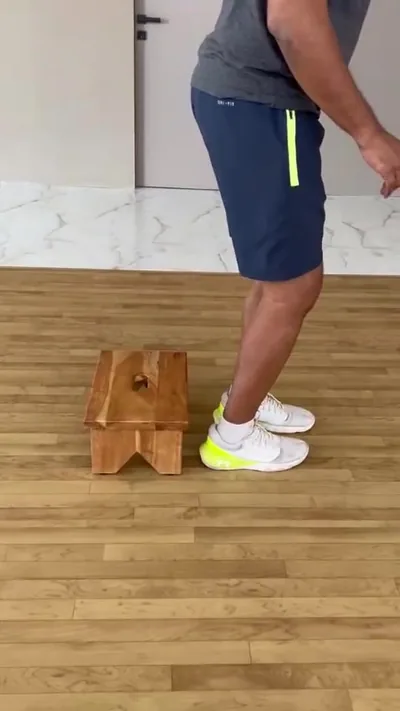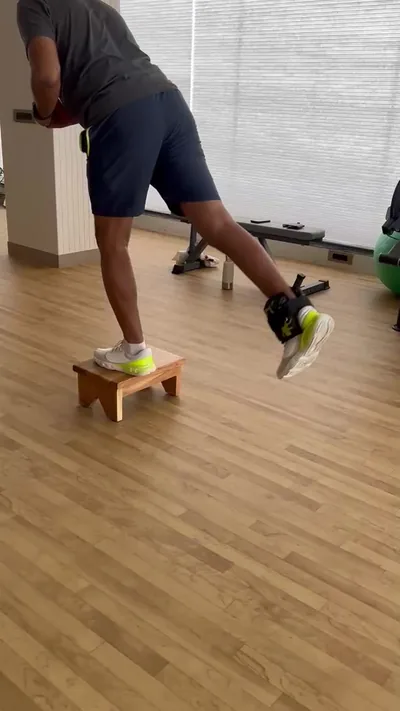
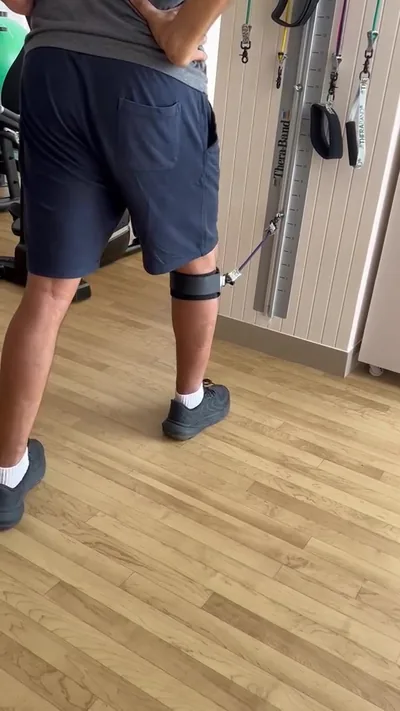
Backward Walking in ACL Rehab Phase 2
Backward walking helps athletes recover from ACL injuries. It builds knee stability in Phase 2 of rehab. This exercise targets quadriceps and improves control after surgery…
Read article
After ACL surgery, scar tissue forms around the knee joint to repair the graft and tissues. This natural process involves fibrous material in the joint capsule, synovium, or fat pad.
Arthrofibrosis limits knee movement in all directions, but flexion suffers most. Symptoms build gradually: pain when bending the knee, ongoing swelling despite ice, and a tight feeling inside the joint.
In Jaipur, post-ACL patients face this from delayed swelling control or limited early motion. Factors raising risk include poor pain management, infection, or graft tension issues.
Knee stiffness post ACL surgery stems from inflammation, haemarthrosis, and scar formation. The joint capsule thickens early if flexion lags behind 90 degrees by week 4. This creates a cycle: stiffness causes guarding, which worsens adhesions.
Patients in Jaipur report stiffness as a ‘locked’ knee that resists gentle bends. It affects quadriceps activation—muscle shuts off, leading to weakness. Untreated, it delays full extension too, forcing a bent-knee walk.
Expect initial sessions to focus on prone hangs for gravity-assisted flexion. Progress to wall slides as tolerance builds. Track with a goniometer—aim for steady gains without force.
Scar tissue adheres layers inside the knee, shortening the posterior capsule and blocking flexion. After ACL surgery, normal flexion reaches 120-135 degrees by week 6. Looking for a Rehabilitation Centre Near Me? Our team in Vaishali Nagar, Jaipur can assess you in person.
For Jaipur patients, this stalls rehab milestones. Bending past 90 degrees triggers sharp pull or pinch. It hampers walking stride, deep squats, or sports pivots. Early signs show in heel slides—heel stops short.
Physiotherapists measure active and passive flexion separately. Passive reveals capsule limits; active shows muscle inhibition. Early intervention breaks the cycle. Get checked in person for tailored steps.
To improve knee bend after ACL, physiotherapists use a graded approach. Week 1-2: gentle heel props to encourage passive flexion. Add low-load long-duration stretches, holding 5-10 minutes multiple times daily.
By week 4, introduce active-assisted exercises. Use a slide board or towel under the heel for frictionless glides. Progress to stationary bike with no resistance—pedal backwards first to target flexion.
Clinic sessions include joint mobilisations: posterior glides with the patient prone, oscillating the tibia to stretch capsule. Expect 20-30 minutes per technique. Home program: 3 sets of 10 heel slides daily, progressing hold time.
Dry needling at Trivayu Physio Center targets tight scar tissue around the ACL graft site. Trained physiotherapists insert thin, sterile filament needles into trigger points or palpable bands. No drugs injected—the needle itself disrupts dysfunctional tissue. Read more about our Pain Management.
For ACL scar, needles go into quadriceps (vastus lateralis for lateral tightness), hamstrings (semimembranosus for posterior pull), or infrapatellar fat pad. It releases local twitch responses, improving slide between layers.
We offer dry needling with electrical stimulation for deeper effect. Sessions run 20-30 minutes. Expect twitching during insertion, then immediate ease in bend. Mild soreness follows for 24-48 hours—use ice and avoid heavy load.
Dry needling works best combined with exercises for knee flexion gains. A session begins with heat pack for 10 minutes to warm tissues, followed by soft tissue massage.
Post-needling, do light exercises to capitalise on release:
Clinic adds Clinical Pilates: reformer leg presses with footbar for controlled flexion. Do exercises daily under guidance; track angle with phone app or mirror. Physiotherapist customises post-assessment.
Post-ACL complications like arthrofibrosis require systematic physio. Start with full assessment: active/passive flexion-extension, quadriceps girth for atrophy, calf measure for swelling, patellar tracking, and pain mapping during specific tests. You may also find Knee Swelling After Surgery in Jaipur: Elevation Tips useful.
Typical session: Explain results plainly. Apply Class IV laser for 8-10 minutes to cut inflammation without heat damage. Follow with manual therapy—sustained posterior capsule stretch in prone position.
For stiffness, phase progression: Phase 1 (weeks 1-4) regains 0-110 degrees flexion via heel props and prone hangs. Phase 2 adds step-downs from 10cm box.
Frequency: 2-3 sessions weekly for 4-6 weeks, then taper. Monitor via patient video of heel slides. If no 10-degree gain in 2 weeks, refer back to surgeon for imaging or arthroscopic release. Consistency drives results.
Trivayu Physio Center in Vaishali Nagar treats post-ACL knee scar tissue and stiffness. We serve Vidyadhar Nagar at Rangoli Gardens, ideal for Jaipur locals with sports injuries or surgery rehab.
Dr. Jyoti Choudhary (17+ years in sports and orthopaedics) supports Rajasthan Senior Women’s Cricket Team. Dr. Hritika Choudhary specialises in post-op rehab protocols. Dr. Ishu Sharma handles exercise and sports-specific return-to-play.
Available: dry needling, Class IV laser, electrotherapy, manual mobilisations, Clinical Pilates. Services cover post-surgery rehab and pain management. Home visits and online consultations available. Book in-person knee scar tissue assessment today.
Fibrous material that heals the ACL graft site. Excess thickens into arthrofibrosis, causing stiffness and limited flexion in the joint capsule or fat pad.
Filament needles break scar adhesions in quadriceps, hamstrings, or popliteus. Boosts blood flow to remodel tissue.
It releases restrictions when paired with stretches. Expect gradual flexion gains over 4-6 sessions post-assessment.
After month 2 if stiffness blocks progress. Clear with surgeon first. We assess skin, infection risk, and timing.
Yes, when done by trained staff. Screen for needle phobia, anticoagulants. Soreness is common but short-lived.
Consider ultrasound or MRI. Physio pushes non-surgical options first; refer for MUA if needed. Reassess weekly.
Daily, 10-15 minutes, 2-3 times. Prioritise full range without pain.
Delayed rehab, excess swelling, or infection. Early physio checks prevent it.
Scar management requires personalised physio. Focus on steady flexion progress. Factors like age, compliance, and surgery details affect path. Book assessment at Trivayu Physio Center. WhatsApp or call +91 90570 65065.
“`
*(Word count: 1,128)*
Physiotherapy is not the right first step for everything. Seek medical assessment promptly if any of the following apply to you:
If you lose control of your bladder or bowels, develop numbness around the groin, or have chest pain or breathlessness, treat it as an emergency and go to hospital.
Truly thankful to Dr. Jyoti Choudhary and the entire team of Trivayu Physio Centre for their genuine care, humble behaviour, and excellent treatment.
Mahesh Dhaka, Google review
This is one patient's own account, published with consent on our reviews page. It describes their experience, not a predicted outcome. Individual results vary.
Backward walking helps athletes recover from ACL injuries. It builds knee stability in Phase 2 of rehab. This exercise targets quadriceps and improves control after surgery…
Read articleAfter ACL surgery, rebuilding knee strength takes time and care. ACL rehabilitation phases guide this process step by step. Phase 1 protects the graft and cuts…
Read articleAfter hip replacement surgery, dressing your lower body safely helps build independence. By week 6 of hip replacement recovery, many patients aim to dress without help.…
Read articleMessage us on WhatsApp with your main concern and preferred time, and we'll confirm your first visit the same day.