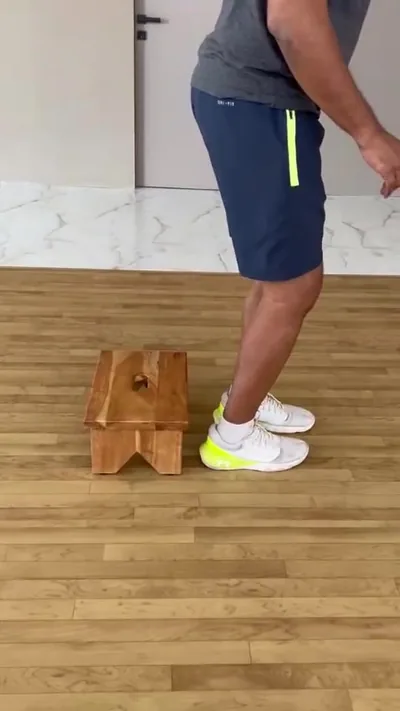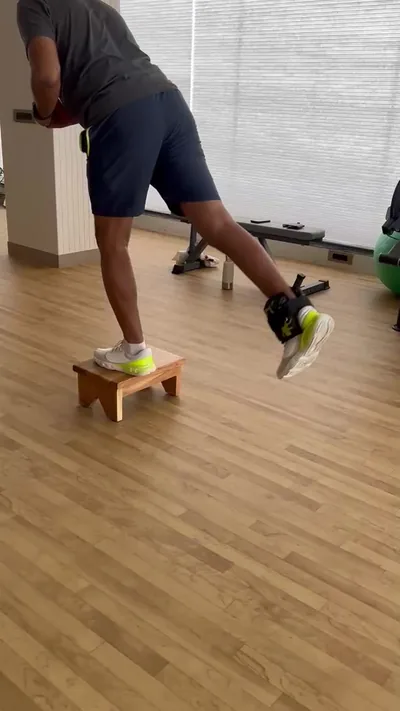
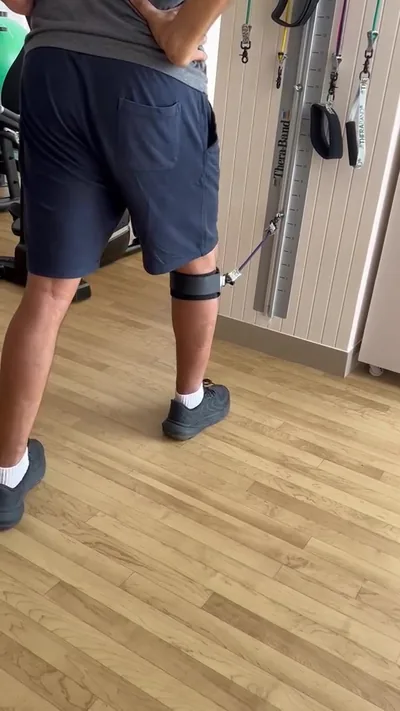
Backward Walking in ACL Rehab Phase 2
Backward walking helps athletes recover from ACL injuries. It builds knee stability in Phase 2 of rehab. This exercise targets quadriceps and improves control after surgery…
Read article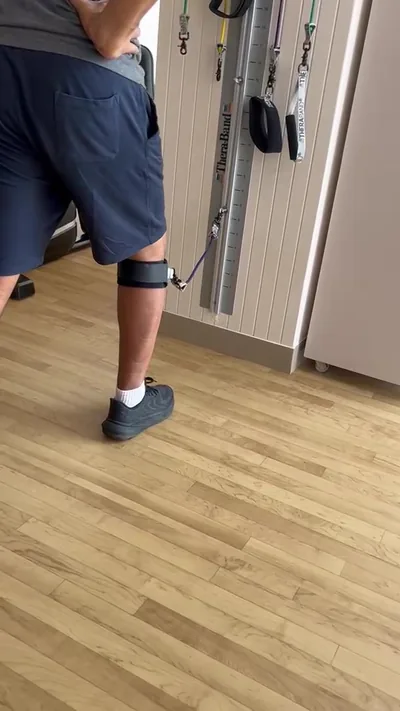

After ACL reconstruction surgery, your knee goes through stages of healing. At month 2, the graft is still tender because it is integrating with your bone and tissue. This process involves the graft tunnels in the femur and tibia filling with new bone and cells. Tenderness often comes with mild swelling or stiffness. It shows the area is sensitive from increased activity as you start walking more and doing basic exercises.
Normal tenderness feels like soreness after exercise. It improves with rest and gentle care. But sharp pain, redness or warmth might mean a problem such as infection or poor graft fixation. Watch for signs that do not settle. Post ACL rehab at this stage focuses on protecting the graft while building knee control.
At month 2 post-op, your knee needs careful loading to build strength without stressing the graft. Walk with full weight but use crutches if pain increases beyond mild soreness. Avoid twisting or sudden stops to prevent graft strain. A physiotherapist would check your gait first, looking for limp or knee wobble, then guide progression.
Listen to your body. Overdoing it can cause knee graft pain or swelling setback. In Jaipur, orthopaedic rehabilitation helps tailor this to your pace.
Gentle touch can ease tension around the graft site without risking damage. Do not push on the graft directly or near the incision scars, as the tissue remains fragile. A physio would use light pressure to assess tightness first. Looking for a Rehabilitation Centre Near Me? Our team in Vaishali Nagar, Jaipur can assess you in person.
This aids blood flow and reduces tightness around the knee graft. Stop if pain worsens. For ACL graft care, combine with daily checks for even skin temperature.
Combine massage with basics to aid healing. Knee graft swelling at month 2 often lingers from fluid buildup as activity ramps up. Physiotherapy for ACL targets this with specific steps.
Expect easing in 1-2 weeks with consistency. Track progress daily by measuring knee girth with a tape at the patella level. ACL rehab tips include pairing this with quad activation: tighten thigh muscle for 5 seconds, 20 reps, to reduce swelling faster. More on Sciatica Treatment and how we assess it.
A physiotherapist starts with a full assessment: testing knee range, strength, and stability. For ACL graft pain or tenderness, they check graft tension by palpating around tunnels without pressure. Expect hands-on work to loosen tight quads or hamstrings, plus electrotherapy like TENS for pain relief if needed.
Week by week at month 2, they add closed-chain exercises: wall sits (back to wall, slide to 90 degrees, hold 10 seconds) or step-ups on a 10 cm box, 10 reps per leg. They teach proprioception: stand on one leg eyes closed for balance training. If knee swelling month 2 persists, they drain excess fluid safely or adjust compression.
For knee pain after ACL, focus shifts to patella mobility: gentle glides side to side under kneecap. Progress includes mini-squats with a therapy band around knees for control. In Jaipur clinics like Trivayu Physio, this builds safe return to daily tasks. You may also find ACL Graft Stretching Precautions Months 2-3 useful.
Healing varies by graft type—hamstring, patellar tendon or allograft—but month 2 marks graft-bone bonding phase. Tenderness peaks with activity increase. Expect knee rehab Jaipur style: daily home program plus weekly physio visits.
Physio tracks milestones: full knee extension by now, flexion to 120 degrees, no limp. If behind, they revisit basics like prone hangs (lie on stomach, let leg hang off bed 5 minutes). ACL graft care means no rushing—graft needs 6-12 weeks minimum for basic strength.
Most tenderness fades with self-care. But see a physio promptly if:
In-person check ensures safe progress. At Trivayu Physio in Vaishali Nagar or Vidyadhar Nagar, our team uses techniques like Manual Therapy, Orthopaedic Rehabilitation and Electrotherapy to guide your rehab. Book an assessment for personalised ACL recovery plan.
New stress from walking or exercise irritates the healing tissue. It is common as you increase activity and graft integrates.
Yes, mild soreness is typical during tissue remodelling and early loading.
Often eases in days to weeks with proper care. Full comfort takes longer as strength builds.
Twisting, jumping, deep knee bends or heavy lifting until cleared by physio.
Yes, gentle massage reduces tightness if done right, away from graft.
Seek experienced physio like at Trivayu for tailored rehab in knee rehab Jaipur.
Try quad sets, straight leg raises, heel slides and mini wall sits.
Ice, elevate, light compression, rest and quad pumps.
Gentle movement plus ice, plus physio-guided stretches.
Progress slowly, track pain daily, attend regular physio checks.
Ready to move forward? Book an assessment at Trivayu Physio Center via WhatsApp or call +91 90570 65065.
Physiotherapy is not the right first step for everything. Seek medical assessment promptly if any of the following apply to you:
If you lose control of your bladder or bowels, develop numbness around the groin, or have chest pain or breathlessness, treat it as an emergency and go to hospital.
Truly thankful to Dr. Jyoti Choudhary and the entire team of Trivayu Physio Centre for their genuine care, humble behaviour, and excellent treatment.
Mahesh Dhaka, Google review
This is one patient's own account, published with consent on our reviews page. It describes their experience, not a predicted outcome. Individual results vary.
Backward walking helps athletes recover from ACL injuries. It builds knee stability in Phase 2 of rehab. This exercise targets quadriceps and improves control after surgery…
Read articleAfter ACL surgery, rebuilding knee strength takes time and care. ACL rehabilitation phases guide this process step by step. Phase 1 protects the graft and cuts…
Read articleAfter hip replacement surgery, dressing your lower body safely helps build independence. By week 6 of hip replacement recovery, many patients aim to dress without help.…
Read articleMessage us on WhatsApp with your main concern and preferred time, and we'll confirm your first visit the same day.