Pre ACL surgery exercises Jaipur
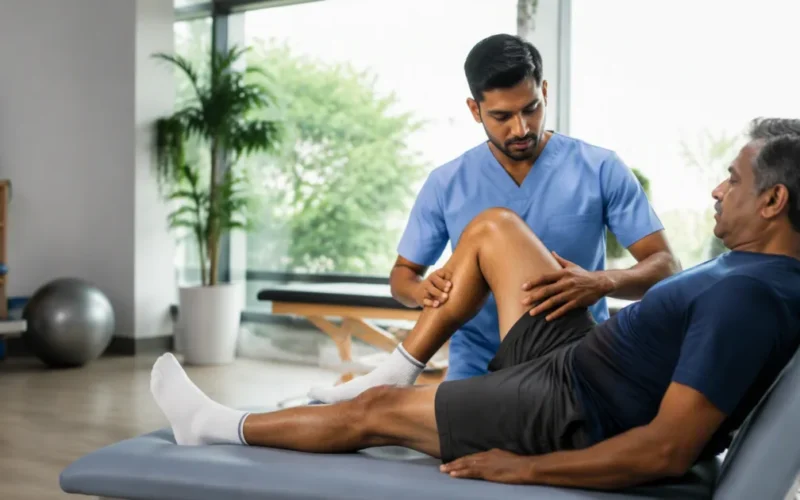
What is Prehab for ACL Tear? Prehabilitation, or prehab, means exercises and therapy before ACL surgery to prepare your knee. An ACL tear happens when the…
Read article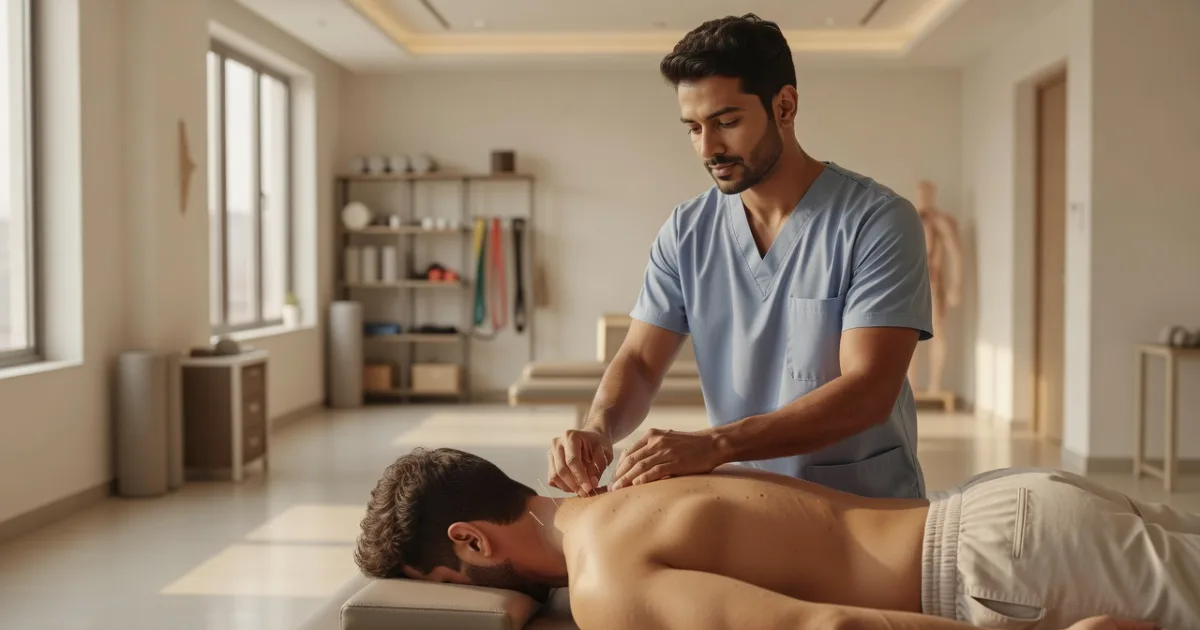

The short answer
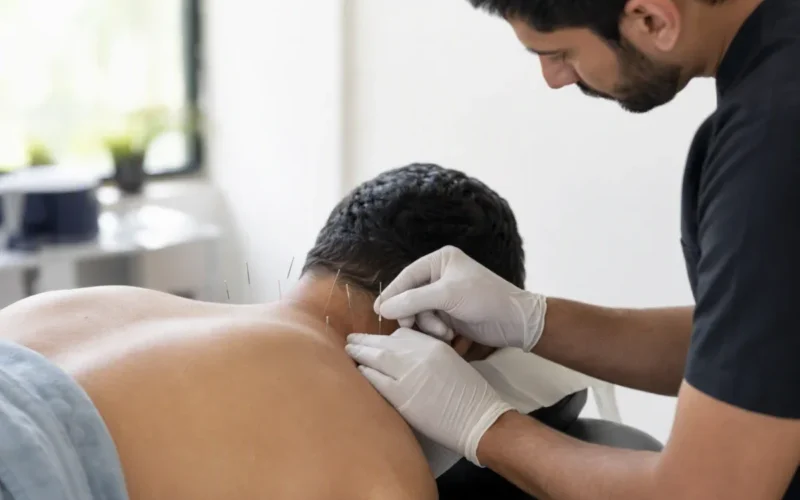
Dry needling targets myofascial trigger points in neck muscles of office workers caused by poor posture and prolonged desk hours. It inserts thin needles into tight bands, eliciting a twitch response that reduces chronic tightness and improves mobility. Combining with stretches yields better long-term results.
Many office workers in Jaipur spend long hours at desks with poor posture. This creates tight bands in the neck muscles known as myofascial trigger points.
Dry needling for neck pain targets these trigger points directly. It is a non invasive neck treatment that can reduce chronic neck tightness and improve neck mobility.
This article explains how dry needling works, what happens in a session and why combining it with stretches and other therapies gives better long-term results.
Chronic neck muscle knots are tight spots within muscle fibres called myofascial trigger points. When pressed they produce local pain and often referred pain from neck to temples, behind the eyes or between the shoulder blades.
In Jaipur many professionals sit in air-conditioned offices with inadequate chair support. This sustained position shortens the upper trapezius, levator scapulae and suboccipital muscles. Over months the muscles develop persistent knots.
When simple measures fail, the knots limit neck movement and disturb sleep. This cycle of chronic neck tightness can affect concentration and work performance. Targeted treatment is required to release the trigger points and correct posture.
Dry needling uses thin filament needles similar in size to acupuncture needles. The physiotherapist inserts the needle into the centre of the muscle knot.
The twitch response resets the overactive muscle fibres. It improves local blood flow, reduces inflammation chemicals and breaks the cycle of muscle spasm. Unlike medication, dry needling for trigger points addresses the source without systemic side effects. Looking for a Rehabilitation Centre Near Me? Our team in Vaishali Nagar, Jaipur can assess you in person.
Patients usually feel a deep ache during the twitch that settles quickly. The result is decreased tightness and improved neck mobility within the same day for many people. The technique is precise and performed only after careful palpation.
For long-standing office neck pain we often add mild electrical current through the needles. This is called dry needling with stimulation.
The stimulation also modulates pain signals to the brain and helps reduce spasm more effectively than dry needling alone. It is particularly useful when chronic neck tightness has lasted months or years.
At Trivayu Physio Center this combination forms part of trigger point release therapy. It supports muscle spasm relief while preparing the neck for better movement and posture correction.
Your first session begins with a detailed assessment of posture, neck movement and location of trigger points. The physiotherapist checks for nerve involvement or joint stiffness. Treatment is tailored to your specific presentation.
Dry needling is performed by senior team members including Dr. Jyoti Choudhary or Dr. Ajit Choudhary who have extensive experience in orthopaedic and sports physiotherapy. Sessions last 30 to 45 minutes.
Safety steps include single-use sterile needles, skin preparation and continuous monitoring of your comfort. We explain each step clearly. Most office workers return to work the same afternoon with reduced pain and greater ease of movement. Read more about our Pain Management.
The release from dry needling lasts longer when followed by proper home care. Post needling stretches prevent the knots from returning and support improved neck mobility.
We also teach Clinical Pilates-based moves to strengthen deep neck flexors and improve posture. These exercises are simple, can be done at your desk and form the foundation of long-term neck care.
Dry needling works well on its own for isolated muscle knots. When pain involves the spine, nerves or joints we combine it with other services available at the clinic.
Manual therapy and myofascial release (MFR) improve joint mobility and soften surrounding tissues. Posture correction exercises address the root cause. For cases with disc or nerve irritation we may add Robotic Spinal Decompression Therapy to reduce pressure on the spine.
This combined approach gives more complete neck pain relief in Jaipur. Our physiotherapists decide the best mix after the initial assessment. The goal is lasting comfort rather than short-term relief only. You may also find Desk Exercises for Neck Pain: Simple Stretches for Office Workers useful.
It inserts a fine needle into the trigger point, creates a local twitch response and allows the tight muscle band to relax. This improves blood flow and reduces referred pain from neck without using drugs.
Yes, the added mild current helps relax deeper muscles, reduces spasm faster and provides longer lasting relief for chronic neck tightness that has not responded to other measures.
Many office workers notice reduced tightness and better movement within hours. Some experience gradual improvement over one to two days as the muscle continues to relax.
Simple chin tucks, side tilts and levator stretches are recommended. Your physiotherapist will demonstrate exact technique and timing to maintain the release and support posture.
When performed by trained physiotherapists after proper assessment, dry needling is a safe non invasive neck treatment. We use sterile single-use needles and monitor comfort throughout.
Persistent neck pain does not have to be accepted as part of desk work. Targeted dry needling for neck pain, followed by the right stretches and posture care, can reduce chronic neck muscle knots and restore comfortable movement.
Book an assessment with us at Vaishali Nagar or Vidyadhar Nagar. Call +91 90570 65065 or message on WhatsApp to start your neck pain relief plan.
Physiotherapy is not the right first step for everything. Seek medical assessment promptly if any of the following apply to you:
If you lose control of your bladder or bowels, develop numbness around the groin, or have chest pain or breathlessness, treat it as an emergency and go to hospital.
What is Prehab for ACL Tear? Prehabilitation, or prehab, means exercises and therapy before ACL surgery to prepare your knee. An ACL tear happens when the…
Read articleCervical spondylosis is age-related wear in the discs and small joints of the neck. Dry needling can ease the muscle tightness that builds up around it. Here is what happens in a first session.
Read articleThumb Arthritis Exercises Jaipur – Manage Basal Joint Pain at Home Thumb arthritis, also known as basal joint arthritis or CMC joint osteoarthritis, causes pain at…
Read articleMessage us on WhatsApp with your main concern and preferred time, and we'll confirm your first visit the same day.