Pre ACL surgery exercises Jaipur
What is Prehab for ACL Tear? Prehabilitation, or prehab, means exercises and therapy before ACL surgery to prepare your knee. An ACL tear happens when the…
Read article

The short answer
Returning to running after ACL surgery requires passing objective strength and movement tests rather than fixed timelines. At Trivayu Physio Center, sports physiotherapists assess quadriceps and hamstring strength at 80-90% of the uninjured leg, single-leg hops at 90%, balance and change-of-direction drills before clearance. This individual approach lowers re-injury risk.
Returning to running after ACL surgery needs more than counting weeks. Young athletes in Jaipur often ask when they can start jogging again after ACL reconstruction.
At Trivayu Physio Center in Vaishali Nagar, our sports physiotherapists use objective measures instead of fixed timelines. This lowers the chance of re-injury and supports a steady return to sport after ACL surgery.
Proper post-surgery knee rehab focuses on building knee stability after ACL surgery before adding running load. Rushing back without meeting clear criteria can lead to swelling, pain or a second injury.
Healing rates vary between athletes. Some regain strength faster while others need more time for full knee stability after ACL surgery. Returning based only on weeks post-surgery ignores these differences and raises risks.
Common risks of returning too early include swelling, loss of confidence in the knee, poor landing control and higher chance of graft strain.
Physiotherapy clearance for running gives a clearer picture than any standard number of weeks. Our team at Trivayu Physio Center checks each athlete individually before approving the next step in sports injury rehab Jaipur.
The first four weeks after ACL reconstruction focus on controlling swelling, restoring full knee range and gentle muscle activation. From week four to twelve the emphasis shifts to building basic strength, balance and walking without a limp. Looking for a Physiotherapist in Jaipur? Our team in Vaishali Nagar, Jaipur can assess you in person.
Running is usually not introduced before three to four months. Even at that point it is only considered after the knee meets objective criteria.
During these early months, physiotherapists use manual therapy, exercise therapy and clinical pilates to restore normal movement. Patients also learn to monitor swelling and pain so they can report changes quickly.
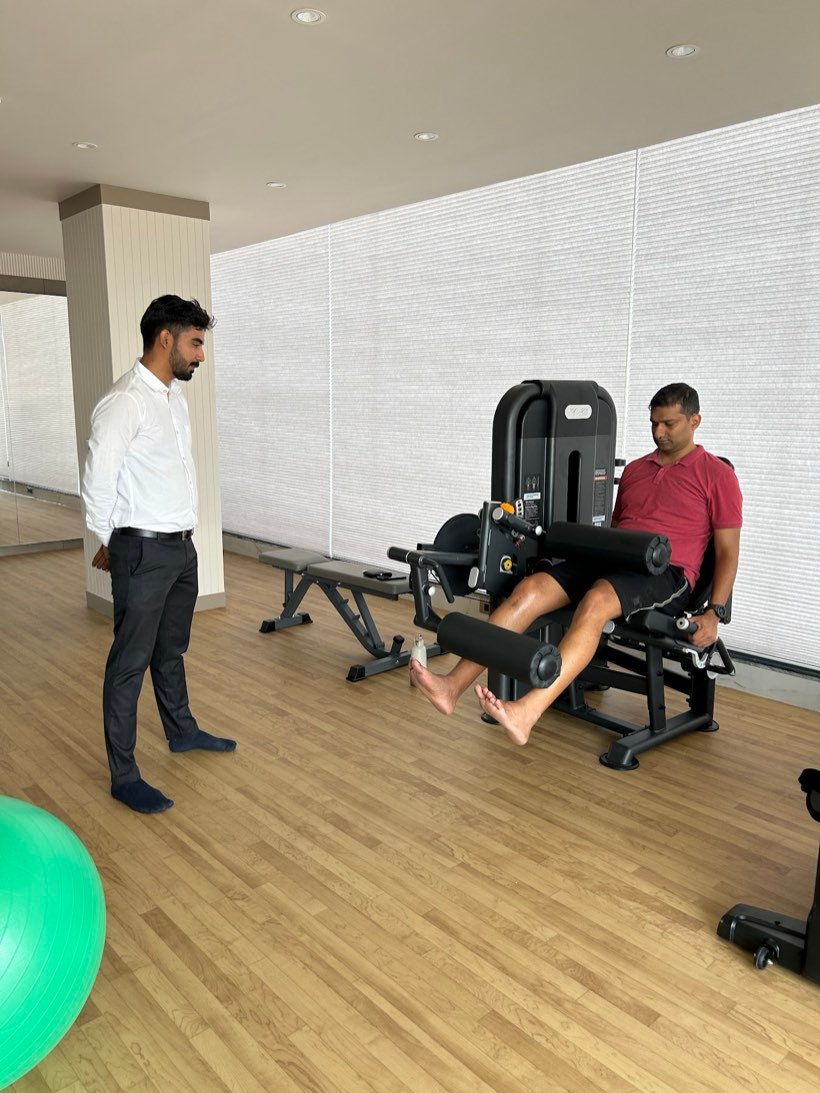
Quadriceps strength and hamstring strength are measured with a handheld dynamometer or isokinetic machine. Most protocols require the injured leg to reach 80-90 percent of the uninjured leg before running begins.
Single-leg leg-press endurance is checked by counting how many controlled repetitions an athlete can complete. Calf strength is tested through single-leg heel raises.
Passing these strength tests reduces the risk of compensation patterns that could overload the new graft. Our team records exact numbers so progress can be tracked clearly across follow-up visits.
Single-leg hop tests form a central part of ACL rehab running criteria. These include the single hop for distance, triple hop, crossover hop and 6-metre timed hop. The injured leg usually needs to achieve at least 90 percent of the uninjured leg score.
Single leg balance after ACL is assessed with eyes open and closed. Good control during 30 seconds of balance on the operated leg suggests readiness for running.
Controlled change-of-direction drills complete the picture. The physiotherapist watches for smooth movement without hesitation or pain. These hop test for ACL recovery and balance checks together give a reliable sign that the knee can tolerate running. Read more about our Sports Injury & Rehab.
Our sports physiotherapy team, led by Dr. Jyoti Choudhary who has worked with the Rajasthan Senior Women’s Cricket Team, performs these tests in a structured session. The assessment combines clinical examination, strength measurement and movement analysis.
Before the tests, patients receive targeted manual therapy, myofascial release and clinical pilates to address any remaining stiffness or weakness. Advanced electrotherapy and exercise therapy help bridge gaps in quadriceps strength or single-leg control.
Once the strength and movement tests are passed, the physiotherapist gives clearance and designs the next running programme. This individual approach forms the core of our post surgery knee rehab and sports injury rehab Jaipur services.
Begin with brisk walking for 15 to 20 minutes. When there is no increase in pain or swelling, introduce short intervals of jogging on soft surfaces.
Progress slowly to continuous jogging, then add slight changes in speed. Include a proper warm-up with dynamic stretches and continue strength work twice a week. Monitor the knee for swelling after every run and adjust pace if needed. You may also find First Week After ACL Surgery Physiotherapy useful.
This gradual method supports safe return to running post ACL repair. Continued physiotherapy sessions ensure form stays correct and strength keeps improving. An in-person assessment remains the best way to tailor the programme to your exact recovery stage.
Most athletes begin running between three and four months after surgery, but only after they pass strength and movement tests. A fixed number of weeks is not enough on its own.
Key tests include quadriceps and hamstring strength reaching 80-90 percent of the uninjured leg, single-leg leg-press endurance and calf strength measured by heel raises.
No. Continuing weakness raises the risk of poor knee stability after ACL surgery and possible re-injury. Strength tests must show the leg is close to the uninjured side before running is introduced.
Single-leg hop tests, single-leg balance, controlled landing and change-of-direction drills are used. Scores of 90 percent or more compared with the uninjured leg usually indicate readiness.
It is not recommended. Clearance based on objective tests helps protect the graft and supports a safer return to sport after ACL surgery. An individual assessment is the safest route.
Returning to running after ACL surgery is an important milestone that deserves careful preparation. At Trivayu Physio Center we combine experience in sports injury rehab Jaipur with clear testing to guide each athlete. Book an assessment with our team using WhatsApp or by calling +91 90570 65065. Our physiotherapists will check your knee, explain the results and create a plan matched to your goals.
Physiotherapy is not the right first step for everything. Seek medical assessment promptly if any of the following apply to you:
If you lose control of your bladder or bowels, develop numbness around the groin, or have chest pain or breathlessness, treat it as an emergency and go to hospital.
What is Prehab for ACL Tear? Prehabilitation, or prehab, means exercises and therapy before ACL surgery to prepare your knee. An ACL tear happens when the…
Read articleCervical spondylosis is age-related wear in the discs and small joints of the neck. Dry needling can ease the muscle tightness that builds up around it. Here is what happens in a first session.
Read articleThumb Arthritis Exercises Jaipur – Manage Basal Joint Pain at Home Thumb arthritis, also known as basal joint arthritis or CMC joint osteoarthritis, causes pain at…
Read articleMessage us on WhatsApp with your main concern and preferred time, and we'll confirm your first visit the same day.