Rotator Cuff Exercises Jaipur Post Injury
Rotator cuff injuries affect muscles and tendons around the shoulder joint. These hold the arm bone in place. Active adults in Jaipur get them from sports,…
Read article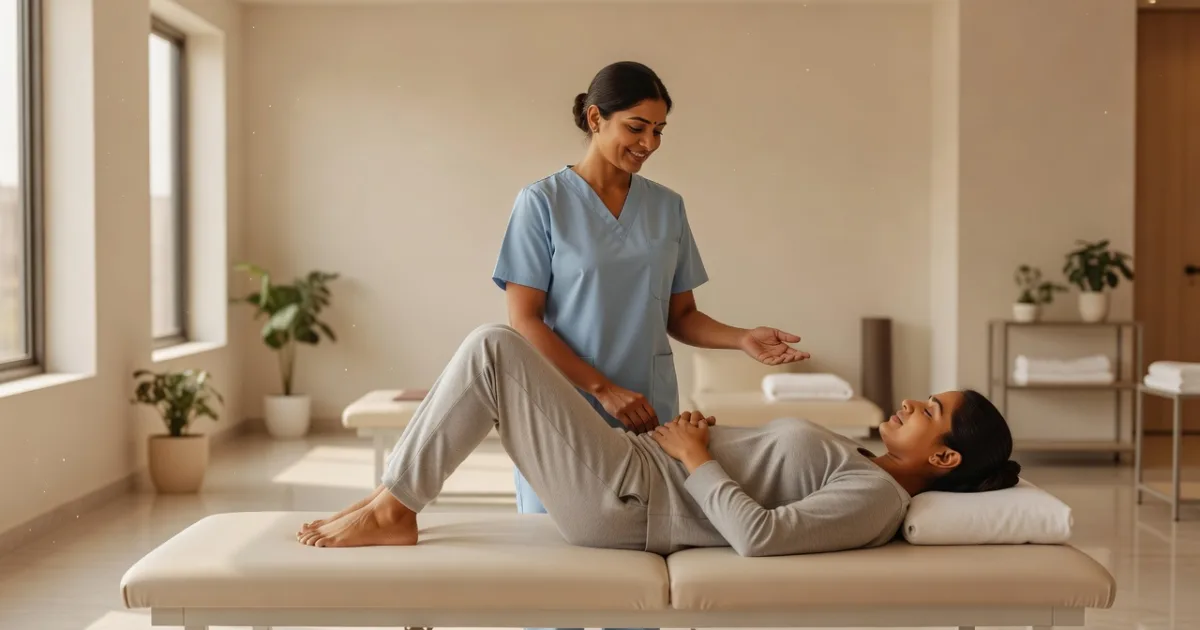

The short answer
Post natal pelvic floor exercises help new mothers rebuild pelvic floor strength gently after childbirth. They support bladder control and reduce risk of future problems. At Trivayu Physio Center in Vaishali Nagar, Jaipur, personalised guidance ensures safe practice.
New mothers often feel changes in their body after childbirth. The pelvic floor muscles stretch and weaken during pregnancy and delivery. Post natal pelvic floor exercises help rebuild strength gently and safely. These moves support bladder control after pregnancy and reduce the risk of future problems.
At Trivayu Physio Center in Vaishali Nagar, Jaipur, our team guides mothers with personalised postnatal pelvic floor strengthening. Recovery varies for every woman. Always get clearance from your doctor before starting. The right timeline and correct technique matter most for new mother pelvic health.
Pelvic floor muscles act like a hammock that holds the bladder, uterus and bowel in place. During pregnancy they carry extra weight. During birth they stretch to allow the baby to pass. After delivery many women notice leaking urine when they cough, laugh or lift. Some feel heaviness in the pelvic area.
Weak pelvic floor can also affect posture because these muscles connect with the deep core. Good strength helps daily movements feel steadier. Early, gentle work supports long-term health and may help prevent prolapse after birth. Results differ from person to person. Consistent practice under proper guidance brings the best progress.
Most women can begin very gentle pelvic floor activation within the first few days after a normal vaginal delivery. Start with simple awareness and light contractions while breathing normally. After a caesarean section, wait until the incision feels comfortable and your doctor gives approval, often around two to four weeks.
Every recovery is different. Factors like stitches, pain, swelling and energy levels decide the right start. Get medical clearance before any exercise. Listen to your body. If something causes pain or increased bleeding, stop and rest. The timeline for starting pelvic exercises is never the same for all mothers.
Begin in a comfortable position such as lying on your back with knees bent or sitting upright. These basic moves can be done at home once cleared.
Focus on quality, not force. Correct technique means the lower belly should stay soft and breathing should stay steady. If you feel pain, dizziness or increased bleeding, stop immediately.
After the six-week check-up and with doctor approval, you can add movement-based work. Combine pelvic floor lifts with light core activation during daily tasks. For example, engage the pelvic floor before standing up from a chair or lifting the baby.
Walking with good posture and controlled breathing helps the core and pelvic floor connection. Once comfortable, add slow body-weight squats while keeping the pelvic floor and deep core gently active. Progress only when the earlier exercises feel easy and pain-free. Our physiotherapists at Trivayu Physio Center create gradual plans that match each mother’s stage.
Contact a women’s health physiotherapist if you notice leaking urine, a feeling of bulging or heaviness in the pelvis, pain during intercourse, or ongoing back pain. These signs of weak pelvic floor after childbirth should not be ignored.
A proper assessment can identify the exact problem and guide safe postnatal pelvic floor strengthening. At Trivayu Physio Center we offer post-natal rehabilitation programs, manual therapy, clinical Pilates and exercise therapy. Home visits are available for new mothers who find travel difficult in the early months.
Many women begin gentle awareness and light contractions within days of a normal delivery. After a caesarean, wait until your doctor confirms it is safe, usually after the first two to four weeks. Individual recovery decides the exact start.
Yes, when started at the right time and with correct technique. Begin with breathing and very gentle activation only after medical clearance. Avoid any movement that pulls on the scar until it has healed well.
Short sessions of eight to ten gentle contractions, two to three times a day is a practical start. Quality matters more than quantity. Spread the practice through the day rather than doing long sessions at once.
Common signs include leaking urine when coughing or sneezing, a heavy or dragging feeling in the pelvis, difficulty controlling wind, and lower back or pelvic pain that does not settle.
Yes. Many gentle post natal pelvic floor exercises can be performed safely at home once cleared. For best results and to avoid mistakes, an initial assessment with a women’s health physiotherapist is recommended. Home visit options are available.
Every new mother in Jaipur deserves support for her pelvic health. Post natal pelvic floor exercises form an important part of postpartum recovery exercises. Start gently, progress slowly and seek expert guidance when needed. Book an assessment at Trivayu Physio Center in Vaishali Nagar or Vidyadhar Nagar. Call +91 90570 65065 or message on WhatsApp to arrange a convenient time.
Physiotherapy is not the right first step for everything. Seek medical assessment promptly if any of the following apply to you:
If you lose control of your bladder or bowels, develop numbness around the groin, or have chest pain or breathlessness, treat it as an emergency and go to hospital.
Rotator cuff injuries affect muscles and tendons around the shoulder joint. These hold the arm bone in place. Active adults in Jaipur get them from sports,…
Read articleOffice workers in Jaipur often feel elbow pain from laptop use. This comes from hours of typing and poor posture. Repetitive strain builds up in the…
Read articleWhat is Prehab for ACL Tear? Prehabilitation, or prehab, means exercises and therapy before ACL surgery to prepare your knee. An ACL tear happens when the…
Read articleMessage us on WhatsApp with your main concern and preferred time, and we'll confirm your first visit the same day.