
Pre ACL surgery exercises Jaipur
What is Prehab for ACL Tear? Prehabilitation, or prehab, means exercises and therapy before ACL surgery to prepare your knee. An ACL tear happens when the…
Read article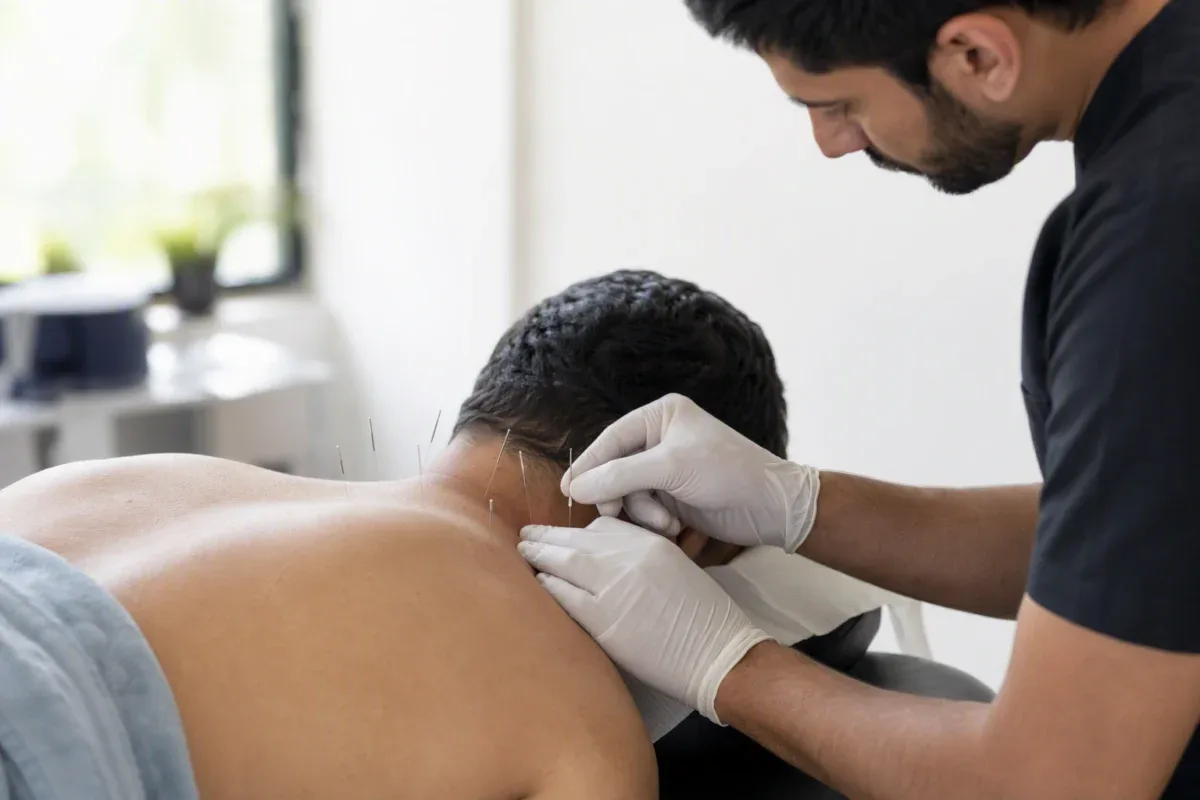

The short answer
A first dry needling session for cervical spondylosis starts with an assessment of symptoms, neck movement, strength, sensation, and tender points, screening for contraindications. If appropriate, a fine sterile needle is inserted into tight muscle points like upper trapezius or levator scapulae, causing a brief prick, ache or twitch. Expect possible soreness afterwards, easing with gentle movement.
Cervical spondylosis is age-related wear in the discs and small joints of the neck. It is common, and many people have these changes on a scan without much pain. When symptoms do appear, they are usually stiffness, a dull ache at the base of the neck, and muscles that feel tight and tender.
Dry needling is one treatment a physiotherapist may use for that muscular part of the problem. A fine, sterile needle is placed into a tight, tender point in the muscle to help it release. It is worth being clear from the start about what that does and does not achieve.
This article explains what happens in a first dry needling appointment for cervical spondylosis, so you know what you are agreeing to.
Dry needling does not reverse the disc and joint changes of spondylosis. Nothing in physiotherapy does. What it can address is the secondary muscle tightness that builds up around a stiff, sore neck, particularly through the upper trapezius, levator scapulae and the small muscles at the base of the skull.
That sets a realistic expectation. Loosening those muscles often makes the neck feel freer and easier to turn, which makes the exercise and posture work more comfortable. Needling supports the rest of the plan; it is not a treatment on its own.
It is also not for everyone. Some people respond better to manual therapy or graded exercise, and part of the first appointment is deciding whether needling is worth using at all.
No needle comes out at the start. The appointment begins with questions: how long the neck has bothered you, what makes it worse, whether pain travels into the arm, and whether you have numbness, pins and needles or weakness in the hands.
Your physiotherapist will then check how your neck moves, test strength and sensation in your arms, and feel along the muscles for tender points. They will ask about your general health, medication, and any neck surgery or recent injury. If you are looking for a Physiotherapist in Jaipur, our team in Vaishali Nagar can carry out this assessment in person.
This screening is not a formality. It is how contraindications get picked up, and how the physiotherapist decides whether your symptoms are muscular at all.
Your physiotherapist will screen for these before treatment, but it helps to know them in advance:
Not all of these rule out treatment for good. Some mean a different approach, or a word with your doctor first.
You will lie face down or sit supported, with the neck and shoulders accessible. The skin is cleaned and a single-use needle is placed into the tight point. It is very thin, much finer than a needle used for injections.
Most people describe a small prick, then a deep ache or brief cramp as the muscle responds. Some feel a quick twitch. None of it should be sharp, and say so if it is: the physiotherapist can adjust or stop.
Needles stay in briefly. Sometimes a mild electrical current is applied through them, which is dry needling with stimulation; whether it is used depends on your assessment and comfort. Read more about our Spine, Back & Neck Care.
Some soreness in the treated muscles is normal and usually settles within a day or two, rather like the ache after unaccustomed exercise. Mild bruising happens occasionally. Water, gentle movement and avoiding heavy lifting that day all help.
Some people notice the neck feels looser straight away. Others feel little after one session and more after two or three. Both are ordinary. Any change holds better when needling is paired with the exercises and posture work you are given.
Contact the clinic if you develop severe pain, dizziness, or anything that feels clearly wrong rather than simply sore. Sleep position also makes a real difference to morning stiffness, and you may find Best Pillow for Cervical Spondylosis useful alongside your treatment.
Most people feel a brief prick followed by a deep ache or twitch, which passes quickly. It should not be sharply painful. Tell your physiotherapist if it is, and the technique will be adjusted.
It differs from person to person, depending on how long the neck has been stiff and how it responds. Your physiotherapist reviews progress and changes the plan rather than continuing treatment that is not helping.
The needles look similar but the reasoning differs. Dry needling targets tight points in muscle found during a physical assessment. Acupuncture follows traditional Chinese medicine principles.
No. Spondylosis involves structural change in the discs and joints, which needling does not alter. It is used to ease the muscular tightness that develops around those changes.
Wear a top that allows easy access to the neck and shoulders, eat something beforehand, and bring a list of your medications and any scan reports you have.
If neck stiffness from cervical spondylosis is limiting how you sleep, drive or work, an assessment is the sensible first step, whether or not needling becomes part of your plan. Call +91 90570 65065 or message us on WhatsApp to arrange a time in Vaishali Nagar or Vidyadhar Nagar.
Physiotherapy is not the right first step for everything. Seek medical assessment promptly if any of the following apply to you:
If you lose control of your bladder or bowels, develop numbness around the groin, or have chest pain or breathlessness, treat it as an emergency and go to hospital.
What is Prehab for ACL Tear? Prehabilitation, or prehab, means exercises and therapy before ACL surgery to prepare your knee. An ACL tear happens when the…
Read articleThumb Arthritis Exercises Jaipur – Manage Basal Joint Pain at Home Thumb arthritis, also known as basal joint arthritis or CMC joint osteoarthritis, causes pain at…
Read articleDaily riding in Jaipur traffic often leads to wrist pain from scooter riding. Prolonged gripping, constant vibration and awkward wrist angles add up over time. Simple…
Read articleMessage us on WhatsApp with your main concern and preferred time, and we'll confirm your first visit the same day.