
Pre ACL surgery exercises Jaipur
What is Prehab for ACL Tear? Prehabilitation, or prehab, means exercises and therapy before ACL surgery to prepare your knee. An ACL tear happens when the…
Read article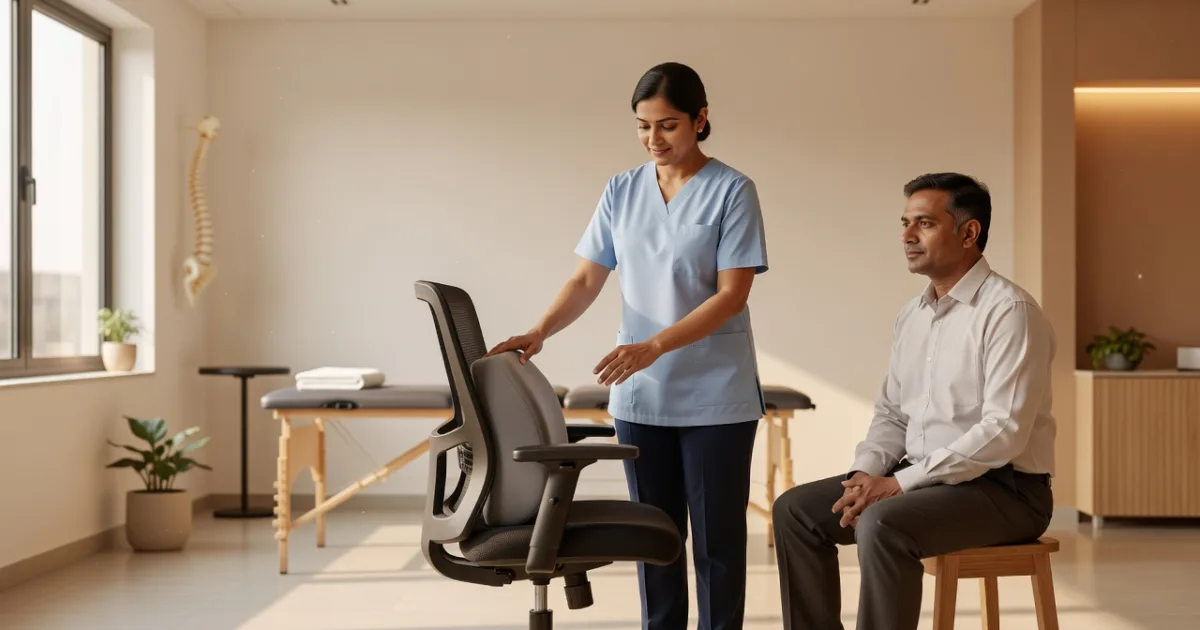

The short answer
Use a lumbar support cushion on your office chair by sitting fully back with hips touching the backrest. Place its thickest part at belt-line height, aligning the centre with your lower back curve for no gaps. Adjust if it slides, pairing with movement breaks every 30-45 minutes.
Long desk hours in Jaipur offices often mean sitting on basic plastic chairs or old executive seats. These setups flatten the natural curve in your lower back. Over time this leads to lower back pain, sciatica and spondylosis. Poor chairs and slouching increase pressure on spinal discs and muscles.
A lumbar support cushion offers simple help by restoring proper lumbar curve support. It is not a cure on its own. Correct lumbar cushion placement must be paired with good habits and, when pain continues, a professional assessment. At Trivayu Physio Center we see many office workers who improve their sitting posture correction once they combine support with guided care.
Pick a cushion that matches Indian office chairs. Look for medium firmness so it holds shape without feeling too hard. Size should fit the chair width and height. Contoured or adjustable designs work best because they maintain the natural lumbar curve without pushing too much.
Avoid cushions that are too thick or too soft. They can create new pressure points. At our clinic we use Clinical Pilates and exercise therapy to strengthen the muscles that support your back. The right cushion works alongside these methods for lasting sitting posture correction. Looking for a Physiotherapy Near Me? Our team in Vaishali Nagar, Jaipur can assess you in person.
Follow these steps for correct lumbar cushion placement:
This position works for common Jaipur office chairs, whether plastic or basic executive models. Proper placement prevents slouching at desk and reduces strain on the spine.
Many people make these lumbar cushion mistakes:
Avoid these errors by checking your position twice a day and pairing the cushion with movement. Patients who come for long-term injury rehabilitation often report better results once they correct these habits.
A lumbar cushion helps but cannot replace movement. Take a 2-3 minute break every 30-45 minutes. Simple desk-friendly movements include:
These movements ease tight muscles and improve blood flow. At Trivayu Physio Center we teach Clinical Pilates and exercise therapy that build on these breaks. Movement paired with lumbar support for office chair gives better lower back pain relief than cushion use alone.
If back pain, sciatica, slip disc or posture problems continue after using a cushion and movement breaks, seek an in-person assessment. Our senior physiotherapists can identify the root cause and create a personal plan. Read more about our Posture Correction.
We offer Manual Therapy, Robotic Spinal Decompression Therapy, Dry Needling, Posture Correction, and Clinical Pilates. Services also include home visits and online consultation for those who cannot travel. The centre is at 204, 2nd Floor, Om Tower, Gandhi Path Road, Nemi Nagar, Vaishali Nagar, Jaipur. We are open Monday to Saturday 8:00 am to 8:00 pm and Sunday 10:00 am to 1:00 pm.
Align the thickest part at belt-line height against the natural curve of your lower back. Sit fully back so there are no gaps and the cushion does not slide.
Yes, if placed too high, too low or on the wrong chair. Wrong placement can increase pressure on discs and muscles. Check your position and combine with movement breaks. You may also find Office Chair Setup for Back Pain in Jaipur useful.
Every 30-45 minutes take a 2-3 minute break. Simple shoulder rolls, seated cat-cow or a short walk help prevent muscle fatigue and support spine friendly seating.
It can reduce pressure on the lower back and sciatic nerve when placed correctly. It works best alongside posture correction and professional care for office workers with sciatica.
The correct height is at belt-line level, supporting the inward curve of the lower back. This maintains proper lumbar curve support and prevents slouching at desk.
Using a lumbar support cushion with correct placement and regular movement breaks can ease daily discomfort for office workers. It forms one part of good back care. For pain that does not settle, book an assessment at Trivayu Physio Center. Call or message us on WhatsApp to arrange a convenient time.
Physiotherapy is not the right first step for everything. Seek medical assessment promptly if any of the following apply to you:
If you lose control of your bladder or bowels, develop numbness around the groin, or have chest pain or breathlessness, treat it as an emergency and go to hospital.
What is Prehab for ACL Tear? Prehabilitation, or prehab, means exercises and therapy before ACL surgery to prepare your knee. An ACL tear happens when the…
Read articleCervical spondylosis is age-related wear in the discs and small joints of the neck. Dry needling can ease the muscle tightness that builds up around it. Here is what happens in a first session.
Read articleThumb Arthritis Exercises Jaipur – Manage Basal Joint Pain at Home Thumb arthritis, also known as basal joint arthritis or CMC joint osteoarthritis, causes pain at…
Read articleMessage us on WhatsApp with your main concern and preferred time, and we'll confirm your first visit the same day.