Pre ACL surgery exercises Jaipur
What is Prehab for ACL Tear? Prehabilitation, or prehab, means exercises and therapy before ACL surgery to prepare your knee. An ACL tear happens when the…
Read article

The short answer
Squatting after knee replacement restores everyday movements like sitting, standing, using Indian toilets, and climbing stairs. Most patients begin supported mini-squats between weeks 3-6, progressing gradually to deeper squats by weeks 7-12 under physiotherapy guidance. An in-person assessment is essential before starting.
Squatting after knee replacement helps restore everyday movement. Many patients in Jaipur need this skill for sitting, standing, using Indian toilets, and climbing stairs. Safe progression takes time and guidance.
This article gives a general week-by-week knee rehab outline. Recovery varies. An in-person assessment with a physiotherapist is essential before trying any new exercise.
Always follow your surgeon’s advice and attend regular physiotherapy after TKR. This helps avoid knee pain while squatting and supports steady progress.
Squatting is a basic movement for daily life. It helps you stand from a low seat, use traditional toilets, climb stairs, and pick up objects from the floor.
Strong quadriceps are needed for safe squatting. Physiotherapy after TKR focuses on rebuilding this strength while protecting the new joint. Rushing into squats without guidance can cause swelling or pain.
Every patient heals at a different pace. Age, fitness before surgery, and surgical technique all play a role. This is why an individual assessment at a physiotherapy clinic is essential before starting any squatting programme.
Most patients follow a gradual knee replacement recovery timeline. In weeks 1-2 the focus is on gentle mobility. Supported mini-squats may begin around weeks 3-6. Between weeks 6-12 many patients increase depth and strength.
These are general stages only. Individual factors such as age, pre-surgery fitness level, and surgical technique affect progress. Always follow the specific advice of your surgeon and physiotherapist.
Regular check-ins with your physiotherapy team help adjust the programme. At Trivayu Physio Center we monitor swelling, range of movement, and strength to keep your progress safe. Looking for a Physiotherapy Near Me? Our team in Vaishali Nagar, Jaipur can assess you in person.
The first two weeks after surgery are a healing phase. Pain and swelling are common. The new joint needs time to settle. Loaded movements like squats are unsafe at this stage because the tissues are still repairing.
Physiotherapists recommend basic bed and chair exercises. These include gentle knee bends while lying down, ankle pumps, and seated leg lifts. A walker is usually needed for walking. The main goals are to reduce swelling, manage pain, and prevent stiffness.
Attending regular physiotherapy sessions during this period is important. Our team at Trivayu uses electrotherapy, manual therapy, and gentle exercises to support early recovery. Home visits are also available if travel is difficult.
By weeks 3 to 6 many patients can begin partial weight bearing squats. Support from household items is essential. Never attempt free-standing squats yet.
Start with sit-to-stand practice. Sit on a firm chair with armrests. Keep feet flat on the floor, hip-width apart. Lean forward slightly, push through both heels equally, and rise to standing. Lower back down slowly.
Wall-supported mini-squats are another safe option. Stand with your back against a wall, feet about 30 cm away. Slide down a few centimetres only, keeping knees behind toes. Hold for 3-5 seconds and return to standing.
Our team may add myofascial release or Mulligan mobilisation with movement to improve comfort. Clinical Pilates principles help teach controlled movement and breathing.
Between weeks 7 and 12 many patients can progress to slightly deeper supported squats. Stable furniture such as a sturdy table or kitchen counter provides safety. Single-leg balance work may also be introduced under supervision. Read more about our Post-Surgery & Joint Replacement Rehab.
Move slowly and keep movements controlled. Depth should increase only if there is no increase in pain or swelling the next day. Strengthening quads after surgery remains a key focus.
Manual therapy and dry needling from a physiotherapist can reduce muscle tightness. Clinical Pilates and exercise therapy improve balance and control. Monitor the knee for swelling or a feeling of instability.
At Trivayu Physio Center our physiotherapists use robotic spinal decompression, Class IV laser, and TECAR therapy when needed to support tissue healing during this phase.
After three months some patients may begin unsupported squats if strength, balance, and range allow. This decision must come from your physiotherapist after careful testing. Full recovery from total knee arthroplasty can take 12 to 18 months.
Continued exercise therapy, posture correction, and geriatric physiotherapy help maintain gains. For older adults or those with other joint issues, a long-term programme prevents setbacks. Women’s health physiotherapy may be useful for certain patients. You may also find Progress from Walker to Cane after Knee Replacement useful.
Regular follow-up at the clinic or through online consultation keeps progress on track. Home visits are available across Vaishali Nagar, Vidyadhar Nagar, and nearby areas in Jaipur.
Most patients begin supported mini-squats between weeks 3 and 6. Earlier movement is limited to gentle mobility exercises. An individual assessment is required to decide the exact timing for your knee.
Full bodyweight squats are not safe in the first 6 weeks. Only partial weight bearing squats with strong support from a chair or wall may be introduced after week 3 if your physiotherapist approves.
Sit on a firm chair with armrests. Place feet flat and hip-width apart. Push evenly through both heels to stand, then lower slowly. Keep movements controlled and stop if you feel pain.
Stop immediately if you feel sharp pain, increased swelling, instability, or a grinding sensation. Warmth or redness around the joint also requires rest and prompt medical advice.
Yes, controlled squatting helps improve knee bend and strengthens the quadriceps. When performed with proper support and guidance it forms a useful part of post knee replacement exercises.
Squatting after knee replacement returns gradually with safe progression. Following a structured knee replacement squat progression under professional supervision reduces risk and improves function.
Recovery takes patience and consistent effort. Do not attempt new exercises without guidance. Book an assessment with our team in Vaishali Nagar. Call +91 90570 65065 or message on WhatsApp to arrange a convenient appointment at the clinic or a home visit.
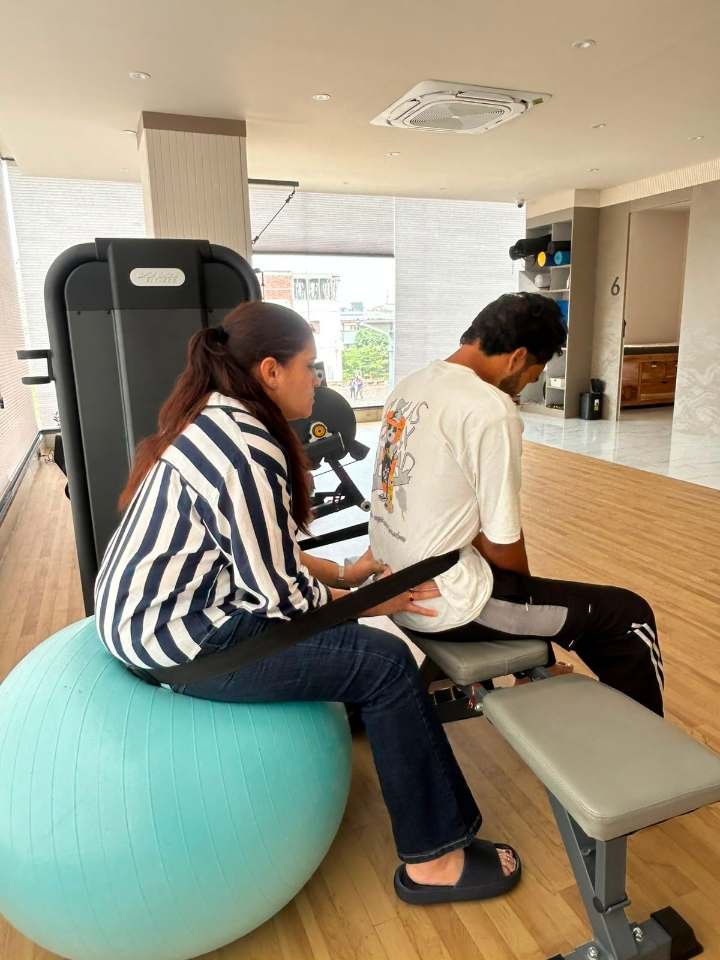
Physiotherapy is not the right first step for everything. Seek medical assessment promptly if any of the following apply to you:
If you lose control of your bladder or bowels, develop numbness around the groin, or have chest pain or breathlessness, treat it as an emergency and go to hospital.
What is Prehab for ACL Tear? Prehabilitation, or prehab, means exercises and therapy before ACL surgery to prepare your knee. An ACL tear happens when the…
Read articleCervical spondylosis is age-related wear in the discs and small joints of the neck. Dry needling can ease the muscle tightness that builds up around it. Here is what happens in a first session.
Read articleThumb Arthritis Exercises Jaipur – Manage Basal Joint Pain at Home Thumb arthritis, also known as basal joint arthritis or CMC joint osteoarthritis, causes pain at…
Read articleMessage us on WhatsApp with your main concern and preferred time, and we'll confirm your first visit the same day.