
Pre ACL surgery exercises Jaipur
What is Prehab for ACL Tear? Prehabilitation, or prehab, means exercises and therapy before ACL surgery to prepare your knee. An ACL tear happens when the…
Read article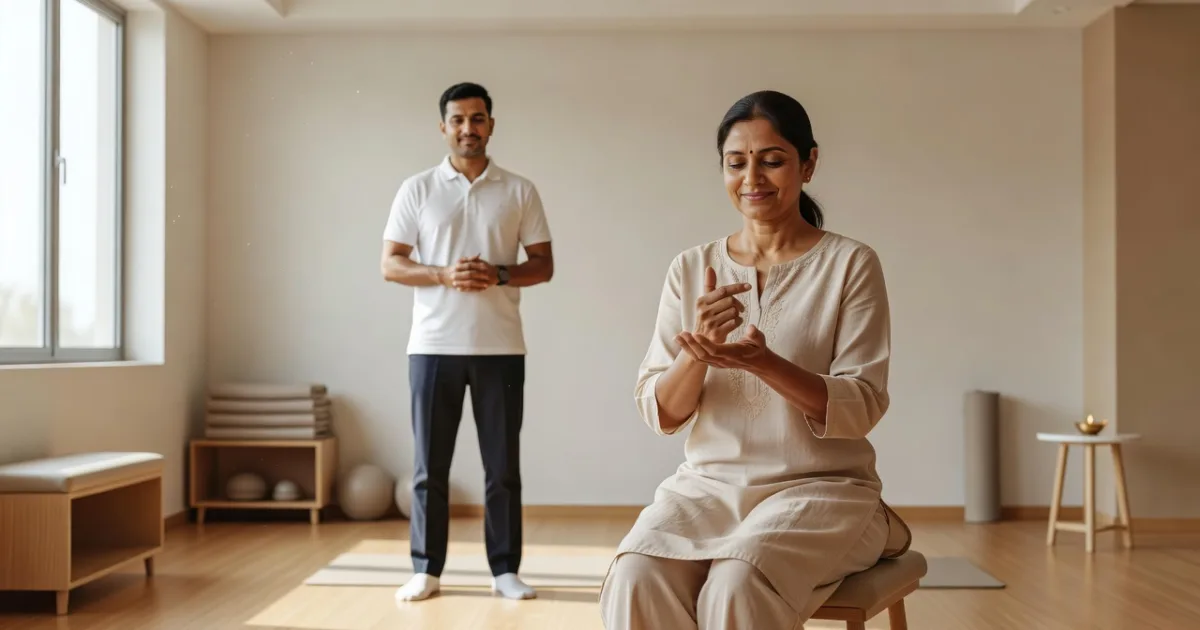

The short answer
Morning hand stiffness in rheumatoid arthritis occurs because joints rest without movement during sleep, allowing fluid to build up from inflammation and tissues to tighten. This autoimmune condition attacks joint linings, causing swelling that limits finger mobility. Home steps like warmth, routine changes and gentle exercises support comfort alongside medical care.
Morning hand stiffness in rheumatoid arthritis can make simple tasks like holding a cup or buttoning clothes difficult. The stiffness often feels worse after sleep because joints rest without movement. Many people in Jaipur notice this stiffness linked to rheumatoid arthritis flare periods.
This article shares home steps that support daily comfort. These include daily routine adjustments and gentle hand exercises. They do not replace medical care or medicine. Always consult your doctor for rheumatoid arthritis management. An in-person assessment at a clinic like Trivayu Physio Center can help tailor support.
Rheumatoid arthritis is an autoimmune condition. The body’s defence system attacks the lining of joints. This leads to inflammation. Overnight, fluid builds up in the joints when movement is low. This causes the stiff feeling in the morning.
Reduced movement during sleep allows tissues to tighten. Inflammation makes joints swell and limits finger mobility. The stiffness is often worse in the hands and fingers. Home management steps can support joint warmth and movement but do not treat the underlying disease. They work alongside your doctor’s plan.
Start your day with warmth. A warm shower or soaking hands in warm water for a few minutes can ease stiffness. This increases joint warmth and helps finger mobility. Looking for a Physiotherapist Near Me? Our team in Vaishali Nagar, Jaipur can assess you in person.
Plan tasks when hands feel less stiff. Avoid heavy gripping first thing in the morning. Use joint protection tips such as larger handles on tools or avoiding tight pinching. Wear warm gloves at night or use a paraffin wax bath at home if suitable. Keep a steady gentle movement pattern during the day instead of long periods of rest or overuse.
Other helpful changes include keeping rooms warm in winter and using a humidifier if air is dry. These small adjustments support reduce morning stiffness in hands at home and help with daily routine for rheumatoid hand stiffness.
Gentle hand exercises can support finger mobility and grip strength. Always start slowly. Stop if pain increases. These use no equipment or only light household items.
Perform these as exercises for rheumatoid arthritis hand stiffness once or twice daily. Focus on smooth motion rather than force.
Apply warmth before gentle hand exercises. A warm cloth or paraffin wax bath softens tissues and reduces discomfort. Follow heat with slow movement to support swelling reduction.
Take short rest breaks during the day. Avoid staying in one position too long. Keep good posture while using hands – keep wrists straight during tasks. Breathe steadily during movement; do not hold your breath. Read more about our Geriatric Physiotherapy.
Consistency matters more than intensity. Short regular sessions help more than one long hard session. This approach supports home management of morning hand stiffness rheumatoid arthritis and helps maintain finger mobility.
Home steps help many people but are not always enough. See a professional if stiffness lasts longer, swelling increases, or pain disturbs sleep and daily life. Difficulty with basic tasks or signs of a rheumatoid arthritis flare also need attention.
A physiotherapist can provide a proper in-person assessment. At Trivayu Physio Center in Vaishali Nagar, Jaipur, the team offers manual therapy, exercise therapy, and electrotherapy. Services also include Clinical Pilates, dry needling, and advanced techniques such as Class IV High Power Laser Therapy or TECAR Therapy. These can support overall hand function as part of a broader plan. The centre also provides home visits and online consultation.
It is caused by overnight build-up of fluid due to inflammation and lack of movement. The immune response in rheumatoid arthritis leads to joint swelling that feels stiff after sleep. You may also find Morning Stiffness in Rheumatoid Arthritis: Self-Care in Jaipur useful.
Gentle exercises and routine changes can support comfort and finger mobility. They work best alongside prescribed medical care and do not replace medicine.
Short sessions of 5–10 minutes once or twice a day are often enough. Focus on gentle movement and stop if pain worsens. Consistency over weeks matters more than duration.
Yes. Warm showers, joint protection methods, steady movement during the day, and use of warmth at night can all help reduce morning stiffness in hands at home.
See a physiotherapist when stiffness interferes with daily activities, does not ease with home steps, or if you notice increasing swelling or weakness. An assessment helps guide safe care.
Managing morning hand stiffness rheumatoid arthritis involves small daily changes and careful movement. These steps support joint warmth, finger mobility, and daily comfort. Recovery varies from person to person. Combine home efforts with guidance from your doctor and physiotherapist for best results.
Book an assessment at Trivayu Physio Center. Call +91 90570 65065 or message on WhatsApp to arrange a convenient time.
Physiotherapy is not the right first step for everything. Seek medical assessment promptly if any of the following apply to you:
If you lose control of your bladder or bowels, develop numbness around the groin, or have chest pain or breathlessness, treat it as an emergency and go to hospital.
What is Prehab for ACL Tear? Prehabilitation, or prehab, means exercises and therapy before ACL surgery to prepare your knee. An ACL tear happens when the…
Read articleCervical spondylosis is age-related wear in the discs and small joints of the neck. Dry needling can ease the muscle tightness that builds up around it. Here is what happens in a first session.
Read articleThumb Arthritis Exercises Jaipur – Manage Basal Joint Pain at Home Thumb arthritis, also known as basal joint arthritis or CMC joint osteoarthritis, causes pain at…
Read articleMessage us on WhatsApp with your main concern and preferred time, and we'll confirm your first visit the same day.