Pre ACL surgery exercises Jaipur
What is Prehab for ACL Tear? Prehabilitation, or prehab, means exercises and therapy before ACL surgery to prepare your knee. An ACL tear happens when the…
Read article

The short answer
The first physiotherapy session for frozen shoulder at Trivayu Physio Center begins with a conversation about pain and daily impact, followed by posture checks, muscle strength tests, and special tests to rule out other issues. Gentle hands-on treatments include manual mobilisation, soft tissue release, and pain relief techniques like laser therapy. It ends with a simple home exercise programme such as pendulum swings and postural advice.
If you are a woman over 45 and your shoulder feels stiff and painful, you may have adhesive capsulitis, also known as frozen shoulder.
At Trivayu Physio Center in Vaishali Nagar, Jaipur, the team uses careful assessment and hands-on care. Early physiotherapy can ease shoulder stiffness and pain and support rehabilitation. Recovery varies.
Frozen shoulder occurs when the capsule around the shoulder joint becomes thick and tight. This leads to stiffness and pain that worsens over time.
Symptoms include pain when moving the arm, trouble reaching overhead or behind the back, and gradual loss of movement. Daily tasks like dressing or combing hair become difficult.
The condition typically passes through three stages. In the freezing stage, pain increases and range of motion starts to reduce. The frozen stage brings marked stiffness while pain may ease slightly.
Booking a first physiotherapy session at a clinic in Jaipur is simple. Call or send a WhatsApp message. Centres in Vaishali Nagar and Vidyadhar Nagar offer slots from 8 am to 8 pm.
Bring doctor reports, X-rays, MRI scans or blood test results. Wear a loose top that allows the physiotherapist to see and move your shoulder. A sleeveless or short-sleeve shirt is best. Looking for a Physiotherapist Near Me? Our team in Vaishali Nagar, Jaipur can assess you in person.
The first session begins with a conversation. The physiotherapist asks about your pain, when it started, what makes it worse, and how it affects daily life.
Next is a posture check of shoulders, neck and upper back.
Strength of muscles around the joint is tested without forcing painful movements. Special tests help rule out other shoulder problems such as rotator cuff tears or impingement.
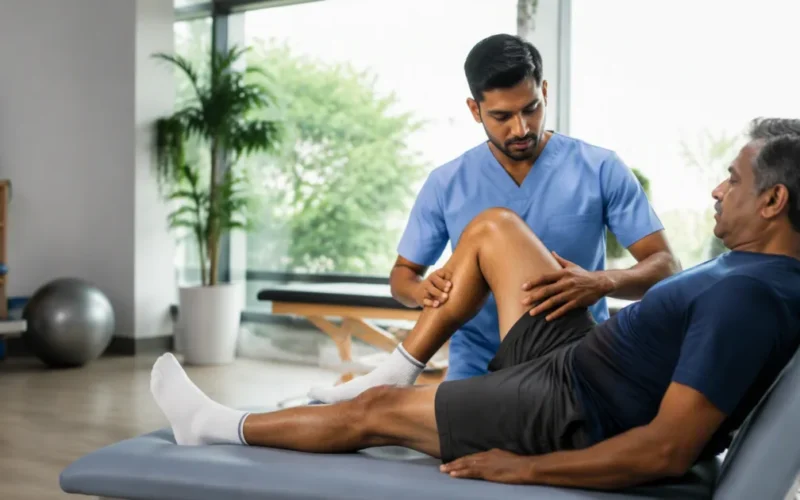
After assessment, gentle hands-on treatment begins. Techniques include manual mobilisation to loosen the tight capsule. The physiotherapist applies small, controlled movements to the upper arm bone within the socket.
Soft tissue release and myofascial release ease tight muscles around the shoulder blade and upper back.
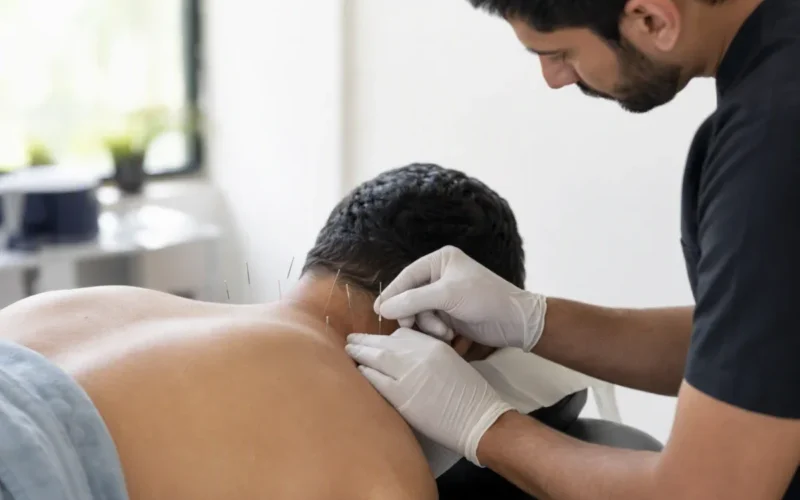
Pain relief techniques include Class IV High Power Laser Therapy or advanced electrotherapy to reduce pain and swelling. Dry needling is added only when appropriate and only after the physiotherapist has explained the procedure.
Dr. Jyoti Choudhary and the team choose techniques that match your needs. The focus remains on reducing pain first so that movement can slowly improve. Read more about our Orthopaedic Physiotherapy.
At the end of the session you receive a simple home exercise programme. It includes pendulum swings, gentle wall climbs and towel stretches. These are shown clearly and written down with diagrams.
Pendulum exercises are performed leaning forward and letting the arm hang like a pendulum. Small circles or back-and-forth swings use body movement rather than shoulder muscle effort.
Postural advice helps you sit and stand without adding stress. The physiotherapist shows how to keep the shoulder blade slightly back and down during computer work or while holding a phone.
Pain management tips include ice or heat at home and avoiding sudden movements. Ice is useful after exercises if the shoulder feels warm; heat can be applied before exercises to relax muscles. You may also find Shoulder Blade Exercises for Posture Jaipur useful.
Daily movement helps prevent further stiffness. The plan is adjusted in later visits as range of motion improves. The home programme always stays within comfortable limits so you can continue without fear.
Shoulder rehabilitation for adhesive capsulitis is gradual. After the first session the physiotherapist continues manual mobilisation with slightly larger movements as pain allows.
Rehabilitation also addresses the shoulder blade and upper back. Weak muscles between the shoulder blades can make the main shoulder joint work harder.
Women over 45 often have additional neck or upper back tightness from years of household work or desk jobs. The treatment plan therefore includes gentle neck stretches and thoracic spine mobility work.
After the first session you will know your diagnosis, the treatment started and the home exercises to follow. Follow-up sessions use progressive exercises and continued manual therapy.
Progress is tracked by measuring movement and pain levels. Consistent attendance supports rehabilitation. The number of sessions needed varies. An in-person assessment is the best way to understand your situation.
If pain worsens suddenly or new symptoms appear, contact the clinic or your doctor. Sudden swelling, redness or fever need medical attention.
Wear a loose, sleeveless or short-sleeve top that allows easy access to the shoulder. Avoid tight clothes or heavy layers.
The first session usually lasts 45 to 60 minutes. This gives time for assessment, treatment and explanation of the home plan.
Yes. You will be given a few simple home exercises to start the same day. They are gentle and clearly explained.
Treatment is kept gentle. Some discomfort may occur when moving a stiff shoulder, but the physiotherapist adjusts techniques to keep pain minimal.
The number of sessions varies with each person. Your physiotherapist will discuss a realistic plan after the initial assessment. Recovery varies.
Shoulder stiffness can make daily life difficult, but the right care helps. At Trivayu Physio Center our team provides clear guidance. Book your first physiotherapy session by calling +91 90570 65065 or sending a message on WhatsApp. A proper in-person assessment will show the best way forward for you.
Physiotherapy is not the right first step for everything. Seek medical assessment promptly if any of the following apply to you:
If you lose control of your bladder or bowels, develop numbness around the groin, or have chest pain or breathlessness, treat it as an emergency and go to hospital.
What is Prehab for ACL Tear? Prehabilitation, or prehab, means exercises and therapy before ACL surgery to prepare your knee. An ACL tear happens when the…
Read articleCervical spondylosis is age-related wear in the discs and small joints of the neck. Dry needling can ease the muscle tightness that builds up around it. Here is what happens in a first session.
Read articleThumb Arthritis Exercises Jaipur – Manage Basal Joint Pain at Home Thumb arthritis, also known as basal joint arthritis or CMC joint osteoarthritis, causes pain at…
Read articleMessage us on WhatsApp with your main concern and preferred time, and we'll confirm your first visit the same day.