Pre ACL surgery exercises Jaipur
What is Prehab for ACL Tear? Prehabilitation, or prehab, means exercises and therapy before ACL surgery to prepare your knee. An ACL tear happens when the…
Read article
The short answer
Physiotherapy after meniscus repair starts early with protection, swelling control and gentle movement in week 1 using protected weight bearing and quad sets. Weeks 2-4 focus on regaining range and controlled strengthening. From weeks 5-8 it builds strength and balance, progressing to sport return from week 9.
Meniscus repair surgery fixes a torn cartilage in the knee. Young athletes often need this after a meniscus tear.
Starting at the right time matters. Early physiotherapy supports healing through protected weight bearing after meniscus repair and gentle movement. Every recovery differs. This guide gives general phases of meniscus repair rehabilitation.
At Trivayu Physio Center in Vaishali Nagar, Jaipur, our team works with young athletes on post meniscus repair physiotherapy.
Meniscus repair involves stitching the torn cartilage. Surgeons use arthroscopic knee surgery, which is minimally invasive. After the operation the knee needs time to heal.
Early physiotherapy after meniscus repair reduces swelling after arthroscopic knee surgery, prevents stiffness and supports safe movement. It follows protected movement principles so the repair can strengthen without extra strain.
Physiotherapy supports the natural healing process. It teaches proper loading, improves blood flow and prepares the knee for later strength work. Professional guidance matches the surgeon’s instructions and the athlete’s progress.
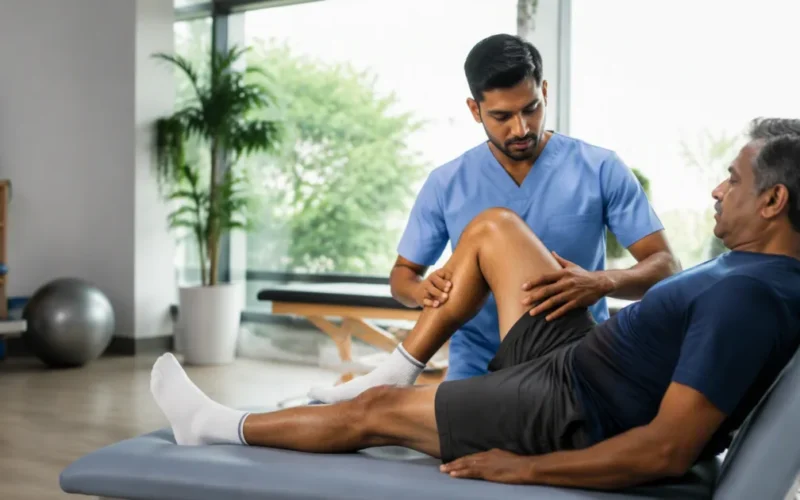
The first week focuses on protection. Most patients follow protected weight bearing after meniscus repair. Many start with non-weight bearing or toe-touch weight bearing using crutches.
Swelling control after knee surgery is a priority. Use ice, elevation and compression as advised. Gentle ankle pumps help circulation.
Simple exercises like quad sets are often started early. These tighten the front thigh muscle without moving the knee much. All movements must stay within the safe range set by the surgeon.
A professional assessment is essential before trying any movement. At Trivayu Physio Center our physiotherapists check the knee, review the surgery notes and guide what is safe for you. Looking for a Physiotherapy Near Me? Our team in Vaishali Nagar, Jaipur can assess you in person.
During weeks two to four many patients progress to partial then full weight bearing. This change happens only when the surgeon and physiotherapist agree it is safe.
Range of motion exercises become more important. Gentle knee bends and straight-leg raises are common. The goal is to regain full straightening and controlled bending without forcing the joint.
Basic strengthening starts with simple resistance bands or body-weight exercises. Swelling management continues with ice, elevation and gentle manual therapy. Our team may introduce soft tissue work or mobilisation when appropriate.
Reducing swelling after arthroscopic knee surgery remains key. Persistent swelling can slow progress. Your physiotherapist will monitor this and adjust the plan.
By weeks five to eight the focus shifts to building strength. Progressive resistance exercises for the quadriceps, hamstrings and calf muscles are added. Balance work on stable and unstable surfaces improves control.
Clinical Pilates style exercises help with core and leg coordination. These movements teach athletes to control the knee during daily tasks and light sports actions. Single-leg stands and controlled step-ups are often included.
Sport-specific preparation begins in small amounts. Young athletes learn basic movement patterns that will later become running or jumping drills. Swelling is watched closely. Any increase means slowing down.
Our physiotherapists at Trivayu use exercise therapy, Clinical Pilates and manual techniques. We also offer advanced electrotherapy when needed to support tissue healing and pain relief. Read more about our Post-Surgery & Joint Replacement Rehab.
From week nine the programme becomes more demanding. Advanced strengthening, agility drills and plyometric exercises are introduced. Criteria-based testing helps decide when an athlete is ready for running and sport.
Return to sports after meniscus repair usually takes several months. Most young athletes need between four and nine months depending on the sport and the repair.
Ongoing swelling control and injury prevention exercises remain part of the plan. Athletes learn proper landing technique, core control and knee alignment during sport movements. This helps protect the knee long term.
Our sports injury rehab team at Trivayu Physio Center guides athletes through these later phases. We assess readiness at every step and adjust the programme to match individual goals.
Knee meniscus tear surgery rehab is different for every person. A standardised online plan cannot replace hands-on assessment. Professional guidance ensures the repair is protected while progress is made at the right speed.
At Trivayu Physio Center in Vaishali Nagar, Jaipur we offer sports injury and rehab, advanced electrotherapy, Clinical Pilates and exercise therapy. Our senior sports physiotherapists understand the demands young athletes face. You may also find Squatting After Meniscus Surgery: Safe Timeline for Athletes useful.
Choosing the right centre matters. Look for a physical rehabilitation center that understands post-surgery knee care and works regularly with athletes.
Most people begin gentle physiotherapy within the first few days after surgery. The exact time depends on the surgeon’s instructions and the type of repair.
Swelling is common in the first few weeks. It usually reduces gradually over four to eight weeks with proper elevation, ice and controlled activity. Some mild swelling can continue for several months.
Gentle ankle pumps, quad sets and heel slides within a safe range are often allowed. All movements must follow the protected weight bearing instructions from your surgeon.
Return to sport usually happens between four and nine months. It depends on the sport, the strength of the knee and successful completion of functional tests.
Many repairs allow partial or protected weight bearing soon after surgery. Some require non-weight bearing for a short period. The exact protocol is set by the surgeon according to the repair technique.
Physiotherapy after meniscus repair supports each phase of healing. Young athletes who follow a guided programme can regain confidence and return to the activities they love. Recovery takes time and patience.
Book an assessment with one of our physiotherapists. Call us or message on WhatsApp to arrange a convenient time at our Vaishali Nagar or Vidyadhar Nagar clinics.
Physiotherapy is not the right first step for everything. Seek medical assessment promptly if any of the following apply to you:
If you lose control of your bladder or bowels, develop numbness around the groin, or have chest pain or breathlessness, treat it as an emergency and go to hospital.
What is Prehab for ACL Tear? Prehabilitation, or prehab, means exercises and therapy before ACL surgery to prepare your knee. An ACL tear happens when the…
Read articleCervical spondylosis is age-related wear in the discs and small joints of the neck. Dry needling can ease the muscle tightness that builds up around it. Here is what happens in a first session.
Read articleThumb Arthritis Exercises Jaipur – Manage Basal Joint Pain at Home Thumb arthritis, also known as basal joint arthritis or CMC joint osteoarthritis, causes pain at…
Read articleMessage us on WhatsApp with your main concern and preferred time, and we'll confirm your first visit the same day.